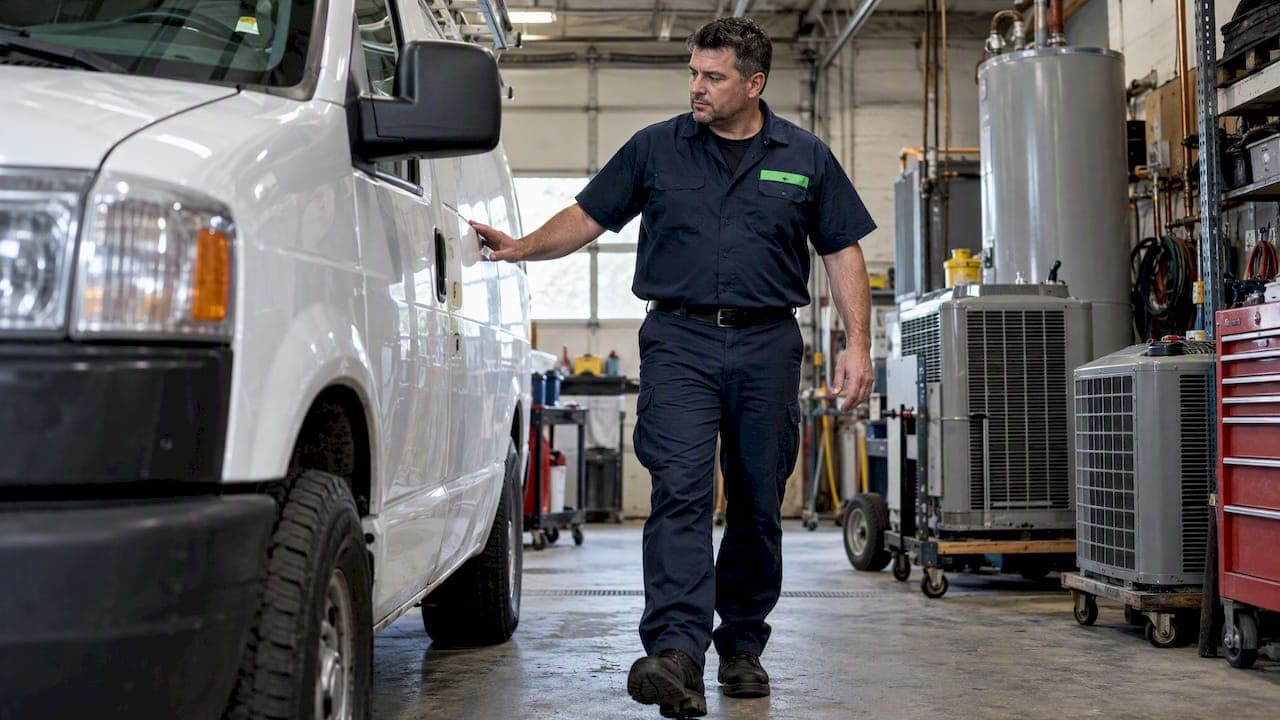
Most SBA loans above $50,000 do require collateral, but that rarely means you must own a building. For a 7(a) loan, the starting point is the assets you buy, refinance or improve with the money, plus other fixed assets the business or its owners have available. For loans of $50,000 or less under the main programs, collateral is generally not required. A personal guarantee is a separate matter, and it is almost always required from owners of 20% or more.
This guide explains how collateral works program by program, what lenders actually accept, how it differs from a guarantee, and what to do if your business does not have much to pledge.
TL;DR
- Loans of $50,000 or less under 7(a) Small Loans, SBA Express and Export Express generally do not require collateral. Above that, lender and program rules apply.
- On a 7(a) loan, the loan counts as fully secured when the lender holds liens on what the loan finances plus available fixed assets up to the loan amount.
- 504 loans are secured mainly by the project property or fixed asset being financed. Microloan collateral is set by the nonprofit intermediary.
- Collateral (a lien on assets) and a personal guarantee (a promise to repay personally) are different. Owners with 20% or more generally must sign the guarantee.
- Ask your lender which SBA rulebook governs your application, because older articles may describe superseded procedures.
Table of Contents
- Does the SBA require collateral?
- Collateral rules by SBA loan type
- What counts as collateral
- Collateral versus personal guarantee
- How the requirements play out by industry
- What if you do not have enough collateral?
- What happens to collateral in a default
- Our perspective: collateral is one input, not the whole answer
- When an SBA loan is not the right fit
- Explore your options with Capital for Business
- Checklist before you apply
- FAQ
- Sources
Does the SBA require collateral?
The SBA does not lend most of the money itself. It guarantees a portion of a loan made by a bank or other approved lender. SBA's 7(a) overview states that the guarantee is 85% for loans of $150,000 or less and 75% for larger loans, and that the maximum is $5 million. You work directly with the lender, and the lender decides which documents it needs based on loan size, its own process and the processing method.
That structure explains why the answer to "does SBA require collateral" is "it depends." The SBA sets floors and program rules. The lender applies them, adds its own credit policy, and decides whether the numbers work. SBA's lender guidance says lenders may use a business credit scoring model, credit score or credit history, and that cash flow, equity or collateral may also be a consideration.
Two businesses with similar assets can therefore get different answers. Collateral supports the credit decision. It does not replace the ability to repay from cash flow.
Which rulebook applies
SBA updates its Standard Operating Procedures (SOPs) periodically. As of this writing, SBA's notice on SOP 50 10 8.1 announces an update to the 7(a) and 504 procedures, effective October 1, 2026. Ask your lender which version governs your file, since that depends on when your SBA loan number was issued. A blog post written two years ago, including some that still rank well, may describe rules that no longer apply.
Collateral rules by SBA loan type
| Program | Typical collateral position | Who sets the details |
|---|---|---|
| 7(a) Small Loans | Generally none at $50,000 or less; above that, a first lien on financed assets in the relevant cases | SBA rules plus lender |
| SBA Express and Export Express | None at $50,000 or less; above that, usually the lender's policy for similar non-SBA commercial loans | Lender |
| Standard 7(a) | Assets acquired, refinanced or improved with proceeds, plus available fixed assets up to the loan amount | SBA rules plus lender |
| 504 | The project property or fixed asset; the CDC usually holds a second lien | SBA regulation, CDC and lender |
| Microloan (up to $50,000) | Set by the nonprofit intermediary | Intermediary |
| Disaster loans | Required to the extent possible above stated thresholds | SBA directly |
The rest of this section walks through each row.
7(a) loans
The 7(a) program is the most common SBA product, covering working capital, equipment, real estate purchase, refinancing and business acquisition. According to SBA's 7(a) guidance, a loan is fully secured when the lender takes security interests in the assets acquired, refinanced or improved with the loan, plus available fixed assets up to the loan amount, subject to program-specific conditions.
For 7(a) Small Loans, the same guidance says loans of $50,000 or less generally do not require collateral. Above $50,000, the lender has to follow the SBA collateral requirements, including a first lien on the financed assets in the relevant cases. Reporting on the changes that took effect in June 2025 notes that collateral is now required on nearly every 7(a) loan above $50,000, where the older threshold was $500,000. If an article you are reading still cites $500,000 as the collateral trigger, treat it as outdated.

A lender saying collateral is "required" does not mean you must own real estate. The practical question is how much usable collateral value exists across your equipment, vehicles, inventory, fixtures and any real property, once the lender applies its own valuation.
SBA Express and Export Express
For these programs, the lender's guidance says loans of $50,000 or less do not require collateral. Larger loans generally follow the lender's established policy for similarly sized non-SBA commercial loans. The published program rules also say inadequate collateral alone may not be the sole reason for a denial. The program table lists a $500,000 maximum for both.
504 loans
The 504 program is built for fixed assets: buying or building property, or purchasing long-life machinery. Because the financed asset is the security, the collateral question is more predictable than on a working-capital request. Under 13 CFR 120.934, the Certified Development Company (CDC) usually takes a second lien on the project property, sometimes requires additional collateral, and allows substitute collateral only in rare circumstances.
If you expect to sell the property, refinance or replace equipment during the loan term, raise it early. Releasing or substituting collateral is not automatic, and the CDC servicing matrix shows that these changes follow set procedures.
This structure suits manufacturers, contractors with heavy equipment needs and businesses buying their own premises.
Microloans
Microloans go up to $50,000 and can fund working capital, inventory, supplies, furniture, fixtures, machinery and equipment. SBA explains that the lender is a nonprofit intermediary, and that the intermediary, not SBA, sets the borrower's collateral requirements within the program framework. Expect requirements to differ from one intermediary to the next, so ask each one what it takes.
Disaster loans
Disaster loans follow their own rules. SBA states that collateral is required to the extent possible for physical-damage loans over $50,000 in Presidential declarations and over $14,000 in SBA administrative declarations. SBA also says it will not decline a disaster loan solely for lack of collateral. For loans of $200,000 or less, the owner's primary residence will not be required when other assets of equal quality and at least equal value are available under the stated conditions.
What counts as collateral
Lenders look for assets they could sell to recover money if the loan defaulted. Typical categories:
- Equipment and machinery: HVAC service trucks, excavators, kitchen equipment, production machinery.
- Vehicles: work trucks and vans with clear titles.
- Inventory: retail stock, parts, supplies, lumber, flowers or food where resale value holds.
- Accounts receivable: invoices owed by creditworthy customers.
- Commercial real estate: a building the business owns, or the property being purchased.
- Fixtures and improvements: build-out items that stay with the premises.
- Residential or investment real estate: sometimes used when business assets fall short, though the rules are narrower than many owners assume.
Value is not the purchase price
A purchase invoice is not the same as recoverable collateral value. A lender discounts assets to reflect what they would fetch in a forced sale. A $90,000 truck bought two years ago, specialized shop fixtures or perishable stock will each be valued below cost, and the lender's analysis also looks at lien priority. If another creditor already holds a lien on an asset, it may offer little or nothing to a new lender.

A worked example makes the gap concrete. Suppose an HVAC contractor requests $300,000 to buy two service vans and upfit a shop. The vans and upfit financed by the loan become collateral. If the lender's valuation of those assets, after discounting, comes to less than the loan, it can look at other available fixed assets up to the loan amount, such as shop equipment the company already owns. The figures here are illustrative, and each lender values assets its own way.
What SBA may ask for to verify value
Under 13 CFR 120.160, SBA may require professional appraisals of the applicant's or principals' assets, a survey, or a feasibility study. These depend on the facts and are not mandatory for every loan. The same rule calls for hazard insurance on all collateral for 7(a) loans above $500,000 and 504 projects above $500,000.
Collateral versus personal guarantee
Owners often mix these up, and the difference matters at closing.
- Collateral is a lien: the lender gains rights in specific assets it can take and sell if you default.
- A personal guarantee is a promise: you personally agree to repay, whether or not business assets cover the debt.
Under 13 CFR 120.160, holders of at least a 20% ownership interest generally must give an unconditional personal guarantee. SBA or the lender can require additional full or limited guarantees when credit or other circumstances warrant it. The 20% line is a general rule, not a promise that a smaller owner will never be asked. Our guide to personal guarantee costs and negotiation levers covers what you can and cannot negotiate, and our note on SBA affiliation rules explains how a 20% stake can affect SBA loans.
If your business operates through an eligible passive real estate company that owns the property, additional requirements apply. The passive company conditions include a written lease that is subordinate to SBA's lien on the property. Review both the lien documents and the guaranty documents before you sign.
How the requirements play out by industry
Collateral is often asset-specific, and what is relevant depends on how the business operates.
- Plumbing, HVAC and electrical: vehicles, tools, diagnostic equipment and receivables are the usual candidates. Newer, titled equipment carries more weight than older tools.
- General contractors: heavy equipment and trucks are the main collateral. Receivables from large projects can matter, but retainage and slow-paying clients make them harder to value.
- Restaurants: kitchen equipment and build-out improvements. A lease often limits what a lender can claim on fixtures.
- Retail and flower shops: inventory and fixtures. Perishable or seasonal stock is discounted heavily.
- Manufacturers: machinery and real estate. These are strong candidates for the 504 structure when buying a facility or major equipment.
- Insurance agencies and service firms: few hard assets, so cash flow, credit history and personal guarantees carry more of the decision.
What if you do not have enough collateral?
Limited collateral does not close the door. It changes which route makes sense.
- Check the loan size. A request of $50,000 or less under the Small Loan or Express structures generally does not require collateral, and a smaller request may meet your actual need.
- Count everything. List equipment, vehicles, inventory, fixtures and receivables, with estimated resale values and any existing liens. Include assets the loan will buy.
- Separate asset financing from working capital. Financing a truck or machine uses that asset as the security, so the purchase can support itself.
- Ask about the lender's policy. For Express loans over $50,000, the lender's own policy for comparable commercial loans is the benchmark, and policies vary.
- Show repayment strength. Clean financials, steady revenue and a clear use of funds help the underwriting case. Our list of documents small businesses need for a business loan shows what to gather.
- Consider a different product. If an SBA structure does not fit your assets or timeline, other financing may. See the next section.
Our explainer on business loan collateral in six steps and our broader piece on how collateral works in small business financing go deeper on preparing your asset list.
What happens to collateral in a default
Collateral is not a safety net for the owner. If a loan goes into default, the lender can liquidate business personal property, and recoveries are shared according to the parties' interests. SBA's servicing regulations allow a lender to demand that SBA honor its guarantee when the borrower is in default for more than 60 calendar days on loans approved on or after May 14, 2007, with exceptions. The guarantee protects the lender's eligible exposure. It does not protect your pledged assets or your personal guaranty.
Before you pledge anything, decide whether you could operate without it. Pledging the only truck your crew uses carries more risk than pledging a spare piece of equipment.
Our perspective: collateral is one input, not the whole answer
We have worked with owners in hundreds of industries since 2009, and the pattern is consistent: owners decide an SBA loan is out of reach because they lack real estate, or they assume it is easy because the government is involved. Neither is accurate.
In our experience, three things deserve more attention than they usually get.
- Timing. SBA loans can be an excellent fit when you can plan ahead and gather documents. When a job, a repair or a seasonal inventory window will not wait, the speed of the product matters as much as its rate.
- Asset clarity. Owners who arrive with a tidy list of equipment, titles, serial numbers and existing liens move through underwriting with fewer surprises.
- Fit. Match the financing to the need. A piece of equipment is often best financed as equipment. A cash flow gap is a working-capital problem. Using the wrong tool makes any collateral picture look worse.
We offer SBA loans alongside other products, and we say plainly that not every business should start with SBA. If your business has been turned down at a bank or credit union, we can look at your situation and show you what is realistic, including SBA and non-SBA paths.
— Capital
When an SBA loan is not the right fit
SBA loans typically reward preparation. If you need money quickly, have limited fixed assets or a thin credit history, another structure may serve you better. Our published starting rates give a sense of the range:
| Product | Published starting rate |
|---|---|
| SBA Loans | from 6% |
| Business Term Loans | from 7% |
| Equipment Financing | from 0.8% per month |
| Business Line of Credit | from 1.2% per month |
| Working Capital Loans | from 1.5% per month |
| Revenue-Based Financing | from 1.8% per month |
| Bad Credit Business Loans | from 2.5% per month |
These are starting points, and the rate you receive depends on your profile and the product. Equipment financing uses the purchased equipment as security, which is why its rate starts lower than most other short-term products. Our guide to equipment financing explains how that works.
Explore your options with Capital for Business
If you want to know where an SBA loan fits, start with our SBA loans page. If SBA is not the right match for your timing or assets, our funding solutions cover working capital, lines of credit, equipment financing and more. We position ourselves as an option when banks and credit unions say no, with funding as fast as 24 hours on some products.
Checklist before you apply
- Decide the amount and the purpose of the funds.
- List every asset, its estimated resale value, its title status and any existing lien.
- Identify every owner with 20% or more, since each generally must guarantee.
- Gather tax returns, financial statements, debt schedules and your business plan.
- Ask the lender which SOP governs your application and how it values each asset class.
- Ask whether the lender will take a lien on any personal real estate, and under what conditions.
- Confirm insurance requirements for the collateral.
- Read the lien and guaranty documents separately before you sign.
FAQ
Can you get an SBA loan without collateral?
Yes, in some cases. Loans of $50,000 or less under 7(a) Small Loans, SBA Express and Export Express generally do not require collateral. Above $50,000, the lender applies SBA rules and its own policy, so expect to pledge assets. A personal guarantee from owners of 20% or more generally still applies.
Do I need to own real estate to qualify?
No. For a 7(a) loan, the lender starts with the assets the loan finances and other available fixed assets, which can include equipment, vehicles and inventory. The lender may look at real estate when other assets fall short, but owning a building is not a blanket requirement.
Can I use a 401(k) as collateral for an SBA loan?
The SBA sources we reviewed do not list retirement accounts as standard collateral, so do not count on it. Ask your lender directly what it accepts, and speak with a tax professional before moving or pledging any retirement funds.
What is the difference between collateral and a personal guarantee?
Collateral is a lien on specific assets that the lender can sell after a default. A personal guarantee is your personal promise to repay the debt. Owners with at least 20% of the business generally must provide an unconditional guarantee, and lenders can ask for more when circumstances call for it.
Is collateral required for an SBA 504 loan?
Yes. The project property or fixed asset being financed is normally the main collateral, and the CDC usually takes a second lien. Additional collateral may be required, and substitutions are allowed only in limited circumstances.
Sources
- SBA: 7(a) loans
- SBA: Types of 7(a) loans (lender guidance)
- SBA: Become an SBA lender (Microloan program)
- SBA: Disaster assistance
- SBA: Issuance of SOP 50 10 8.1
- SBA: CDC servicing and liquidation action matrix
- eCFR: 13 CFR 120.160, Loan conditions
- eCFR: 13 CFR 120.111, Eligible Passive Company
- eCFR: 13 CFR Part 120 Subpart H, 504 loans
- eCFR: 13 CFR Part 120 Subpart E, servicing and liquidation
- NerdWallet: SBA loan collateral requirements