
Most lenders want to see about a year in business, steady revenue, a personal credit score somewhere between the 500s and 650, a quote for the equipment and a short stack of financial documents. The equipment itself acts as collateral, so the bar is usually lower than for an unsecured loan. The exact numbers change from lender to lender, so this guide shows the ranges, explains what sits behind them and walks through how to prepare.
TL;DR
- Typical benchmarks: at least 12 months in business, roughly $50,000 to $100,000 or more in annual revenue, and a credit score from about 550 to 650 or higher, depending on the lender.
- Prepare a vendor quote or invoice, bank statements, a government ID, your business details and, for larger deals, tax returns.
- The equipment matters: its price, age, type and remaining useful life all shape the decision and the terms.
- Weaker credit does not automatically end the conversation. Revenue, time in business and a down payment can offset it.
- Our equipment financing starts at 0.8% per month, with amounts up to $250,000. See the details.
Table of Contents
- The core equipment financing requirements
- Credit score: what is realistic
- Time in business and revenue
- Documents to prepare
- How the equipment affects approval
- Typical terms to expect
- Equipment leasing requirements
- Are equipment loans hard to get?
- How to apply: a step-by-step path
- Our perspective
- Financing for your next piece of equipment
- FAQ
- Sources
The core equipment financing requirements
Equipment financing is a loan or lease-style agreement in which the equipment you are buying secures the debt. Because the lender can recover the asset if payments stop, it asks for less than it would on an unsecured product. It still wants proof that the business can make the monthly payment.
Lenders generally evaluate five things:
- Personal and business credit. How you have handled debt so far.
- Time in business. How long the company has operated.
- Revenue and cash flow. Whether deposits comfortably cover the new payment.
- The equipment. What it is, what it costs and how long it will hold its value.
- Paperwork. Whether the application is complete, consistent and verifiable.
No single factor decides the outcome. A newer business with strong deposits can be approved where an older one with thin cash flow is not.
Credit score: what is realistic
Credit score is the number owners worry about most. Published benchmarks vary widely, which is why the same owner can hear "you need 650" from one source and "550 is fine" from another.
According to U.S. News, borrowers can generally qualify with at least one year in business, $100,000 or more in annual revenue and a credit score no lower than 550 to 600 at one online lender. Another lender's guidelines in the same article are $50,000 or more in annual revenue, a score of 650 or better and at least a year in business. The Wall Street Journal adds that a personal score of 600 or higher is generally required for a business loan.
Here is how those ranges tend to play out:
| Personal credit score | What to expect |
|---|---|
| 650 and above | The widest choice of lenders and the most room to negotiate on rate and down payment |
| 600 to 649 | Broadly approvable at many lenders, often with a documented revenue history |
| 550 to 599 | Possible with some lenders, usually with stronger revenue, a down payment or a shorter term |
| Below 550 | Harder, but not closed off if cash flow is strong and the equipment is easy to value |
This table is a reading guide, not a promise from any lender, ours included. If your score sits in the lower rows, our guides on equipment financing credit scores and getting equipment loans with a low credit score go into more detail.
Personal vs. business credit
For small companies, lenders usually look at the owner's personal credit, because the business may have little or no credit file of its own. Owners of newer companies should expect a personal credit check even when the loan is in the company's name. Established businesses with a business credit profile may find that it supports the application too.
Time in business and revenue
Time in business is a proxy for stability. Traditional banks and credit unions often want two years, according to the WSJ, while equipment financing often has lower thresholds. One year is a common benchmark among alternative lenders, as the U.S. News figures above show.
Revenue works the same way. The WSJ notes that lenders often want annual revenue of at least $100,000, and the lower benchmark in the U.S. News piece is $50,000. Think of it as a payment test: lenders compare your average monthly deposits with the payment the new equipment would add.
A simple self-check:
- Take your average monthly deposits over the last three to six months.
- Add the estimated monthly payment on the equipment.
- Ask whether the business could carry that payment after rent, payroll, materials and existing debt service.
If the answer is a comfortable yes, you are in a strong position, regardless of which benchmark a lender uses.
What if you are a startup?
Businesses under a year old can sometimes still be financed, often with a larger down payment, a personal guarantee or a strong personal credit profile. Our overview of business loans for startups shows which products fit a young company.
Documents to prepare
A complete file shortens the approval process more than almost anything else. Requests differ by lender and deal size, but most applications draw on the same list. Smaller requests may need only a few items, while larger ones usually ask for more.
Identity and business basics
- Government-issued photo ID for each owner
- Business name, address, legal structure and tax ID (EIN)
- Date the business was established
- Ownership details, including each owner's percentage
Financial documents
- Three to six months of business bank statements
- Business tax returns, commonly two years for larger deals
- Profit and loss statement and balance sheet, if you keep them
- A list of current debts and monthly obligations
Equipment details
- A quote, pro forma invoice or purchase agreement from the seller
- Make, model, year, condition (new or used) and serial number if you have it
- Delivery and installation costs, if you want them financed
Our guides to the documents small businesses should bring and a five-step equipment financing checklist can help you put the folder together before you apply.
How the equipment affects approval
The equipment is both the purpose of the loan and the lender's security, so its details carry real weight.
- Price. Smaller purchases often need only a short application and recent bank statements. Larger ones move toward full documentation.
- New or used. New equipment is easier to value. Used equipment can be financed, but age and condition affect the term and sometimes the down payment.
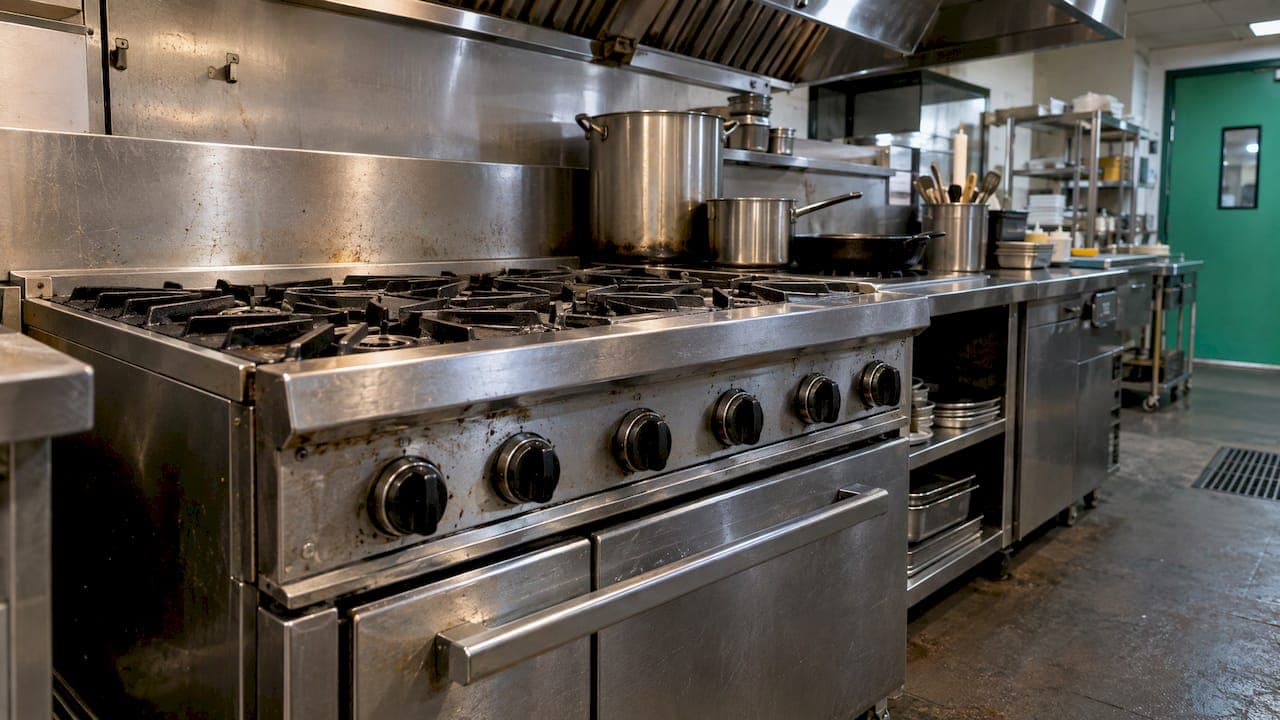
- Type of equipment. Items with a strong resale market, such as trucks, construction machinery, HVAC units, restaurant kitchen equipment and manufacturing tools, are simpler for a lender to value than highly customized machines.
- Useful life. Lenders usually match the term to how long the equipment will remain productive. A machine expected to last seven years will not normally be financed over ten.
- Seller. A quote from an established dealer or supplier gives the lender a clear, verifiable number.
This is also why a clean vendor quote is the single most useful document in the file. It tells the lender exactly what it is securing.
Typical terms to expect
Terms depend on the equipment, the amount and your profile, so treat any figure as a range rather than a rule. In general:
- Term length is tied to the useful life of the equipment, often running from a couple of years to around seven for common business assets.
- Down payment may be requested, particularly for used equipment, newer businesses or lower credit scores. A larger down payment reduces the lender's risk and can improve your odds.
- Repayment is typically in fixed installments, so the payment is predictable.
- Ownership is yours once the balance is paid and the lien is released.
Our published pricing for equipment financing starts at 0.8% per month. Your own rate depends on your application and the equipment. For comparison, our term loans start at 7% and our SBA loans at 6%. If you are deciding between buying and renting equipment, read choosing between a small business loan and equipment leasing.
Equipment leasing requirements
Owners often ask what credit score is needed for equipment leasing. Leasing requirements tend to look very similar to financing requirements: the lender checks credit, time in business, revenue and the equipment. The structure differs. With a lease you pay to use the equipment for a set period and then return it, renew or buy it, depending on the agreement. With financing you are buying the equipment and building ownership.

Because the underlying review is alike, preparing for one prepares you for the other. Our comparison of equipment leasing vs. equipment financing explains the practical differences for cash flow and ownership.
Are equipment loans hard to get?
For most established small businesses with consistent deposits, equipment loans are among the more accessible forms of business credit, precisely because the equipment secures the debt. They become harder when several weak points stack up: a very young business, a low score, irregular deposits and a purchase that is hard to value.
Steps that improve your chances:
- Request a realistic amount. Match the amount to the equipment quote and your payment capacity.
- Bring a larger down payment. Even a modest one reduces risk.
- Clean up the file. Make sure names, addresses and tax IDs match across every document.
- Show your deposits. Recent bank statements often matter more than a single weak month on a tax return.
- Pay down or resolve outstanding delinquencies before you apply, where you can.
- Choose a lender that works with your profile. Banks and credit unions often set stricter minimums, so owners turned away there can still be a fit for alternative financing.
To see how lenders weigh these factors together, read our guide to understanding loan eligibility.
How to apply: a step-by-step path
- Pick the equipment and get a quote. Ask the seller for a written quote with model, price and any delivery or installation costs.
- Check your numbers. Look up your personal credit score, count months in business and total your last six months of deposits.
- Gather your documents. Use the list above so you do not stall midway.
- Compare the structure. Decide between a loan, a lease or another product based on ownership goals and cash flow.
- Submit one complete application. A full file avoids back-and-forth requests.
- Review the offer carefully. Check the payment, term, total cost, down payment and any prepayment terms before you sign. Our considerations before signing up for a small business loan lists what to read closely.
Our perspective
We have worked with business owners in hundreds of different industries since 2009, from contractors and electricians to restaurants, retailers and manufacturers. The same pattern shows up again and again: the owner knows exactly which machine will help the business grow, and the delay comes from not knowing what the lender needs to see.
That is why we look at the whole business, not only a credit score. Revenue, time in business and the equipment itself all tell part of the story. Our approach is designed to work for a broad range of credit profiles, including owners who have been turned down by a bank or credit union.
We also believe speed matters. When a truck, oven or compressor is down, waiting weeks costs money. We aim to fund as soon as 24 hours after approval, and our equipment financing offers amounts up to $250,000.
Our advice is simple. Get a written quote, gather your last few months of statements and apply with a complete file. A clear application is the best foundation for a fast, fair decision.
Capital
Financing for your next piece of equipment
If you have a quote in hand and want to see what your business could qualify for, we offer equipment financing from 0.8% per month, designed for contractors, restaurants, retailers, manufacturers and other small businesses across the US. You can review amounts and how it works on our equipment financing page, or compare it with our other funding solutions.
If you are still weighing options, our examples of equipment financing options show how different businesses structure their purchases.
FAQ
What credit score do I need for equipment financing?
It depends on the lender. Published guidelines run from the mid-500s at some online lenders to 650 or higher at others, and a personal score of 600 or more is commonly cited as the general benchmark. A higher score widens your options, but revenue and time in business can offset a lower one.
How long do I need to be in business?
One year is a common benchmark for equipment financing, while many traditional banks and credit unions look for two. Startups can sometimes qualify with a down payment or strong personal credit, though the options are narrower.
What documents do I need to apply?
Expect to provide a photo ID, business details and tax ID, three to six months of bank statements and a quote or invoice for the equipment. Larger deals commonly add business tax returns and financial statements.
Can I finance used equipment?
Yes, in many cases. Lenders look at the age, condition and remaining useful life of the equipment, so used purchases may come with a shorter term or a larger down payment than new ones.
Are the requirements different for leasing?
The review is broadly similar: credit, time in business, revenue and the equipment. The main difference is the structure of the agreement, since a lease is about use of the equipment while financing builds ownership.
Sources
- How to Finance Equipment for Your Small Business, U.S. News
- Business Loan Requirements: What You Need to Qualify, Wall Street Journal