
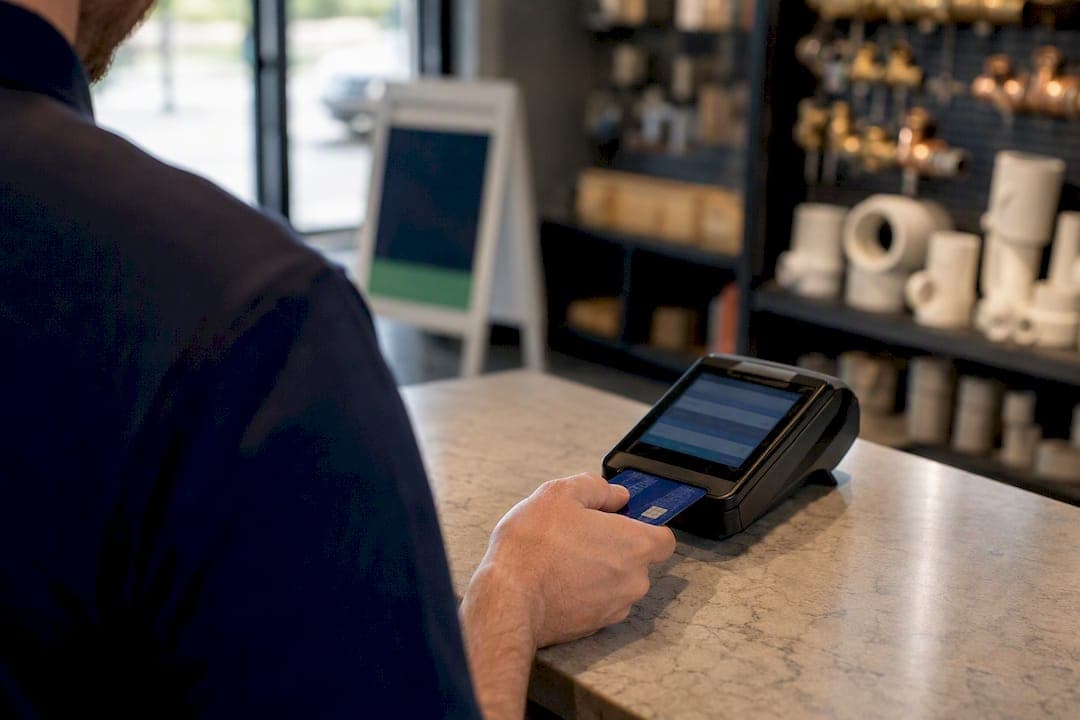
Surcharging credit card transactions is legal in most of the United States, but the rules are narrow and unforgiving. A handful of states, including Connecticut and Massachusetts, ban the practice outright, so location matters as much as math.
TL;DR:
- Surcharging credit card payments is prohibited in Connecticut, Maine, Massachusetts, and Puerto Rico, but allowed in most other states with restrictions.
- Colorado limits surcharges to 2% or the actual processing cost, whichever is lower, which is stricter than the networks' standard caps.
- Disclosures at multiple points and notification to acquirers 30 days before implementation are mandatory to stay compliant across all networks.
- Merchants must ensure their POS systems exclude debit and prepaid cards from surcharges and itemize surcharges on receipts to avoid violations.
- Surcharging a debit or prepaid card is illegal under all network rules, regardless of state law, and non-compliance can lead to fines or account termination.
Table of Contents
- Credit Card Surcharge Rules by State: A Quick Reference
- Visa, Mastercard, Amex, and Discover: How Network Caps Work
- Setting Up a Compliant Surcharge Program: A 7-Step Checklist
- What Happens When Merchants Get Surcharge Rules Wrong
- Surcharge, Cash Discount, or Convenience Fee: Which One Fits?
- What Small Merchants Consistently Get Wrong About Surcharging
- Where to Verify These Credit Card Surcharge Rules Yourself
- Sources
- FAQ
Credit Card Surcharge Rules by State: A Quick Reference
Before you touch your point-of-sale settings, you need to know whether your state even permits surcharging. This is the piece merchants skip, and it's the one that gets them fined.
Most states now allow credit card surcharges in some form, largely because a wave of court challenges over the past decade struck down blanket bans as unconstitutional restrictions on speech. But not every ban fell, and some states replaced their prohibitions with strict disclosure or cap requirements instead. The NFIB's state chart on surcharge and cash discount laws remains the most practical reference for tracking which states fall into which camp, and it's worth bookmarking if you operate in more than one.
Here's the landscape as it stands:
| State status | Examples | What it means for you |
|---|---|---|
| Prohibited | Connecticut, Maine, Massachusetts, Puerto Rico | Surcharging credit cards is not permitted; cash discounts are typically still allowed |
| Capped | Colorado | Surcharges limited to 2% or the merchant's actual processing cost, whichever is lower |
| Special disclosure required | New York | State law requires specific pricing display rules at point of sale, separate from federal disclosure norms |
| Generally allowed | Most other states | Surcharging is permitted, subject to card network caps and standard disclosure rules |
Connecticut, Maine, and Massachusetts have some of the oldest and most consistently enforced surcharge bans in the country. Puerto Rico maintains its own prohibition as well, which catches out mainland merchants who assume U.S. territories automatically mirror federal rules. None of these jurisdictions ban cash discounts, so merchants there still have a legal path to offset processing costs. Our comparison of surcharges versus cash discounts breaks down exactly how to structure that alternative.
Colorado is the state most merchants get wrong. Under Colorado's surcharge statute, the surcharge cannot exceed 2% or your actual cost of acceptance, whichever is smaller, which is tighter than the Visa or Mastercard network caps most merchants default to.
New York doesn't ban surcharging, but it does dictate exactly how the surcharged price must be displayed at the point of sale. Merchants there need pricing signage that shows the card price plainly next to the cash price, not buried in fine print. Get this wrong and you're exposed to a state-level dispute even if you've complied with every card network rule.
- Prohibited states include Connecticut, Maine, Massachusetts, and Puerto Rico.
- Colorado caps surcharges at the lower of 2% or the merchant's actual processing cost.
- New York enforces specific pricing display requirements at checkout.
- Court challenges have reshaped several state bans in the last decade, so a state's status can shift with new litigation or legislation.
- When you operate stores in multiple states, apply the strictest rule that touches any single location, not just your headquarters state.
That last point deserves emphasis. If you run five locations and one sits in a state that bans surcharging, you cannot apply a blanket surcharge policy company-wide. Multi-location merchants often set surcharge programs at the individual outlet level within their merchant account specifically so that a banned-state location stays on non-surcharging or cash-discount pricing while other outlets surcharge freely. A single POS system configured for one universal rule is how well-meaning merchants end up violating law in a location they forgot to check.
State surcharge bans have also faced ongoing constitutional and legislative challenges, meaning a rule that was enforceable last year might be blocked this year, or vice versa. That's not a reason to guess. It's a reason to verify your state's current status before you launch, and to check again periodically, since this area of law moves faster than most small business regulations.
Visa, Mastercard, Amex, and Discover: How Network Caps Work
State law tells you whether you're allowed to surcharge at all. Card network rules tell you how much you're allowed to charge once you clear that hurdle, and the two sets of rules stack on top of each other rather than replacing one another.
Visa sets the tightest formula among the major networks. Under Visa's merchant surcharging guidance, your surcharge cannot exceed your merchant discount rate for that specific card, or 3%, whichever is lower. Visa also requires disclosure at three separate points: at the entrance to your store or website, again at the point of sale before the transaction completes, and a third time on the printed or emailed receipt.
Mastercard allows surcharging within the merchant's cost of acceptance and publishes a hard ceiling of 4%, per Mastercard's surcharge rules for merchants. Mastercard also gives merchants a choice between applying a surcharge at the brand level (all Mastercard credit products) or the product level (specific card tiers), which offers more flexibility than Visa's single blended rate but adds a layer of complexity to your POS configuration.
American Express and Discover require the same fundamental parity and disclosure standard: if you surcharge one credit brand, you generally need to apply consistent treatment across all credit brands you accept, and disclosures must be equally visible regardless of which network the customer's card runs on. Singling out one network for a surcharge while leaving another untouched invites a complaint and, potentially, a network audit.
Card network caps at a glance: Visa limits surcharges to the merchant's discount rate or 3%, whichever is lower. Mastercard caps at 4% or actual cost of acceptance. Both explicitly exclude debit and prepaid cards from surcharging entirely regardless of state law.
Every network shares three operational requirements that trip up merchants who treat surcharging as a simple percentage bump:
- Populate the correct transaction field (Field 28 in network processing specs) so the surcharge amount is properly flagged, not folded into the base price.
- Itemize the surcharge as its own line on every receipt, digital or paper.
- Notify your acquirer and the relevant card networks at least 30 days before your first surcharged transaction runs.
Visa has said plainly that it monitors surcharge compliance through consumer complaints and its own mystery-shopping audits, which means clean, visible disclosure isn't just good practice. It's your actual defense if a customer disputes a charge or files a complaint with the network.
Setting Up a Compliant Surcharge Program: A 7-Step Checklist
Getting surcharging right is a sequencing problem as much as a legal one. Skip a step, or do them out of order, and you can end up compliant with the card networks but still in violation of state law, or vice versa.
- Verify state law for every location. Check the status of each store or service address individually, not just your corporate headquarters. If any location sits in a state with an unclear or disputed surcharge law, get a payments attorney to confirm before you proceed.
- Calculate your allowable surcharge. Compare your actual processing cost against the applicable network cap (3% for Visa, 4% for Mastercard) and use whichever number is lower. Never default to the network maximum without checking your own discount rate first.
- Notify your acquirer and card networks 30 days ahead. This isn't optional paperwork. Get written confirmation from your processor that the network notification was actually filed, not just requested.
- Configure your POS and website to exclude debit and prepaid cards automatically. Every credit surcharge program needs a system that can tell the difference between card types at the point of swipe, tap, or checkout, and itemize the surcharge as a distinct receipt line.
- Post disclosures at point of entry and point of sale. Signage at the door, a notice before the customer confirms the transaction, and a clear line item on the final receipt. Online, this means checkout page language before the payment button, not a footnote in your terms of service.
- Refund the surcharge whenever you refund the transaction. If a customer returns an item or disputes a charge, the surcharge amount goes back with it. Reconcile your surcharge income account monthly so you're not accidentally booking profit on refunded transactions.
- Monitor and audit regularly. Run periodic mystery-shopping checks on your own locations and review processor statements for surcharge-related complaints or chargebacks.
Pro Tip: Require your processor to hand you two things before you ever charge a customer: written proof that the network notification was filed, and a POS test report confirming debit and prepaid cards are correctly excluded from the surcharge rule. Both are cheap insurance against a network fine.
Merchants juggling multiple funding priorities alongside a surcharge rollout often find it easier to fold this into a broader review of processing costs. Our guide on reducing credit card processing fees walks through where surcharging fits against other cost-control levers.
What Happens When Merchants Get Surcharge Rules Wrong
The mistakes are predictable, and they cluster around the same handful of failure points every time. Surcharging a debit or prepaid card by accident, because the POS system wasn't configured to tell the difference, is the single most common violation. Close behind it: skipping acquirer notification, failing to itemize the surcharge as its own receipt line, charging above the merchant's actual discount rate or the network cap, and posting disclosures too late or too vaguely for a customer to notice before they pay.
The consequences scale with how long the violation runs. Card networks can levy fines directly against the merchant account, and repeated or severe violations can result in termination of processing privileges, which is often more damaging to a small business than any single fine. Customers who discover an unauthorized or non-disclosed surcharge can file chargebacks, dispute the charge with their card issuer, or in some states pursue a claim under consumer protection statutes. Federal fee-limitation provisions under Regulation Z, Section 1026.52, which cap certain penalty fees and set safe-harbor thresholds, add another layer of federal context to how aggressively fee practices get scrutinized industry-wide.
- Surcharging a debit or prepaid card, even unintentionally, is the most cited violation.
- Missing the 30-day acquirer/network notification window puts your whole program out of compliance from day one.
- Charging above your actual discount rate or the network's published cap, even by a fraction of a percent, is treated the same as charging far above it.
- Late or unclear disclosure is the single easiest fix and the most commonly ignored one.
The fix for all four is the same: get written confirmation of your network filing, keep your signage and receipt templates on file as proof of disclosure, and put a recurring calendar reminder on quarterly compliance reviews. None of that is expensive. All of it is cheaper than a terminated merchant account.
Surcharge, Cash Discount, or Convenience Fee: Which One Fits?
These three terms get used interchangeably by merchants and almost never mean the same thing to a card network or a state regulator.
A surcharge adds a distinct fee on top of your listed price specifically when a customer pays with a credit card. A cash discount works in reverse: you post a higher 'standard' price and give a discount to customers who pay cash, which keeps your listed price compliant even in states with surcharging prohibitions. A convenience fee applies only when a customer chooses an alternative payment channel they wouldn't otherwise use, like paying a bill by phone or through an online portal instead of in person, and it must apply regardless of card type, not just to credit cards.
- Cash discounts remain the safer legal default in states that prohibit surcharging outright.
- Convenience fees only apply to alternative payment channels, never as a blanket credit card fee at your regular checkout.
- Surcharges require the most disclosure and network compliance work but let you keep a single listed price.
- All three affect how you report income for tax purposes, so loop in your bookkeeper before choosing one.
For most single-location retailers debating the two, our breakdown of surcharge versus cash discount programs walks through the pricing psychology and tax mechanics in more depth than fits here.
What Small Merchants Consistently Get Wrong About Surcharging
Most surcharge guidance treats this as a math problem: calculate the cap, apply it, done. That misses the bigger risk, which is operational drift. A merchant sets up a compliant program on day one, then adds a second location six months later without re-checking that state's law, or switches POS vendors without confirming the new system still excludes debit cards. Compliance isn't a one-time setup. It's a maintenance habit.

When financial services advisors recommend on this, the standing recommendation is to apply the strictest jurisdiction rule across your entire operation rather than managing exceptions' location by location, and to keep every network notification in writing, permanently, not just in an email you might lose. Choose a processor or POS vendor that auto-detects debit and prepaid cards natively, because manual workarounds fail exactly when volume spikes. Beyond the software, build the human side: staff scripts for explaining the surcharge line item, signage that doesn't change without your sign off, and a monthly refund reconciliation so surcharge income never silently overstates your margin.
If cash flow pressure is what's pushing you toward surcharging in the first place, it's worth looking at whether a working capital loan or business line of credit solves the underlying problem faster than a fee restructure ever will.
— Capital
Where to Verify These Credit Card Surcharge Rules Yourself
Card network policy and state law both change, so don't treat any article, including this one, as your final word. Go to the source documents directly:
- Visa's merchant surcharging Q&A for the network's official cap and disclosure language.
- Mastercard's surcharge rules page for its 4% cap and notification process.
- CFPB Regulation Z, Section 1026.52 for federal fee-limitation context.
- The NFIB state chart on surcharge laws for a state-by-state legal summary.
- Your state's attorney general or department of revenue website for the most current local guidance.
This article is general information, not a substitute for advice from a qualified financial advisor. Consult a qualified financial professional about your own circumstances before acting on anything here.
Sources
- Visa — Merchant surcharging Q&A
- Mastercard — Merchant surcharge rules and fees for merchants
- CFPB / Regulation Z — §1026.52 Limitations on fees
- NFIB — Credit card surcharge and cash discount laws (state chart)
FAQ
Is it legal to charge 3% for a credit card surcharge?
Yes, in most states, provided the surcharge does not exceed your actual discount rate or the applicable network cap, whichever is lower. Under Visa's rules, 3% is the network's absolute ceiling, not a default rate every merchant can charge regardless of cost.
What states ban credit card surcharges?
Connecticut, Maine, Massachusetts, and Puerto Rico are commonly cited as prohibiting credit card surcharges outright, according to the NFIB's state law chart. Several state bans have faced legal challenges in recent years, so always confirm current status before launching a program.
Is it legal to charge 4% on a debit card?
No. Debit and prepaid cards cannot be surcharged under any circumstance, regardless of the percentage, under both Visa and Mastercard network rules.