
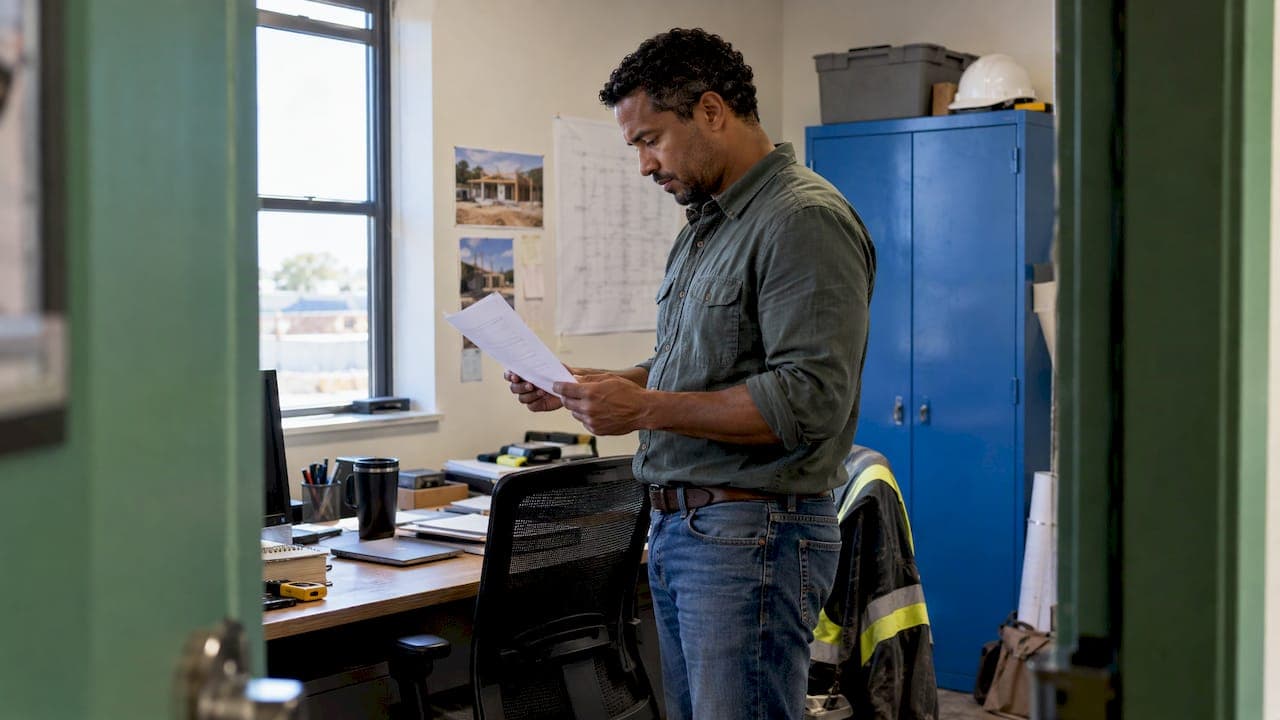
A denied business loan application is a setback, but it is rarely the final answer. Most denials trace back to a short list of causes: credit, cash flow, time in business, existing debt, collateral, or an application that did not fit the loan type. Once you know which one applied to you, you can fix it, reapply with a stronger file, or move to financing built for your situation.
This guide explains the common rejection reasons, how to get the lender's explanation in writing, how long to wait before trying again, what changes after a bankruptcy or an SBA denial, and which options to look at next.
TL;DR
- Banks have tightened standards for small firms, so a "no" often says more about the lender's current rules than about your business.
- Ask the lender for the specific reasons. If a credit report was involved, you can get a free copy and dispute errors.
- Fix the stated cause first (credit, cash flow, paperwork, loan type), then reapply. Many lenders suggest waiting a few months.
- A bankruptcy does not close the door permanently, but the typical wait is two to three years for traditional lending.
- Different products weigh different things. Revenue-based options look at sales more than at credit history.
Table of Contents
- Why business loans get denied
- How to find out exactly why you were denied
- What to do right after a denial
- Business loans after bankruptcy
- If an SBA loan application was denied
- How hard is it to get a $100,000 business loan?
- Financing options to consider after a denial
- Need funding while you fix your file?
- Our perspective
- Frequently asked questions
- Sources
Why business loans get denied
Lenders decide on one question: how likely is it that this business repays on time? Every reason below is a different way of answering that question with "not enough evidence yet."
The lending climate matters too. The Federal Reserve's October 2024 Senior Loan Officer Opinion Survey reported tighter standards for small firms, including higher premiums on riskier loans, stricter collateral requirements, and tighter covenants. If you were turned down at a bank, part of the answer may be the market and not your company.
Credit that is low, thin, or inaccurate
Credit is the most frequently cited reason. Lenders look at your personal credit, and at your business credit if it exists. A low score, recent late payments, high card balances, collections, or a very short credit history can each trigger a decline. Errors count too: an account that is not yours or a debt reported as open when it was paid can drag a score down without your knowing.
Not enough time in business
Many traditional lenders want to see a track record, often measured in years. A business that opened last spring has little history to evaluate, so the lender leans on the owner's personal finances. Startups hit this wall most often.
Cash flow that does not cover the payment
The SBA explains that lenders assess repayment ability from cash flow, and they may ask for a recent profit and loss statement, a cash flow statement, bank account details, assets, and investments. If your statements show thin margins, seasonal gaps, or payments that would consume most of your monthly cash, the answer is likely to be no for that amount.
Too much existing debt
A new loan payment is added on top of the obligations you already carry. If current debt service takes a large share of your income, the lender sees little room for another payment. Stacking several small advances or cards can produce this result even when sales are healthy.
Collateral problems
Secured loans depend on assets the lender can claim if payments stop. A business with few assets, or assets already pledged elsewhere, can be declined on a secured product even when the cash flow looks fine. Our guide to how collateral works in small business financing covers what lenders accept.
Incomplete or inconsistent paperwork
Missing tax returns, bank statements that do not match reported revenue, an unsigned form, or a business name that differs between documents can stop an application early. This is the most fixable reason on the list. We list the six documents small businesses should bring to get a business loan so you can check your file before submitting.
The wrong product for the purpose
Applying for a long-term loan to cover a two-month cash gap, or for a product the lender does not offer to your industry, can end in a decline that has nothing to do with your finances. Matching the product to the need is part of a good application.
Industry or eligibility rules
Some lenders limit the industries they will finance, and government-backed programs have their own eligibility rules. These are about fit, not about how well you run your business.
A note on fairness
Lenders cannot decline you for protected reasons. The Federal Trade Commission states that credit applicants cannot be denied based on race, color, religion, national origin, sex, marital status, or age if they can enter a binding contract. If you believe that happened, the reasons you request in the next section are your first piece of evidence.
How to find out exactly why you were denied
Guessing is the slowest way to fix a denial. Get the reasons.
- Read the notice. Under the federal Equal Credit Opportunity Act rules, a creditor must tell you the action it took. The rule requires either a statement of specific reasons or notice of your right to request them. For smaller businesses, the request window is generally 60 days from the notification, with the reasons due within 30 days of your request. Check the notice for the exact terms.
- Ask the lender directly. The SBA advises that after a rejection you ask what factors affected the decision and how to improve for future applications. Loan officers often tell you more in a phone call than the form letter does.
- Pull the credit report if one was used. When a denial rests on a credit report, the Consumer Financial Protection Bureau says you can get a free copy within 60 days, dispute inaccuracies, and add a statement if you still disagree after an investigation.
- Write the reasons down. Sort them into what you can change quickly (documents, errors, loan type), what takes months (credit utilization, cash flow), and what takes years (time in business).
What to do right after a denial
Resist the urge to send five new applications this week. Each application can leave an inquiry on your credit profile, and repeating the same file at different lenders usually repeats the same answer.
Step 1: Confirm you applied for the right financing
A quick check: is the amount in line with what your revenue can support, and does the term match how long the money will be useful? Equipment should usually be financed with equipment-based funding. A seasonal cash gap fits a line of credit or short-term working capital better than a multi-year loan.
Step 2: Fix the file
Use the reasons you collected. The table below pairs common causes with practical responses.
| Reason for denial | What to do before reapplying | Typical time to fix |
|---|---|---|
| Low personal credit score | Pay down card balances, bring accounts current, dispute errors | A few months to a year |
| Errors on a credit report | File disputes with the bureau and the reporting company | Weeks |
| Weak or uneven cash flow | Build several months of steadier deposits, cut avoidable expenses | 3 to 6 months |
| High existing debt | Pay off or consolidate the smallest or costliest balances | Months |
| Missing or mismatched documents | Reconcile statements and returns, complete every form | Days |
| Too little time in business | Build revenue history, consider products that weigh sales over age | Months to years |
| Collateral shortfall | Consider unsecured or revenue-based options, or equipment-secured financing | Varies |
Step 3: Prepare a cleaner application
The SBA recommends that before applying you check personal and business credit reports and scores, have your financials in order, and prepare a lean business plan covering your company, products, market, team, and financials. Our checklist on what to do before applying for a business loan walks through that preparation, and our piece on how to optimize your business loan application for approval shows how to present the numbers clearly.
Step 4: Pick the timing
Lenders do not publish one universal waiting period. A common guideline is to wait a few months so your credit, bank balances, and statements can show real change. Reapplying in a week with the same file is rarely useful. Reapplying after you have fixed the specific cause is. If your reasons were paperwork-related, you can move faster.
Business loans after bankruptcy
A bankruptcy filing makes lending harder, not impossible. According to Nolo, you can get a small business loan after bankruptcy, but the average wait is two to three years and varies by lender. Lenders consider how much time has passed, your current credit, and proof that your finances have improved, and you should be ready to explain what led to the filing.
A useful way to prepare:
- Document the recovery. Show steady deposits, on-time payments since discharge, and a stable business.
- Explain the cause plainly. A medical event, a lost major customer, or a one-time disruption is easier to understand than a vague answer.
- Rebuild credit deliberately. Keep balances low and pay everything on time, since recent history carries the most weight.
- Look at products that lean on revenue. Some financing is evaluated mainly on sales volume and bank deposits, which can fit owners whose credit is still recovering.
For government-backed loans the rules are stricter. For SBA 504 loans, a business or associate involved in a federal loan that defaulted and caused a federal loss must disclose it and consult the SBA about whether a waiver is needed, even if the debt was discharged in bankruptcy. Note that this form dates from 2018, so check the SBA's current materials before relying on the details.
If an SBA loan application was denied
SBA-backed loans offer attractive terms, and that is why lenders review them carefully. Denials usually come from the same areas as other loans: credit, business age, repayment capacity, and eligibility. The SBA also screens for past federal debt problems, as above.
The agency has also looked at how it asks about criminal history. In 2023 it said its proposed rule would replace detailed criminal-history questions with an incarceration question and database checks, noting that such questions can deter people from applying. If a past record was part of your denial, read the SBA's current eligibility guidance and ask the lender what applies today.
After an SBA decline, you have three practical paths: correct the cause and reapply, ask about a different lender's approach to the same program, or use faster financing while you strengthen your file. Our SBA loans page explains the program as we offer it, and our note on SBA and bank term loan updates tracks changes.

How hard is it to get a $100,000 business loan?
There is no single answer, because lenders weigh the same factors differently. What changes at $100,000 is the scrutiny. A larger amount means a larger payment, so lenders want to see revenue that supports it comfortably, a clean credit file, and often some form of collateral or a personal guarantee.
A simple self-test before applying: divide the expected monthly payment by your average monthly deposits over the last six months. If the payment takes a heavy share of deposits, either lower the request or extend the term. Asking for the amount your cash flow can carry gets approved more often than asking for the amount you wish you had. A smaller first facility, repaid on time, also builds the history that supports a larger one later.

Financing options to consider after a denial
Banks and credit unions are not the only source of capital. Different products measure different things, so a decline on one does not predict the result on another. Here are the options we offer and what each is built for, with starting prices as published on our site.
| Option | Best suited for | Published starting price |
|---|---|---|
| Working capital loans | Payroll, inventory, seasonal gaps | From 1.5% per month |
| Business line of credit | Recurring, uneven expenses | From 1.2% per month |
| Equipment financing | Machinery, vehicles, tools | From 0.8% per month |
| Business term loans | Planned expansion or a larger purchase | From 7% |
| SBA loans | Long-term, lower-rate financing | From 6% |
| Merchant cash advance | Businesses with steady card sales | From a 1.15 factor, one-off |
| Revenue-based financing | Businesses whose sales are stronger than their credit | From 1.8% per month |
| Bad credit business loans | Owners rebuilding credit | From 2.5% per month |
| Invoice factoring | Businesses waiting on customer invoices | 0.69 to 4.9% per invoice |
Real estate bridge loans are also available, with no published price. Rates and approval depend on your application.
Matching the product to the reason you were denied
- Denied for credit: Look at bad credit business loans or revenue-based financing, where your sales history carries more weight.
- Denied for short time in business: Our guide to business loans you should apply for as a startup covers what newer companies can use.
- Denied for collateral: An equipment loan uses the equipment itself as security, and unsecured options exist for those without assets.
- Denied because of slow-paying customers: Invoice factoring turns outstanding invoices into cash.
- Denied for payment size: A line of credit lets you draw only what you need.
If you are unsure what an advance or line costs over time, read our considerations before signing up for a small business loan so you can compare total cost and not only the headline number.
Need funding while you fix your file?
We have worked with business owners in hundreds of industries since 2009, and we are set up for owners whom banks and credit unions turned down. We say that funding can arrive in as little as 24 hours, and we consider a broad range of credit profiles, including bad credit. Our funding solutions page lists every product with its starting price, and you can apply from there.
If your plumbing, HVAC, retail, restaurant, or construction business needs working capital now, tell us what happened with your last application. It helps us point you to the product that fits. Our application workflow guide shows what to expect from start to finish.
Our perspective
Most owners who come to us after a denial believe the problem is their business. In our experience, it is more often a mismatch: the wrong product, the wrong lender, or the wrong timing. A bank that scores a file on years in business and credit history will naturally decline an owner whose strength is steady sales.
That is why we built our range around different strengths. A working capital loan, a line of credit, equipment financing, revenue-based financing, and invoice factoring each look at a different part of your company. Our goal is that a denial at one door starts a conversation at another, one that is quick, clear, and priced in a way a small business can plan around.
We would also tell any owner to keep a record of every application. Note the date, the product, the amount, and the reason you were given. After two or three attempts, that record tells you what to fix, and it makes your next application more convincing. We work with owners at that stage every day, and we are glad to help you choose the next step.
Capital
Frequently asked questions
What disqualifies you from getting a business loan?
The usual disqualifiers are low credit, too little time in business, cash flow that cannot support the payment, heavy existing debt, and missing collateral or paperwork. Eligibility rules for specific programs, such as SBA loans, add their own conditions. The lender's reasons will tell you which applied to you.
How soon can I apply again after a denial?
There is no single rule, but a common recommendation is to wait a few months so you can address the cause. If the problem was missing documents, you can often resubmit sooner. Use the waiting time to improve the specific item the lender named, and avoid sending many applications at once.
Can I get a business loan after bankruptcy?
Yes. Nolo reports that the average wait for a small business loan after bankruptcy is two to three years, and it varies by lender. Some financing that weighs revenue and bank deposits may be available sooner, so ask about the options for your situation.
Does being denied hurt my credit?
The denial itself does not lower your score, but the application may have created a credit inquiry, and the underlying issues, such as high balances or late payments, affect it. Reviewing your reports after a denial lets you catch errors early.
What can I do if I need money quickly after a rejection?
Look at products that move faster and evaluate different factors, such as working capital loans, merchant cash advances, or invoice factoring. Compare the total cost and repayment schedule, not only the starting rate, and choose the amount your cash flow can handle.
Sources
- The Fed: October 2024 Senior Loan Officer Opinion Survey
- Federal Trade Commission: Getting Business Credit
- CFPB: Regulation B, section 1002.9 Notifications
- CFPB: What can I do if my credit application was denied because of my credit report?
- SBA: How to Have a Stand Out Business Credit Application
- Nolo: Getting Small Business Loans After Bankruptcy
- SBA Form 2450: Eligibility Information Required for 504 Submission
- SBA: Returning Citizens Empowered to Start and Grow Businesses Under Proposed Rule