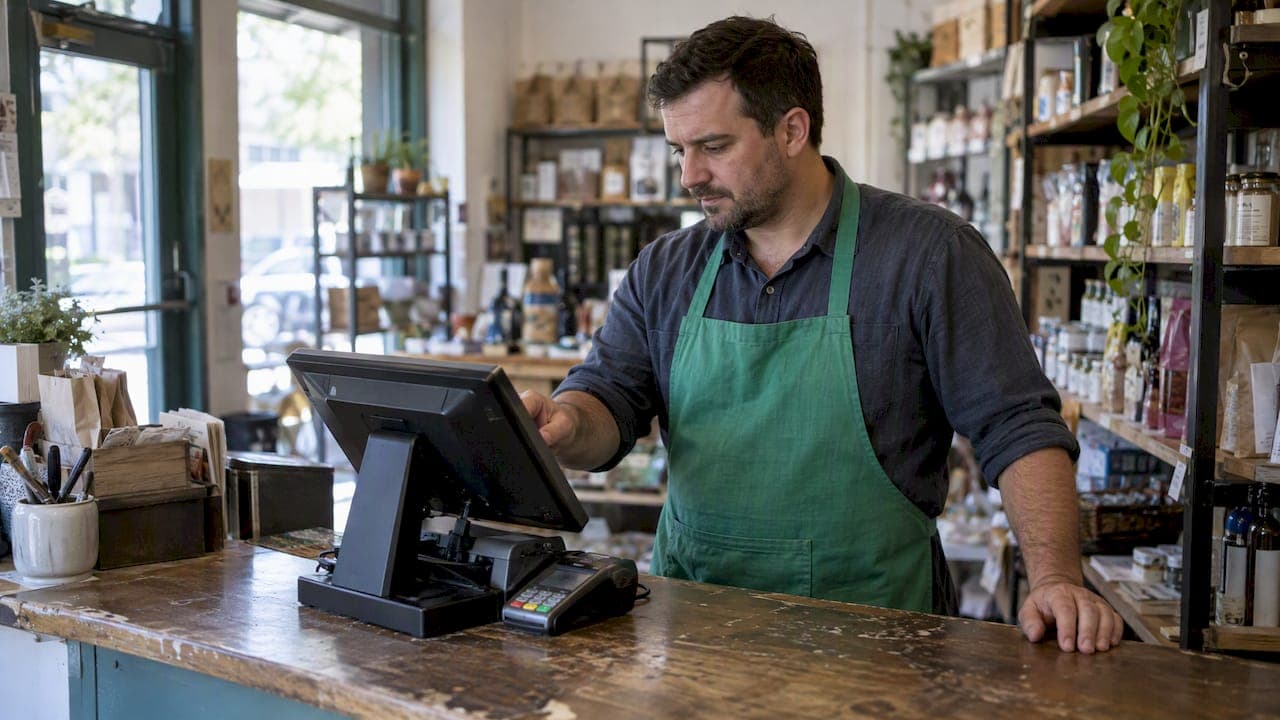
Financing a POS system means spreading the cost of terminals, software and setup over time instead of paying it all on day one. For most small businesses in the US, that comes down to five routes: equipment financing, an SBA-backed loan, a business line of credit, a term loan, or a merchant cash advance. The right one depends on how big the purchase is, how fast you need it, and how steady your card sales are.
This guide walks through each option, what a POS purchase really costs, how the tax rules treat it, and which contract terms deserve a second look. One note on terminology: "POS financing" also describes a different product, where shoppers split a purchase into installments at checkout. This article is about the other meaning, which is how a business pays for its own point-of-sale system.
TL;DR
- A POS system is more than a terminal. Budget for hardware, monthly software, processing fees, installation and training, then compare total cost over the full term.
- Equipment financing is usually the most natural fit because the POS hardware itself serves as the collateral. We publish rates starting from 0.8% per month on equipment financing.
- SBA 7(a) and 504 loans can carry more competitive terms, but they take longer. A line of credit or term loan can cover faster or mixed needs.
- Read any lease or processor contract for the total cost, the cancellation terms and who owns the hardware at the end. The FTC has sued processors over hidden terms.
- Ask a tax professional whether your purchase qualifies for a Section 179 deduction before you choose between leasing and buying.
Table of Contents
- What POS system financing actually covers
- What a POS system really costs before you finance it
- Your main financing options compared
- Lease or finance: what changes
- The tax side of buying a POS system
- Red flags in POS and processing contracts
- Choosing a POS setup worth financing
- Our perspective: match the money to the asset
- How to apply for POS financing: a step-by-step plan
- Funding your POS upgrade with Capital for Business
- FAQ
- Sources
What POS system financing actually covers
A point-of-sale system is the combination of payments hardware and software that lets a business take payment from customers. A small shop might need only a tablet, a card reader and a receipt printer. A restaurant could need several terminals, kitchen display screens, handheld ordering devices and a back-office integration. A contractor or HVAC company might need mobile readers for the field plus invoicing software.
Financing can cover any part of that package:
- Hardware: terminals, tablets, scanners, cash drawers, printers, kitchen displays.
- Software: a setup fee or a prepaid subscription, if the lender allows it.
- Installation and training: often a real cost for multi-lane stores and restaurants.
- Related upgrades: network equipment, inventory systems, loyalty tools.
A retail or restaurant owner replacing an aging system usually wants one lump sum or a clean equipment contract. A new business opening its first location may bundle the POS system with furniture, a build-out and opening inventory. That second situation points toward a more flexible product than a single-asset equipment contract.
What a POS system really costs before you finance it
Before you pick a financing product, define the amount. A common mistake is to finance only the sticker price of the hardware and then get surprised by the recurring costs. Experts quoted in Visa's research on small business digital payments stress that the cost of a system goes beyond hardware to include infrastructure fees, chargebacks and cybersecurity.
We suggest building a simple budget with four lines:
- One-time costs: hardware, installation, data migration from the old system, staff training.
- Monthly software: the subscription for the POS platform, plus add-ons such as online ordering, inventory, payroll or loyalty.
- Processing fees: the percentage and per-transaction charges on every card sale. These depend on your processor, your sales volume and your card mix.
- Compliance and risk: card-data security requirements, fraud investigation time and chargeback handling.
Then multiply the recurring items out over the length of the financing term. If you plan to pay off a loan in 24 months, add 24 months of software and processing to the hardware price. That total is what you are actually committing to.
A worked example
Suppose a restaurant owner plans a three-terminal system with a printer at each station and a handheld device for patio service. We will use round, hypothetical numbers for illustration only, not a quote.
| Item | Hypothetical amount |
|---|---|
| Hardware and installation | $9,000 |
| Training and menu setup | $1,000 |
| Total to finance | $10,000 |
If the owner finances $10,000 for 24 months, the financing cost is one line. The software subscription and card processing fees are separate and continue whether the hardware is financed or paid for in cash. The comparison that matters is the financing cost against the benefit the owner expects: faster table turns, fewer ordering errors, better reporting. Financing makes sense when that benefit comfortably outpaces the cost of money. The cost of money is a rate you can calculate. The benefit is an estimate, so keep your assumptions conservative.
Your main financing options compared
Each product below behaves differently on speed, cost and flexibility. The rates shown for our own products are the starting points we publish. Your actual rate depends on your business profile, time in business, revenue and the amount requested.
| Option | Best for | Our starting rate | Speed |
|---|---|---|---|
| Equipment financing | Buying POS hardware as a defined asset | From 0.8% per month | Fast |
| Business line of credit | Ongoing or phased upgrades | From 1.2% per month | Fast once set up |
| Working capital loan | A POS upgrade plus other costs | From 1.5% per month | Fast |
| Business term loan | Larger multi-location rollouts | From 7% | Moderate |
| SBA loan | Lowest cost when you can wait | From 6% | Slowest |
| Merchant cash advance | Quick cash with steady card sales | Factor rate from 1.15 | Fastest |
We cover each in turn.
Equipment financing
Equipment financing is built for this exact purchase. The lender funds the hardware, and the hardware itself typically secures the deal, which is one reason this product can carry a lower rate than unsecured options. Our rates start from 0.8% per month, and we offer equipment financing up to $250,000 with same day funding for qualifying businesses.
It works best when you can name what you are buying and get a quote or invoice from the vendor. It is a poorer fit when most of your POS cost is software subscriptions or services, because those are not assets a lender can take back. If you are unsure how the product is structured, our beginner's guide to equipment financing covers the basics, and six examples of equipment financing options show how different businesses use it.
SBA loans
SBA-backed loans reduce the lender's risk through a government guarantee, which generally leads to more competitive terms than conventional, non-guaranteed financing. The two programs that matter for a POS purchase are:
- 7(a): the SBA's primary program, with loan amounts up to $5 million, usable for machinery and equipment among other purposes.
- 504: long-term, fixed-rate financing for major fixed assets that promote business growth and job creation.
For a single POS system, an SBA loan is often more process than the purchase needs. It makes more sense when POS is one piece of a larger project, such as a second location or a renovation. The tradeoff is time: SBA applications involve more documentation and a longer wait than equipment financing or a line of credit. Our rates on SBA loans start from 6%.
Business line of credit
A line of credit gives you a limit to draw from as needed, and you pay interest on what you use. For POS, that suits owners who upgrade in phases: terminals now, a handheld ordering fleet next quarter, a new inventory module after that. It also covers the unplanned costs around a rollout, like an extra network drop or a replacement printer.

Our business line of credit starts from 1.2% per month, up to $250,000. If you want to understand how revolving credit behaves in practice, we explain it in what a business line of credit is.
Term loans and working capital loans
A business term loan gives you a lump sum repaid on a fixed schedule. It suits a larger purchase where you want a predictable payment, such as equipping several locations at once. See our business term loans, which start from 7%.
A working capital loan is more flexible about use. If the POS system is part of a wider push, say new equipment, extra stock and a marketing launch, one funding amount can cover the lot. Rates on working capital loans start from 1.5% per month. The compare-and-choose page for all of these is our funding solutions overview.
Merchant cash advance
A merchant cash advance (MCA) gives you a lump sum in exchange for a share of future sales. The Consumer Financial Protection Bureau's small business lending FAQs describe these as sales-based financing that is repaid through a holdback of receipts or fixed daily withdrawals. Instead of an interest rate, MCAs use a factor rate. Ours starts from 1.15, which means you repay $1.15 for every $1 advanced, before any other fees.
Because repayment follows your sales, an MCA can suit a business with steady card revenue that needs money quickly and does not have collateral. It is also usually the most expensive route per dollar borrowed, so we treat it as a bridge rather than a default. For a POS system with a clear price tag, equipment financing is normally cheaper. If you are weighing it anyway, read how merchant cash advance fees work and our merchant cash advance page before you decide.
Lease or finance: what changes
Many POS vendors offer a lease. A lease can lower the up-front cost, but it changes who owns the hardware and what happens at the end of the term. Financing generally means you own the equipment and build equity in it. Leasing can mean returning, upgrading or buying out the hardware, depending on the contract.
The questions to answer before signing either:
- What is the total amount you will pay across the term, not just the monthly figure?
- Who owns the hardware at the end, and at what price can you buy it?
- Can you cancel early, and what does that cost?
- Is the hardware locked to one processor, so that switching processors means replacing the terminals?
- Who pays if a terminal breaks?
Our comparison guides go deeper: equipment leasing versus equipment financing and choosing between a small business loan and equipment leasing.
The tax side of buying a POS system
How you structure the deal affects your tax bill, so talk to your accountant before you sign.
The IRS explains that costs for property that lasts more than a year may be recovered through depreciation, and some qualify for a Section 179 deduction. For tax years beginning in 2026, the maximum Section 179 expense deduction is $2,560,000, reduced when you place a large amount of qualifying property in service. For a typical small business buying a POS system, that ceiling is far above the purchase price, but eligibility depends on your circumstances.
The lease-versus-purchase distinction matters too. The IRS looks at the parties' intent to separate a true lease from a conditional sale. If an agreement is effectively a conditional sale, for example because you can buy the equipment at a nominal price at the end, you may have to treat it as a purchase and take depreciation rather than rent deductions. A certified public accountant or enrolled agent who knows your books can tell you which treatment applies to your contract. We are lenders, not tax advisors, so take that question to them before signing a long-term deal.
Red flags in POS and processing contracts
POS hardware is frequently sold together with a payment processing agreement. That bundle is where small business owners most often get hurt. The FTC has sued over this: in one case it alleged that a processor tricked small business owners into signing lengthy, complicated contracts with hidden terms. The agency's consumer alert advises owners to request a complete breakdown of monthly fees and the total cost of any hardware lease before signing.
Watch for:
- Claims of affiliation. A salesperson who says they represent a major card brand or your current bank deserves verification.
- Pressure to sign today. A fair offer survives a day of review.
- A long lease with no clear exit. Ask for the cancellation terms in writing.
- Fees that appear only in the fine print. Ask for every recurring charge listed on one page.
- Terms that differ from what was said. If the verbal and written versions disagree, believe the written one and negotiate it.
A useful habit: keep the financing and the processor decision separate. When you finance the equipment through an independent lender, you can choose the processor and software on their merits, and you are not locked in by a lease that only works with one vendor. It also gives you leverage to negotiate processing rates.
Choosing a POS setup worth financing
Financing a poor system just means paying for it longer. Check these before you borrow:
- Contactless and mobile acceptance. Visa's small business research found that 48% of surveyed small businesses identify contactless and mobile payment acceptance as a critical need. Make sure any system you finance supports both.
- Cloud-based versus on-premise. Cloud systems can reduce the burden of hardware-specific security certification, a point also raised in Visa's digital-transformation report cited earlier.
- Industry fit. A restaurant needs table management and tip handling. A retailer needs inventory sync. A contractor needs invoicing and mobile payments in the field.
- Integration. Check that it connects to your accounting software.
- Support. Find out what happens when the system goes down during a Friday dinner rush.
If your business sells online or you need payment acceptance for a higher-risk category, standard retail processors may not fit. In that case, look at payment processing built for high-risk and complex online businesses, which offers gateway integration and chargeback tools, and treat it as a separate decision from equipment funding.
If you are also thinking about letting your own customers pay in installments, a guide to payment plan options such as pay in 4 and longer financing explains how those structures are typically set up from the seller's side.
Our perspective: match the money to the asset
We have worked with small business owners since 2009, across construction, retail, restaurants, plumbing, HVAC, insurance agencies and many other industries. When owners come to us about a POS system, the pattern is consistent: they have a clear need, a short timeline and often a bank that has said no.

Our view is simple. Match the financing to the asset. A POS terminal is a defined piece of equipment with a useful life of several years, so it belongs in an equipment financing structure where the term is similar to the life of the hardware. A line of credit is better for the phased or unpredictable parts. A merchant cash advance is a tool for urgency, not a first choice for a purchase you can plan.
We also believe owners should see the full cost before they sign. Whatever product you choose, ask for the total repayment amount, the term, the payment schedule and any fees in writing, and compare them to at least one alternative. Our funding is available for a broad range of credit profiles, including owners who were declined by banks and credit unions, and many applicants can see funding in as little as 24 hours. Speed is useful, but it never replaces reading the terms.
— Capital
How to apply for POS financing: a step-by-step plan
- Get quotes for the system. Ask at least two vendors for itemized pricing covering hardware, software, installation and training.
- Separate one-time from recurring costs. Only the one-time costs and the hardware are typically financed.
- Decide how much you need. Add a modest buffer for cables, a spare reader or a delay.
- Check your numbers. Know your monthly revenue, time in business and any outstanding debts. Lenders will ask.
- Compare two or three products. Use total repayment, not the monthly payment alone.
- Review the tax treatment. Ask your accountant about Section 179 and lease classification.
- Apply and read the final terms. Confirm the amount, term, fees and early payoff conditions before you sign.
If you are a startup without much operating history, our guide to business loans to apply for as a startup lays out which products are typically within reach early on.
Funding your POS upgrade with Capital for Business
If you know what you want to buy, our equipment financing is the place to start: rates from 0.8% per month, up to $250,000, and same day funding for qualifying businesses. If your project mixes hardware with other costs, our funding solutions include lines of credit, working capital loans and more. Tell us what you are buying and we will help you find the structure that fits.
FAQ
What is a POS loan?
A POS loan, in the business sense, is money borrowed to buy a point-of-sale system, often as equipment financing secured by the hardware. The term is also used for loans that pay merchants upfront while customers repay in installments, so check which meaning a lender intends. For your own system, compare the total repayment, not only the monthly payment.
Can I get POS financing with bad credit?
Often yes, though the cost is higher. Equipment financing relies partly on the value of the hardware, and other products weigh your revenue heavily. Our bad credit business loans start from 2.5% per month. A bank may decline the same application, so it is worth asking a lender that works with a wider range of credit profiles.
Is it better to lease or finance a POS system?
Financing generally means you own the equipment and build equity, while leasing can lower the first payment but leave you with returns, buyouts or lock-in. The right answer depends on how long you will keep the hardware and how your accountant classifies the contract. Ask for the total cost of each and who owns the system at the end.
Can I deduct the cost of a POS system?
Possibly. Equipment that lasts more than a year may qualify for depreciation or a Section 179 deduction, and for 2026 the Section 179 limit is $2,560,000 per the IRS. Whether your purchase qualifies depends on your situation, so confirm it with a tax professional before filing.
Which financing option is cheapest for a POS system?
SBA loans and equipment financing generally cost less than merchant cash advances or revenue-based products. SBA loans take longer, so equipment financing is often the practical balance of cost and speed. Compare the total repayment across offers.
Sources
- SBA: 7(a) loans
- SBA: 504 loans
- CFPB: Small business lending rule FAQs
- IRS: Publication 946, How To Depreciate Property
- IRS: Income and expenses FAQ on leases and conditional sales
- FTC Consumer Advice: Payment processor sales pitches tricked small business owners
- Visa: Digital transformation of SMBs
- Visa: Small business special report, the digital imperative