
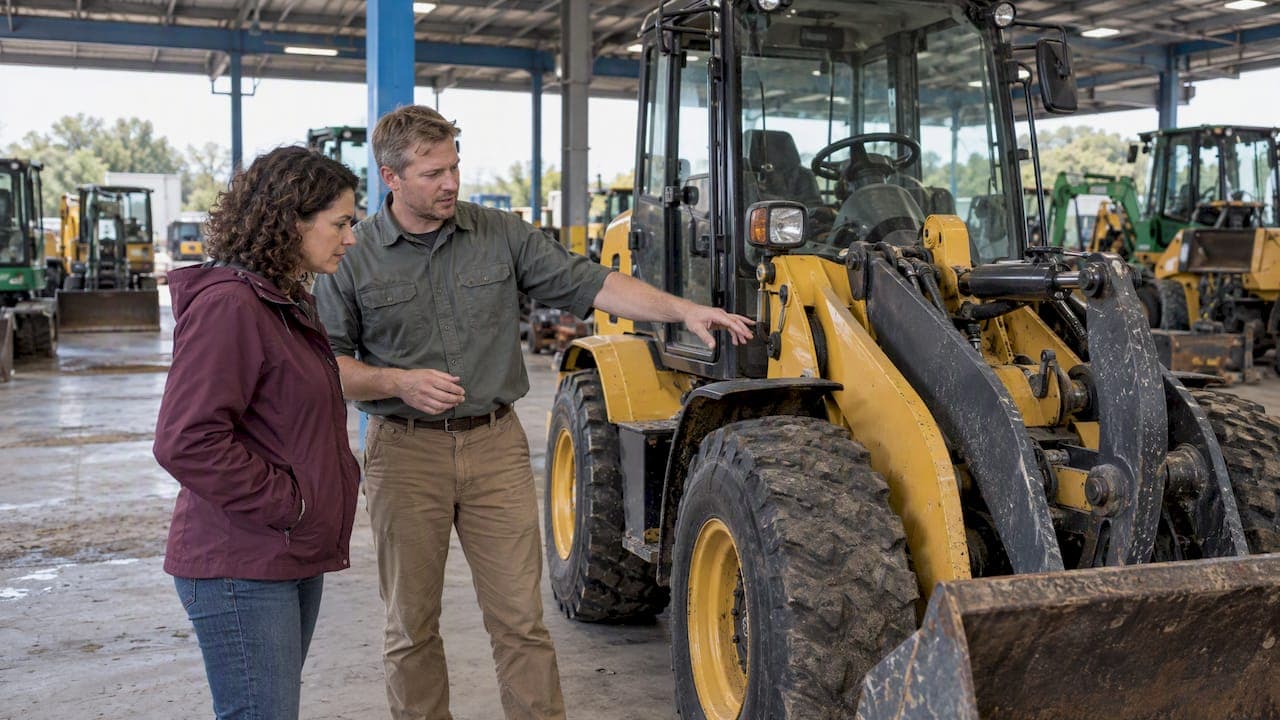
Some equipment financing can be approved without a personal guarantee, but it is the exception, not the rule. Lenders are most flexible when the business is established, the equipment is easy to resell and the down payment or collateral is strong. If your business is young or the equipment is specialized, expect to be asked to guarantee the debt personally, and plan to negotiate its terms instead of avoiding it.
This guide explains why lenders ask for a guarantee, which deals are most likely to skip it, what lenders ask for in its place, and what to check before you sign one.
TL;DR
- Most small-business debt carries a personal guarantee: in a Federal Reserve survey, 59% of employer firms with outstanding debt used one.
- Equipment financing is easier to place without a guarantee than unsecured borrowing, because the equipment itself secures the loan. Strong business credit, time in business and resalable equipment help most.
- Lenders that waive the guarantee often ask for a larger down payment, extra collateral, a lien on business assets or a higher rate instead.
- If you do sign, negotiate the scope: a limited guarantee, a cap, a burn-off date, or a guarantee tied to a specific piece of equipment.
- Read the default terms first. A personal guarantee can put your home and savings behind a business debt.
Table of Contents
- Why lenders ask for a personal guarantee in the first place
- When equipment financing can work without a guarantee
- What lenders ask for instead of a guarantee
- Where guarantees are fixed: SBA financing
- Financing versus leasing when you want less personal exposure
- Our perspective
- How to check and negotiate a personal guarantee
- Worked example: a catering van
- Does credit still matter?
- A step-by-step approach to your application
- Work with us on your equipment financing
- FAQ
- Sources
Why lenders ask for a personal guarantee in the first place
A personal guarantee is a written promise that you will repay the debt from your own assets if the business cannot. It exists because a business entity, such as an LLC or corporation, normally shields its owner from business debts. The guarantee removes that shield for one specific loan.
It is common. The Federal Reserve Banks' 2026 Report on Employer Firms, based on a 2025 survey, found that 59% of employer firms with outstanding debt used a personal guarantee to secure it, and 51% used business assets. Many firms use both. So if a lender asks you to sign one, you are looking at the standard, not a red flag.
From the lender's side, equipment is useful security but imperfect. It loses value with use, it can be hard to locate and repossess, and the resale market for some machines is thin. The guarantee covers the gap between what the equipment sells for and what you still owe.

Guarantee versus collateral versus lien
These three terms get mixed up, and the difference matters when you compare offers.
| Term | What it pledges | What it means for you |
|---|---|---|
| Equipment collateral | The specific machine, vehicle or tool you are buying | The lender can repossess and sell it if you default |
| Blanket lien | Business assets more broadly, such as inventory, receivables and other equipment | Other business property can be claimed, and it can limit future borrowing |
| Personal guarantee | Your personal assets, such as savings, investments or a home | You can be pursued personally for any shortfall |
A loan can be secured by the equipment and still carry a guarantee. Lenders describing a loan as "unsecured" usually mean there is no specific asset pledged, not that there is no legal recourse. Industry commentary notes that lenders in that space almost always file blanket liens and require owner guarantees. That is why a "no collateral" pitch is not the same thing as "no personal risk."
When equipment financing can work without a guarantee
No rule says equipment lenders must waive the guarantee, and no lender is obliged to. Whether it is waived comes down to how little risk the lender sees. These factors tend to move a deal in that direction.
The equipment is easy to resell
A lender's real question is what the machine would fetch if it had to take it back. Federal credit union examiner guidance on collateral and loan-to-value ratios says newer collateral in good condition supports a relatively higher loan-to-value ratio, while assets with limited alternative uses, or used equipment with limited useful life, warrant a lower one. That guidance is written for credit unions, but the logic is how most lenders think.
In practice:
- Easier to finance on the asset alone: late-model trucks and trailers, common construction equipment, standard kitchen equipment, widely used computers and medical devices from major manufacturers.
- Harder: custom-built machinery, equipment installed into a building, older units with few buyers, and anything where the only logical buyer is another business in your exact niche.
If you are buying a specialized line, such as automated packaging equipment, ask the manufacturer what financing it offers. Some builders offer manufacturer lease-purchase programs that tie the terms to the machine itself, which can change what a lender needs from you personally.
The business has a track record
Lenders look at time in business, revenue consistency, business credit history and the strength of your bank balances. A company with several years of steady deposits and a clean payment record gives a lender evidence to rely on in place of a personal promise. A startup has no such record, so the owner's personal credit and guarantee fill the gap. If you are new, our guide to business loans to apply for as a startup covers realistic options.
You put more money in
A bigger down payment cuts the amount the lender can lose. If you finance 100% of an asset, the lender is exposed from day one, because the equipment is worth less the moment it is installed. Putting 15% to 30% down, where your cash flow allows it, often gives you a stronger hand when you ask to limit or drop the guarantee. Whether a given lender agrees is its own decision.
The deal is small relative to your business
A $12,000 piece of equipment for a company with $2 million in annual revenue is a very different risk than a $200,000 purchase for a business two years old. Smaller tickets against solid financials are the most likely to be approved on the business's merits alone.
What lenders ask for instead of a guarantee
When a lender drops the guarantee, it usually still needs protection somewhere else. The same NCUA guidance states that additional collateral may be warranted for less-marketable assets or higher-risk loan relationships. Expect one or more of these:
- A larger down payment. Less money financed means less to lose.
- Additional collateral. Other equipment, a vehicle or real estate owned by the business.
- A blanket UCC lien. A public filing that gives the lender a claim on business assets.
- A higher rate or shorter term. The lender prices in the added risk and recovers its money faster.
- A deposit or reserve. Some lenders hold back one or two payments.
- Corporate guarantees. A parent company or affiliated business guarantees the debt instead of you.
Each has a cost. A blanket lien can block you from pledging the same assets to another lender later. A higher rate adds up across the term. Compare the total cost of each version of the deal, not just whether the word "guarantee" appears.
Where guarantees are fixed: SBA financing
If you are considering a government-backed loan, the guarantee is not negotiable. The SBA's unconditional guarantee form states that individuals who own 20% or more of a small-business applicant must provide an unlimited personal guaranty for applicable SBA lending. The underlying rule, 13 CFR § 120.160, generally requires holders of at least a 20% ownership interest to guarantee, and allows SBA or delegated lenders to require other individuals or entities to give full or limited guarantees.
So SBA loans offer long terms and low rates, but they are the wrong place to look if avoiding a guarantee is your priority. For smaller equipment needs, the SBA also runs microloans, which can fund machinery and equipment, up to $50,000 with a maximum repayment term of seven years. Microloan lenders set their own collateral and guarantee requirements, so ask each intermediary directly.
If you want to compare the SBA route with conventional options, our overview of SBA and bank term loan updates is a good starting point.

Financing versus leasing when you want less personal exposure
Leasing is another path. With a lease, the lender or lessor owns the equipment, and you pay to use it. Because the asset stays titled to the lessor, some owners find the credit conversation easier, especially for equipment that holds value. A lessor may still ask for a guarantee, particularly from a newer company, so do not assume a lease is automatically guarantee-free.
The tradeoffs:
- Loan or financing agreement: you own the equipment, build equity and can usually claim depreciation or related tax treatment (confirm with your accountant).
- Lease: lower payments are common, and you can often upgrade at the end, but you may not own the machine unless the contract includes a buyout.
We compare these in detail in Choosing between a small business loan or equipment leasing and Equipment Leasing vs. Equipment Financing.
Our perspective
We work with owners in construction, restaurants, HVAC, plumbing, retail, manufacturing and many other trades, and the question we hear most about guarantees is a practical one: "Can I get this machine without putting my house on the line?"
Our honest answer is that it depends on the deal, and we would rather tell you that up front than promise something a lender will not deliver. What we can say is that equipment financing is one of the easier products to structure around the asset. The machine is the security, so we look at the equipment, your time in business, your cash flow and how much you want to put down, not only at a credit score.
We also built our approach for owners that banks and credit unions have turned down. Our equipment financing is designed for fast decisions, with funding as soon as 24 hours on qualified approvals, and our team will walk you through what a given offer requires of you before you accept it. If a guarantee is part of the picture, we will help you understand its scope and look for the version that limits your exposure.
The best outcome is a financing structure you fully understand, with payments your business can carry comfortably.
Capital
How to check and negotiate a personal guarantee
If your offer includes a guarantee, you still have options. Read the document before the rate sheet. The consequences in default are spelled out there.
Know what is at stake
A guarantor can be pursued for the debt. According to Bankrate's explanation of personal guarantees, if the business defaults, a lender may pursue personal assets such as the owner's home, personal savings or investments to satisfy the debt. A personal guarantee can also show up in your personal credit profile if the account defaults. Talk to an attorney before signing any guarantee on a large equipment purchase, and to your accountant about how the debt fits your finances.
Questions to ask the lender
- Is the guarantee unlimited or limited to a set dollar amount or percentage?
- Is it continuing, covering future debts too, or does it apply to this transaction only?
- Does it fall away after a number of on-time payments or once the loan balance drops below the equipment's value?
- Is it a full payment guarantee or a collection guarantee, where the lender must first pursue the business and the equipment?
- Who else must sign? A spouse's signature may be requested in some cases, and you should find out why.
- Is there also a blanket lien, and what does it cover?
Negotiation levers
Owners tend to have the most room when they bring something to the table. Our guide to personal guarantee costs and negotiation levers goes deeper, but the main moves are:
- Offer a larger down payment in exchange for a limited guarantee.
- Ask for a cap, such as a guarantee for the unpaid balance after the equipment is sold, up to a fixed amount.
- Request a burn-off clause, so the guarantee ends after 12 to 24 months of on-time payments.
- Split the guarantee among owners in proportion to their ownership, instead of each being liable for 100%.
- Offer additional business collateral to replace the personal promise.
- Bring stronger documents: bank statements, profit-and-loss statements, tax returns and equipment quotes from reputable vendors.
Worked example: a catering van
Say a caterer needs a refrigerated van priced at $42,000. Here is how the choices might compare. The numbers are for illustration only and are not an offer.
| Structure | Down payment | Guarantee | What the lender gets |
|---|---|---|---|
| Standard financing | 10% ($4,200) | Unlimited personal | Van title, guarantee |
| Larger down payment | 25% ($10,500) | Limited, capped at the unpaid balance | Van title, limited guarantee |
| Asset-heavy structure | 30% ($12,600) plus a second vehicle pledged | None requested | Van title, second vehicle, blanket lien |
The third row removes the personal risk but gives up more business assets and cash up front. Whether that is the right trade depends on how much cash the business can part with and whether pledging a second vehicle would leave it short if a job falls through.
Does credit still matter?
Yes, in two ways. Business credit and cash flow drive whether you are approved. Personal credit often still gets pulled, particularly when the business is young. Lenders working with weaker profiles may price the loan higher instead of declining it. If your credit is a concern, read how owners get equipment loans despite a low credit score and our guide on bad credit business loans. Some "no credit impact" tools let you check eligibility with a soft inquiry, so ask whether a lender's prequalification will affect your credit before you submit.
If you are comparing structures, six examples of equipment financing options shows how loans, leases and other arrangements differ in practice. And if you are still sorting out how personal and business borrowing interact, see how business loans differ from personal loans.
A step-by-step approach to your application
- Get quotes for the equipment. A vendor quote with make, model, age and price lets a lender judge resale value.
- Decide your down payment range. Know what you can pay without starving working capital.
- Gather documents. Typically recent bank statements, business tax returns or financial statements, a copy of your business license and the equipment quote.
- Ask upfront about guarantee requirements. Say that you would like to understand the guarantee, or whether the deal can be structured without one.
- Compare total cost. Include the rate, fees, down payment, term and any liens, not just the monthly payment.
- Read the default section. Then have an attorney review any guarantee.
Work with us on your equipment financing
Capital for Business offers equipment financing up to $250,000, with rates starting from 0.8% per month. We have worked with business owners across many industries since 2009, and we aim to give an answer quickly, with funding in as little as 24 hours once approved.
Tell us what you need to buy and how your business operates, and we will explain what the offer would require, including any guarantee, before you decide. You can also see everything we offer on our funding solutions page.
FAQ
Can I get equipment financing with no personal guarantee?
Sometimes. It is most likely when the business has a solid operating history, the equipment is easy to resell and you can contribute a meaningful down payment. Newer companies are usually asked to guarantee. Lenders that waive the guarantee often ask for extra collateral, a lien or a higher rate in exchange.
Is equipment financing considered secured?
Yes, usually. The equipment you are buying serves as collateral, so the lender can take it back if you default. That security can reduce the need for other protections, but it does not automatically remove a guarantee or a blanket lien. Ask which of these the lender plans to use.
Does an SBA loan require a personal guarantee?
For applicable SBA lending, yes. SBA rules generally require owners of 20% or more of the business to give an unlimited personal guaranty. Other individuals or entities may be asked to give full or limited guarantees. Check the program's terms with the lender before applying.
What happens if I default on a loan I personally guaranteed?
The lender can pursue you for the unpaid balance after the equipment is sold, and potentially claim personal assets such as savings or property, depending on the contract and state law. Talk to an attorney before signing, and contact your lender early if you expect trouble making payments, since many will discuss options before a default.
Can I negotiate a personal guarantee down instead of removing it?
Often, yes. You can ask for a cap on the amount, a burn-off after a period of on-time payments, or a guarantee shared among owners by ownership share. A larger down payment or extra business collateral strengthens your request.
Sources
- 2026 Report on Employer Firms, Federal Reserve Banks
- Unconditional Guarantee, U.S. Small Business Administration
- 13 CFR Part 120 Subpart A, eCFR
- Microloans, U.S. Small Business Administration
- Collateral, NCUA Examiner's Guide
- Unsecured Business Loans: How They Work, TurboFunding
- Personal Guarantee For A Business Loan, Bankrate
- Lease Purchasing Packaging Machines, KBW Packaging