
What is a microloan for contractors?
A microloan for contractors is a small business loan, typically up to $50,000, designed to help independent contractors and tradespeople cover startup costs, equipment purchases, or working capital gaps. The U.S. Small Business Administration reports the average microloan is about $13,000, which fits the real-world needs of most contractors who want to buy tools, cover payroll between jobs, or stock up on materials before a project kicks off.
The SBA does not lend directly to contractors. Instead, it funds a network of nonprofit, community-based intermediaries that handle applications, set loan terms, and make credit decisions independently. These intermediaries also provide management training and business counseling alongside the financing, so you get more than just a check.
Key features that make microloans well suited for contractors:
- Loan amounts from a few hundred dollars up to $50,000
- Repayment terms up to six years
- Interest rates generally in the 8%–13% range
- Flexible eligibility criteria set by local intermediaries
- Access to business coaching and technical assistance
- Usable for equipment, supplies, working capital, and more
For a contractor running a lean operation, this combination of accessible capital and hands-on support is often more practical than applying for a traditional bank loan.
Who qualifies for a contractor microloan?
Eligibility for SBA microloans is more flexible than most contractors expect, but a few factors carry real weight. Business structure matters: operating as an LLC or corporation generally strengthens your application, while sole proprietors without a formal business designation can face additional hurdles in SBA programs. Forming a legal business entity before applying is one of the most practical steps you can take.

Credit history plays a role, though local intermediaries have discretion to work with borrowers who have imperfect credit. Each nonprofit lender sets its own credit standards, so a rejection from one does not mean you are ineligible nationally.
Documents lenders typically require include:
- A written business plan or business summary
- Cash flow projections for the next 12 months
- Recent personal and business bank statements
- Government-issued photo ID
- Tax returns (personal and business, if applicable)
- Collateral documentation or agreement to a personal guarantee
Revenue thresholds vary by intermediary, but lenders generally want to see that your contracting business has a realistic path to repayment, even if it is early-stage. If your income is seasonal or project-based, documenting your contract pipeline can substitute for steady monthly revenue.
How can contractors use microloan funds?

Microloans cover a broad range of operational needs, which is one reason they fit contractor businesses so well. The SBA explicitly permits using microloan funds for working capital, inventory, supplies, furniture, fixtures, machinery, and equipment. That list maps almost directly onto what a contractor spends money on day to day.
Common uses for contractors include:
- Working capital: Covering payroll, insurance premiums, or subcontractor payments while waiting on client invoices
- Equipment and tools: Purchasing or repairing power tools, compressors, scaffolding, or specialty machinery
- Materials and supplies: Buying lumber, pipe, wiring, or other job-specific materials before a project starts
- Fixtures and furniture: Outfitting a small office or showroom space
- Marketing expenses: Building a website, printing business cards, or running local ads to attract new clients
- Business expansion: Taking on a second crew or entering a new service area
One thing microloans cannot fund is paying off existing debt or purchasing real estate. Keeping those restrictions in mind helps you plan exactly how to allocate the funds before you apply.
How to apply for a contractor microloan
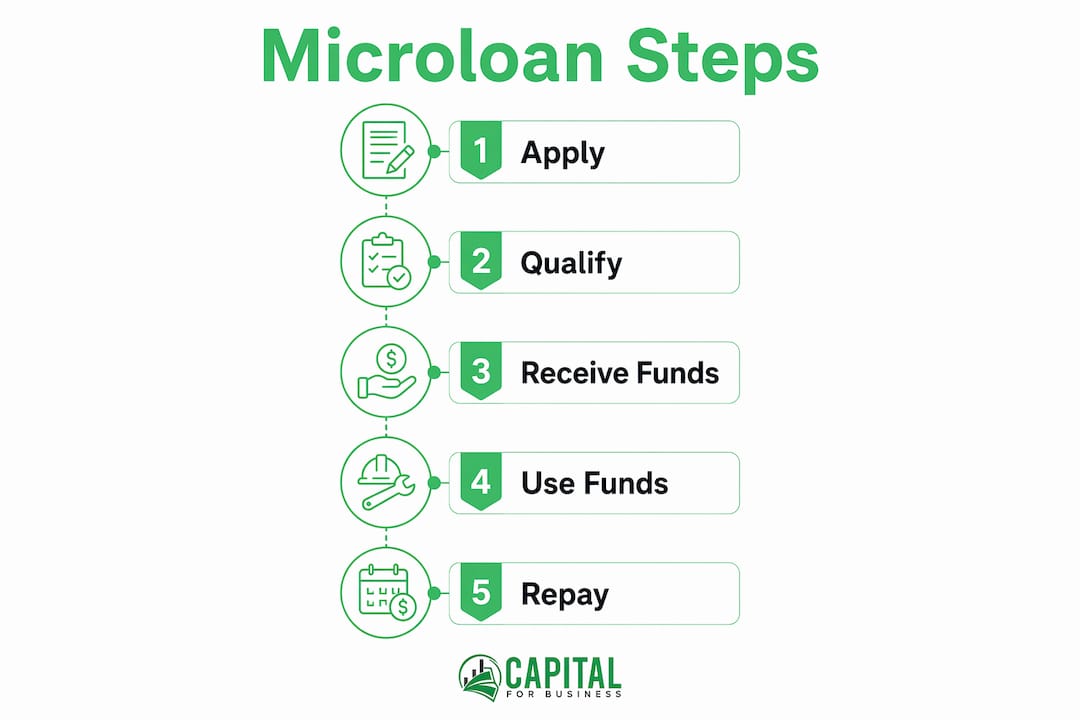
The application process follows a clear sequence, and preparing your documents in advance cuts the timeline considerably.
- Find an SBA-approved intermediary. Use the SBA's lender locator to identify nonprofit microloan lenders in your area. Each operates independently, so terms and requirements differ.
- Request an application package. Contact the intermediary directly and ask what their specific documentation checklist looks like.
- Prepare your business plan and financials. Lenders want a clear picture of what your contracting business does, how it earns money, and how you plan to repay the loan.
- Submit your application. The intermediary reviews your file, runs a credit check, and may request additional information.
- Complete any required training. Some intermediaries require borrowers to attend a business workshop before funds are released.
- Receive funds and begin repayment. Once approved, funds are typically disbursed quickly, and your repayment schedule starts shortly after.
Key documents to have ready:
- Business plan with a clear description of services and target market
- 12-month cash flow projection
- Three to six months of bank statements
- Personal and business tax returns
- Photo ID and Social Security number
- Any existing contracts or letters of intent from clients
Pro Tip: Before you submit, ask the intermediary whether they offer pre-application counseling. Many SBA-approved lenders will review a draft business plan and flag weaknesses before you formally apply, which meaningfully improves your approval odds.
Personal guarantees are standard for microloans. If your business cannot repay, you are personally responsible. Collateral requirements vary, but some lenders will accept business equipment or accounts receivable as security.
What are the repayment terms for contractor microloans?
Microloans carry interest rates of roughly 8%–13% and must be repaid within a maximum of six years. Most lenders structure payments monthly, though the exact schedule is set by the intermediary at the time of approval. A shorter term usually means higher monthly payments but less total interest paid over the life of the loan.
Repayment obligations are firm. Microloans are not grants and missing payments damages your credit score and your relationship with the lender. Late or missed payments can also affect your ability to access future financing, including larger loans as your contracting business grows.
A few repayment realities contractors should plan for:
- Monthly payments are fixed and begin shortly after disbursement
- Prepayment is generally allowed without penalty, reducing total interest cost
- Defaulting triggers collection action and credit reporting
- Strong repayment history with a microloan lender can open doors to larger credit lines later
Contractors with seasonal income should discuss payment timing with the lender upfront. Some intermediaries will work with you on a schedule that aligns with your busiest billing periods.
Practical tips for managing microloan financing
Microloans work best as one piece of a broader funding plan, not a standalone solution. Combining a microloan with a business line of credit or a relationship with a local bank gives you more flexibility as your project volume grows. Capitalforbusiness works with contractors across the country to build that kind of layered financing approach, connecting them with working capital solutions that complement smaller SBA-backed loans.
Keeping clean financial records from day one pays off quickly. Lenders at every level, from nonprofit intermediaries to commercial banks, make faster decisions when your books are organized and your cash flow statements are current.
SBA-approved intermediaries provide management and technical assistance alongside funding, and contractors who use that support tend to manage their loans more effectively. Think of the lender relationship as a resource, not just a transaction.
Pro Tip: Build a direct relationship with your intermediary lender before you need a second loan. Lenders who know your business history and repayment track record are far more likely to approve a larger amount or better terms on your next application.
Advantages and disadvantages of microloans for contractors
Advantages:
- Accessible to startups and contractors with limited credit history
- Loan amounts match the real capital needs of small contracting operations
- Bundled business coaching adds value beyond the funds themselves
- Flexible eligibility criteria compared to traditional bank loans
- Repayment terms up to six years keep monthly payments manageable
Disadvantages:
- Loan cap of $50,000 may not cover larger equipment purchases or project startup costs
- Interest rates of 8%–13% are higher than conventional bank loans for well-qualified borrowers
- Personal guarantees put personal assets at risk if the business cannot repay
- Application process can be slower than alternative financing options
- Some intermediaries require business training before releasing funds
For contractors just starting out or managing a cash flow gap between projects, the advantages typically outweigh the drawbacks. For those with strong credit and larger capital needs, a traditional loan or equipment financing line may be a better fit.
How do microloans compare to other contractor financing options?
| Financing type | Typical loan size | Speed | Credit requirements | Best for |
|---|---|---|---|---|
| SBA microloan | Up to $50,000 | Moderate | Flexible | Startups, small equipment, working capital |
| Traditional bank loan | $50,000 and up | Slow | Strong credit required | Established contractors with collateral |
| Business line of credit | Varies | Fast | Moderate | Ongoing cash flow management |
| Equipment financing | Tied to asset value | Moderate | Moderate | Specific equipment purchases |
Traditional bank loans offer lower interest rates but require strong credit, collateral, and years of financial history. Most new contractors do not qualify. A business line of credit gives you revolving access to funds, which suits contractors who need to draw and repay repeatedly across project cycles. Equipment financing ties the loan to a specific asset, which can simplify approval but limits how you use the funds. Microloans sit in a practical middle ground: more accessible than bank loans, more structured than a cash advance, and paired with support that other products do not offer.
Where can contractors find microloan providers?
The SBA's network of nonprofit intermediary lenders is the primary source for federally backed microloans. These organizations operate at the local and regional level, which means their knowledge of your market and industry can work in your favor during the application review.
Beyond the SBA network, contractors can explore:
- CDFI Fund lenders: Community Development Financial Institutions certified by the U.S. Treasury that serve underserved small business borrowers
- State and local economic development agencies: Many states run their own microloan programs with terms specific to in-state businesses
- Nonprofit business development organizations: Groups focused on minority-owned, women-owned, or veteran-owned contracting businesses often administer their own small loan pools
Capitalforbusiness connects contractors with a range of construction business loan options, from microloans to larger working capital products, helping you find the right fit for your current stage and project pipeline. Explore the full range of small business loan types to see which products align with your needs.

Key Takeaways
SBA microloans give contractors access to up to $50,000 in funding through nonprofit intermediaries, with repayment terms up to six years and interest rates of 8%–13%, making them one of the most accessible financing options for small contracting businesses.
| Point | Details |
|---|---|
| Loan size and average | SBA microloans go up to $50,000; the average loan is about $13,000. |
| Repayment terms | Loans carry 8%–13% interest and must be repaid within six years. |
| Eligible uses | Funds can cover working capital, equipment, supplies, fixtures, and machinery. |
| Business structure matters | Operating as an LLC or corporation strengthens eligibility for SBA programs. |
| More than just funding | SBA intermediaries provide management training and business coaching alongside the loan. |
FAQ
What qualifies as a microloan for a contractor?
A microloan is a small business loan of up to $50,000 administered through SBA-approved nonprofit lenders. Contractors qualify by demonstrating a legitimate business purpose, a repayment plan, and meeting the individual intermediary's credit and documentation requirements.
What are the disadvantages of microloans for contractors?
The main drawbacks are the $50,000 cap, interest rates of 8%–13% that exceed conventional bank rates for strong borrowers, and the personal guarantee requirement that puts personal assets at risk if the business defaults.
Do contractors have to pay back microloans?
Yes, microloans must be repaid in full with interest. They are not grants, and missing payments damages your credit score and can trigger collection action against your business and personal assets.
What is the monthly payment on a $50,000 microloan?
Monthly payments depend on the interest rate and term. Microloans carry interest rates of roughly 8%–13% and must be repaid within a maximum of six years, with monthly payments that vary depending on the exact rate and term. Shorter terms reduce total interest but increase the monthly amount.