
TL;DR:
- Restaurant cash flow depends on timely monitoring of income and expenses to prevent shortfalls. Regular daily reviews, a rolling 13-week forecast, and expense control strategies help maintain liquidity. Improving payment timing and building reserves ensure consistent cash flow for restaurant operations.
Restaurant cash flow is defined as the net movement of money into and out of your operation during any given period. Knowing how to improve restaurant cash flow separates restaurants that survive slow seasons from those that close during them. Food and labor costs typically consume 55–60% of total revenue, leaving a narrow margin where timing errors become expensive. Financial professionals call the combined total of food and labor costs the "prime cost," and tracking it weekly is the standard practice for any restaurant serious about liquidity. The goal is not just profitability on paper. It is having cash available when rent, payroll, and vendor invoices land at the same time.
How to improve restaurant cash flow with daily monitoring
The single most effective starting point for better cash management is a structured daily review. Most restaurant owners check their bank balance reactively, after a problem appears. A proactive approach changes that.
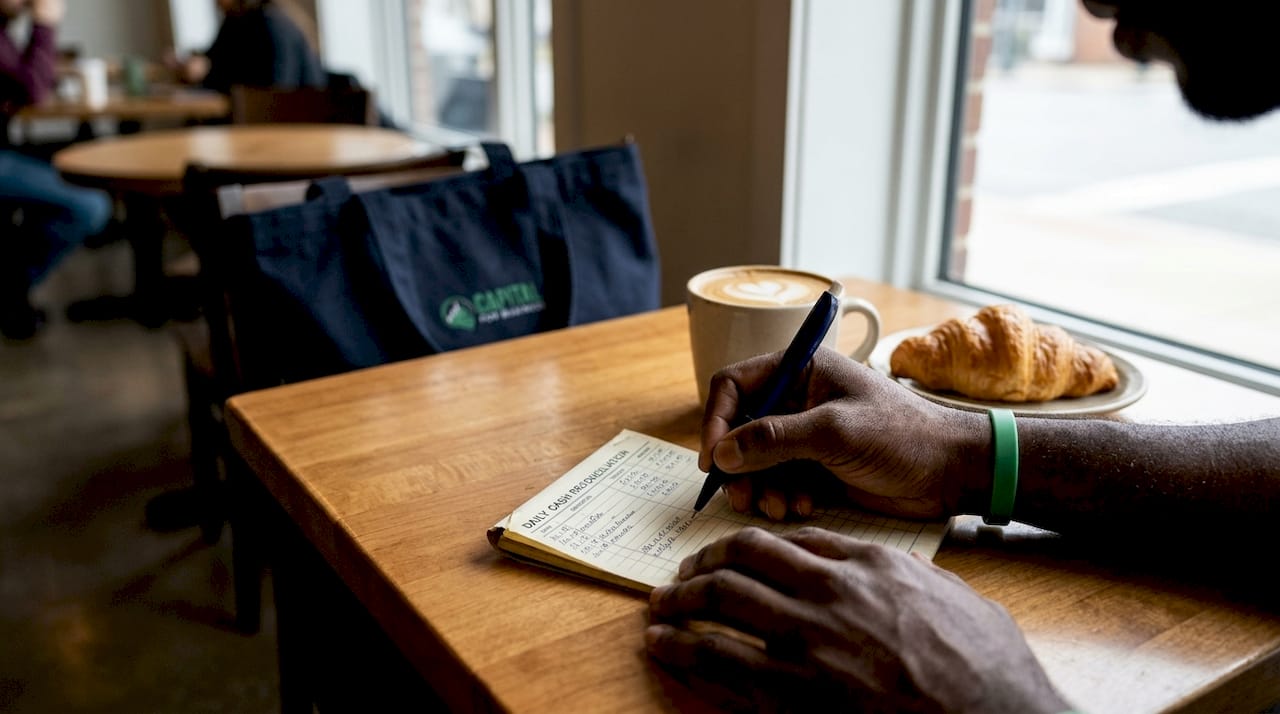
Daily 5-minute cash reconciliation covers three things: actual sales versus forecast, current bank balance, and upcoming payment obligations within the next seven days. That short review catches problems before they compound. A Friday shortfall discovered on Monday is a crisis. The same shortfall spotted on Wednesday is a scheduling adjustment.
Building a 13-week rolling forecast
A 13-week rolling cash flow forecast gives you a full quarter of visibility at all times. Each week, you add one new week to the end and drop the oldest week off the front. This keeps your view current without requiring a full financial overhaul every month.
Here is a practical structure for building your weekly forecast:
- Pull last week's actual sales from your POS system. Compare them against your forecast to identify variance.
- List every payment due in the next 13 weeks. Include rent, payroll, vendor invoices, loan payments, and insurance premiums.
- Estimate revenue by week using historical data. Factor in seasonal patterns, booked events, and known slow periods.
- Calculate the net cash position for each week. Subtract projected outflows from projected inflows.
- Flag any week where the balance drops below your minimum reserve. That week needs a corrective action now, not when it arrives.
Pro Tip: Connect your POS system directly to your accounting software. When sales data flows automatically into your forecast model, you eliminate manual entry errors and get real-time accuracy without extra labor.
The 13-week horizon is not arbitrary. It covers one full business quarter, which is long enough to spot seasonal cash pressure and short enough to remain accurate. Restaurants that forecast 4–13 weeks ahead consistently avoid the cash surprises that force emergency borrowing.
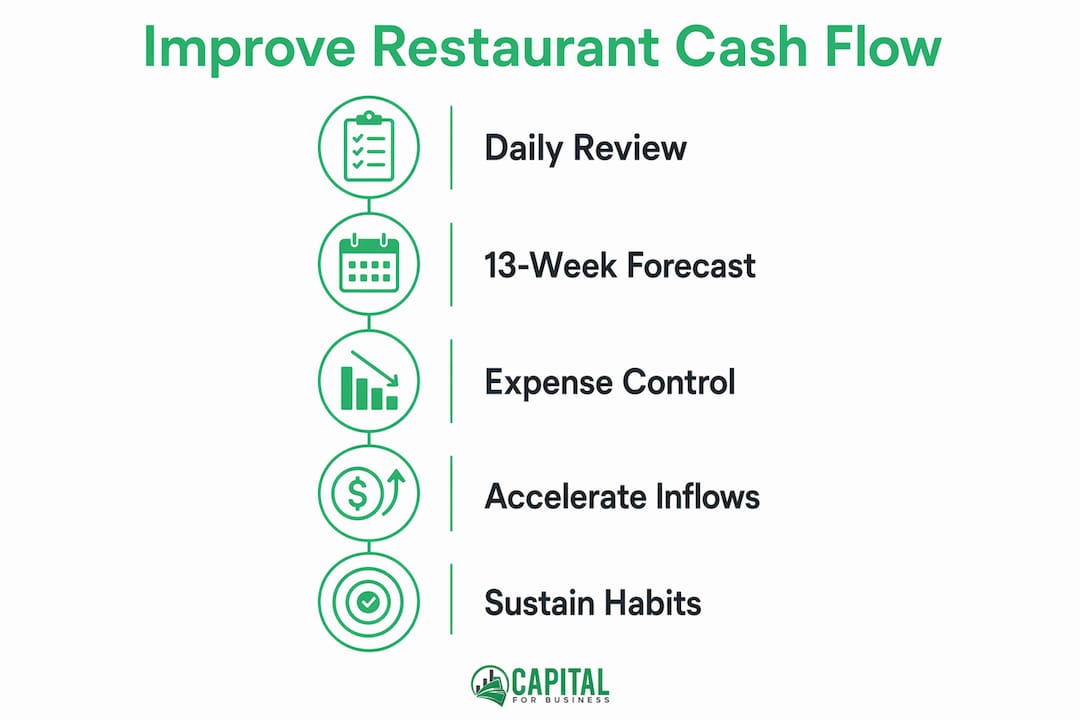
What are effective strategies to control and optimize restaurant expenses?
Controlling expenses is where most restaurants have the most immediate opportunity. The prime cost benchmark of 55–60% of revenue is the industry standard. If your prime cost runs above 65%, you are operating with almost no margin for error.
Labor scheduling with data
Labor is the most controllable line item in your budget. Data-driven labor scheduling can reduce labor costs by 1–3 percentage points without reducing service quality. That reduction on a $1,000,000 revenue restaurant saves $10,000–$30,000 per year. The method is straightforward: pull your hourly sales data from your POS for the past 90 days, identify your peak and slow periods by day and hour, then build your schedule to match staffing levels to actual demand rather than habit or guesswork.
Menu engineering for higher margins
Menu engineering can increase revenue by 15–25% by repositioning your highest-margin items. The process involves categorizing every menu item by its profitability and popularity, then designing the menu layout to guide guests toward your most profitable choices. Items that are both popular and profitable get prime placement. Items that are popular but low-margin get reformulated or repriced. Items that are neither get removed.
Key expense control tactics to apply alongside scheduling and menu work:
- Renegotiate vendor payment terms. Moving from COD or net-7 to net-30 or net-45 frees working capital immediately with no change in total cost. Most suppliers will agree if you have a solid payment history.
- Separate reserve accounts for lump-sum expenses. Rent, insurance, and quarterly taxes hit in predictable but irregular intervals. A dedicated reserve account for these expenses shields your operating balance from sudden pressure.
- Track food waste weekly. Waste tracking by category reveals which ingredients are being over-ordered or mishandled, and small reductions compound quickly across a full year.
- Negotiate rent during lease renewals. Flexible rent terms, such as a percentage-of-sales clause during slow months, can create meaningful cash flow breathing room without permanently reducing your space.
| Expense area | Default approach | Better approach |
|---|---|---|
| Vendor payments | COD or net-7 | Net-30 or net-45 |
| Labor scheduling | Fixed shifts by habit | Demand-based scheduling |
| Reserve expenses | Paid from operating account | Separate dedicated reserve |
| Menu pricing | Annual review | Quarterly review with cost data |
Pro Tip: Review your top five vendor relationships every six months. Ask directly for extended terms. Suppliers prefer a loyal customer on net-30 over a lost account.
How can restaurants accelerate revenue inflows and improve payment timing?
Controlling expenses addresses one side of the cash flow equation. Accelerating inflows addresses the other. The goal is to get money into your account faster and reduce the lag between earning revenue and having it available.
Reduce third-party delivery dependence
Third-party delivery platforms charge commissions of 25–35% and typically hold payouts for 7–14 days. That combination drains both margin and liquidity. Shifting even 20% of delivery orders to your own direct ordering channel eliminates those commissions and delivers payment immediately. A direct ordering setup requires upfront investment in a website or app, but the payback period is short when you factor in the commission savings.
For more on managing delivery operations effectively, the post-Covid delivery management framework covers the operational side of building direct channels.
Build prepaid revenue streams
Prepaid revenue is cash you collect before you spend anything to deliver the service. Gift cards, event deposits, and catering prepayments all fall into this category. A private dining event with a 50% deposit collected at booking means you have cash in hand weeks before the food cost hits your account. That timing advantage reduces the need for short-term borrowing.
Additional tactics to accelerate inflows:
- Negotiate faster credit card settlement. Standard settlement runs 2–3 business days. Many processors will move to next-day or same-day settlement for accounts with strong volume. Ask your processor directly.
- Require deposits for large party reservations. A $500 deposit for a party of 20 is standard practice and protects you from last-minute cancellations that leave you with staffed labor and prepped food.
- Train servers on upselling. Increasing average spend per guest by $1.50–$3.00 through targeted upselling can add $80,000–$165,000 in annual revenue for a busy restaurant. That is a significant cash flow improvement with zero additional marketing cost.
- Align payment collection with outflow timing. If payroll runs on Friday, structure your largest revenue collection days to land earlier in the week so funds clear before the payroll debit hits.
Pro Tip: If you accept reservations for private events, collect the full balance 72 hours before the event date. This eliminates day-of payment friction and guarantees cash is in your account before you incur the labor and food cost.
What operational and financial habits sustain improved restaurant cash flow?
Short-term fixes produce short-term results. The restaurants that maintain healthy cash positions year over year do so through consistent habits, not one-time corrections. Cash flow success depends on synchronizing the timing of inflows and outflows, not just generating profit on paper. A restaurant can show a net profit for the month and still run out of cash if the timing is misaligned.
Here are the habits that sustain cash flow health over time:
- Conduct a weekly financial review. Review actual versus forecast cash position every week, not monthly. Monthly reviews catch problems too late to correct without pain.
- Maintain 6–8 weeks of fixed costs as a cash reserve. Keep this reserve in a separate account. Do not treat it as available operating cash. It exists specifically for unexpected shortfalls.
- Update labor and menu pricing quarterly. Food costs shift with supplier pricing and seasonal availability. A menu priced in january may be losing margin by april if you have not reviewed ingredient costs.
- Review supplier relationships every 6–12 months. Proactive relationship management keeps you in a position to negotiate. Suppliers are more flexible with customers who communicate regularly than with those who only call when they have a problem.
- Run scenario plans for seasonal fluctuations. Model your cash position for your three slowest weeks of the year. If the model shows a shortfall, address it before the season arrives through adjusted scheduling, prepaid revenue, or a credit line.
- Avoid the profitability blind spot. Many restaurant owners overestimate their cash position because they see profit on their income statement. Profitability on paper is not the same as available cash. Timing delays between earning revenue and collecting it, combined with lump-sum expenses, create gaps that catch operators off guard.
Improving cash flow for small businesses follows the same core principles across industries. Restaurants face a more compressed version of these challenges because of daily perishable costs and high labor variability, which makes consistent habits even more critical.
Key takeaways
Improving restaurant cash flow requires consistent monitoring, precise expense control, and deliberate timing of both inflows and outflows.
| Point | Details |
|---|---|
| Daily cash review | A 5-minute daily reconciliation prevents cash surprises before they become crises. |
| Prime cost control | Keep food and labor combined below 60% of revenue to maintain a workable margin. |
| Vendor term negotiation | Moving to net-30 or net-45 payment terms frees working capital at zero cost. |
| Revenue timing | Prepaid deposits, direct ordering, and faster card settlement accelerate cash inflows. |
| Reserve separation | Keep 6–8 weeks of fixed costs in a dedicated account separate from operating funds. |
What I've learned about cash flow after working with hundreds of restaurants
Cash flow problems in restaurants almost never come from one big failure. They come from a dozen small timing mismatches that stack up quietly until the bank account hits zero on a Thursday before payroll. That pattern repeats across operators of every size.
The most effective operators I have worked with do not treat cash flow as a finance department problem. They treat it as an operational discipline, the same way they treat food safety or line prep. They check their cash position daily. They know their prime cost number without looking it up. They have already negotiated net-30 terms with their top three suppliers.
What surprises most restaurant owners is how much improvement comes from timing adjustments rather than revenue increases. Shifting a vendor payment by two weeks, collecting a deposit on a catering event, and moving 15% of delivery orders to a direct channel can collectively add weeks of cash runway without changing your menu or your prices. Working capital management is fundamentally about timing, and timing is something every operator can control.
The less obvious tactic that consistently delivers results is the separate reserve account. Most operators resist it because it feels like money sitting idle. It is not idle. It is the buffer that keeps you from making a bad financing decision under pressure. When the HVAC fails in july and the repair quote is $8,000, the operator with a reserve account writes a check. The operator without one takes whatever financing is available at whatever rate is offered.
Automate what you can. Connect your POS to your accounting software. Set up automatic transfers to your reserve account on payroll days. Remove the manual steps that create opportunities for delay or error. The operators who sustain strong cash positions are not working harder on their finances. They have built systems that make the right behavior the default behavior.
— Capital
Funding solutions that support your restaurant's cash position
Running a restaurant means cash needs do not always align with revenue cycles. Equipment breaks, a slow season arrives earlier than expected, or a growth opportunity requires capital before your reserves are ready.
Capitalforbusiness has worked with restaurant operators since 2009, providing small business loans and merchant cash advances designed to bridge timing gaps and support working capital. Whether you need to cover a payroll shortfall, fund a kitchen upgrade, or build a cash reserve before a slow season, Capitalforbusiness offers funding up to $500,000 with fast approvals. When banks say no, Capitalforbusiness finds a path forward. Explore your restaurant financing options and find the structure that fits your operation.
FAQ
What is restaurant cash flow?
Restaurant cash flow is the net movement of money into and out of your business during a specific period. Positive cash flow means more money is coming in than going out; negative cash flow means the reverse.
How much cash reserve should a restaurant keep?
Industry standards recommend maintaining a cash reserve equal to 3–6 months of fixed costs. A practical starting target for most operators is 6–8 weeks of fixed expenses held in a separate account.
What is prime cost and why does it matter?
Prime cost is the combined total of food costs and labor costs. It typically consumes 55–60% of restaurant revenue, making it the most critical expense category to monitor for cash flow health.
How do third-party delivery platforms affect cash flow?
Third-party platforms charge commissions of 25–35% per order and hold payouts for 7–14 days. Shifting orders to direct channels eliminates both the commission drain and the payout delay.
Can a profitable restaurant still have cash flow problems?
Yes. A restaurant can show a net profit on its income statement and still run short on cash if the timing of inflows and outflows is misaligned. Profitability and liquidity are separate conditions that require separate management.