
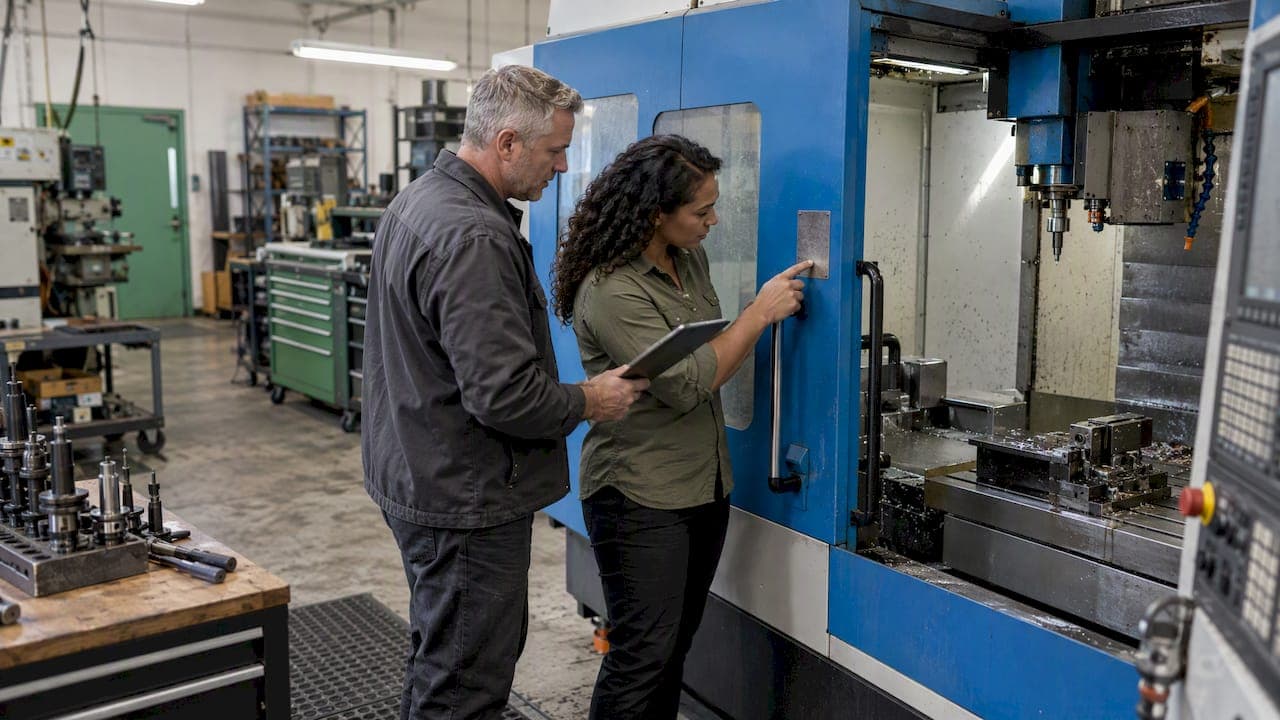
An equipment sale leaseback lets you sell machinery, vehicles or tools your business already owns to a finance company, then lease the same equipment back and keep running it. You get cash now, you make lease payments instead of owning the asset, and the work on your floor or job sites does not change. It can be a smart way to free up money tied up in a paid-off CNC machine, excavator or HVAC fleet. It can also be a more expensive and more rigid choice than a line of credit or a standard equipment loan. This guide explains the mechanics, the tax and accounting treatment, what makes these deals fail, and how to compare the alternatives.
TL;DR
- A sale leaseback converts equipment you own into working capital: you sell it, lease it back, and keep using it throughout the lease.
- It works best when you own valuable, in-demand equipment outright and need a lump sum for payroll, expansion or paying down more expensive debt.
- The IRS and U.S. accounting rules both look at substance. If control of the asset does not really transfer, the deal is treated as a loan, not a sale and lease.
- A line of credit, equipment loan or SBA financing can cost less or carry fewer strings, so compare before you sign.
- Have a CPA review the structure before closing, and read the end-of-term options carefully.
Table of Contents
- What an equipment sale leaseback is
- How the process works, step by step
- Benefits of a sale leaseback
- Disadvantages and risks
- Tax and accounting treatment in the U.S.
- What makes a sale leaseback fail
- Sale leaseback versus a line of credit
- CNC machine financing: leaseback or something else
- HVAC and other trades: matching the tool to the need
- Other ways to turn equipment into capital
- Our perspective
- How we can help
- Is a sale leaseback right for you?
- FAQ
- Sources
What an equipment sale leaseback is
In a sale leaseback, a business sells an asset it owns to a buyer, usually an equipment finance company, and immediately leases it back. Deloitte's accounting guidance describes this as a transaction in which the seller-lessee transfers an asset and then leases it back, and notes that the main appeal is unlocking liquidity for expansion or debt reduction.
Three things happen at closing:
- The buyer pays you a purchase price for the equipment.
- Title moves from your company to the buyer.
- You sign a lease that lets you keep using the same equipment for an agreed term at a set monthly payment.
Nothing physical changes. The machine stays where it is, your operators keep running it, and your customers never know. What changes is your balance sheet and your cash position.
Who typically uses it
The structure suits businesses that have built up equity in machinery but need cash for something else. Think of a machine shop that owns three CNC mills outright, a contractor with a paid-off fleet of trucks and skid steers, a restaurant group with commercial kitchen equipment, or a manufacturer with a production line it bought years ago. The common thread is owned equipment that holds its value and a need for money that the business cannot easily get from a bank.
How the process works, step by step
Every lender runs the details a little differently, but the sequence is consistent.
- Inventory your equipment. List each asset with make, model, year, serial number, hours or mileage, and condition. Note any existing liens, because a lien must be paid off or released for the buyer to take clean title.
- Get an offer. The buyer values the equipment and quotes a purchase price. That price is based on what the equipment would realistically fetch, not on what you paid for it years ago.
- Review the lease terms. Look at the term length, monthly payment, any security deposit, who pays for insurance and maintenance, and what happens at the end.
- Complete due diligence. Expect to provide financial statements, bank statements, proof of ownership and sometimes an inspection or appraisal.
- Close and fund. You sign a bill of sale and the lease, any lien is cleared, and funds are sent.
- Make lease payments. You pay monthly for the term, then use whichever end-of-term option your lease gives you.
End-of-term options
What happens when the lease ends matters as much as the cash at the start. Common structures include buying the equipment back at a nominal amount, buying it back at fair market value, renewing the lease, or returning the equipment. A nominal buyout often signals that the deal is really a loan in disguise, which has tax consequences covered below. A fair market value buyout leaves you with an unknown cost at the end, so ask how it is determined and what appraisal process applies.
Benefits of a sale leaseback
Cash without new traditional debt
You are monetizing an asset you already own. If your balance sheet is stretched or a bank has turned you down, that equity can be the most accessible source of capital you have. Deloitte lists liquidity for expansion or debt reduction and potentially improved financial ratios among the reasons companies use the structure.
Possibly more operating flexibility
Cleary Gottlieb notes that sale-leaseback documentation may offer greater operating flexibility than cash-flow-based debt agreements, because it may leave out change-of-control provisions and covenants that regulate how the company operates generally. For a business that expects to take on other financing or sell part of the company, fewer company-wide restrictions can matter.
No interruption to operations
Unlike selling equipment outright, you never lose access to the asset. A fabricator does not have to stop a production run, and a plumbing contractor keeps its vans on the road.

Pay down costlier debt
Some owners use the proceeds to retire high-cost obligations. That only helps if the all-in cost of the lease is lower than the debt you are paying off, so compare the total payments, not just the monthly amount.
Disadvantages and risks
The same sources that describe the benefits are blunt about the trade-off. Cleary Gottlieb also points out that the economics of these deals are often structured similarly to secured loans. That means you should judge them like a loan: by total cost, term and what you give up.
- You no longer own the equipment. You cannot sell it, modify it freely or use it as collateral for other borrowing until you buy it back.
- Total cost can exceed the cash you receive. Add up every payment, fee and the buyout, then compare with the proceeds.
- Default has a clear consequence. The buyer owns the equipment, so missed payments can mean losing machines you depend on to earn revenue.
- Tax and accounting treatment can surprise you. More on that next.
- Valuation may be lower than you expect. The purchase price reflects resale value in a forced-sale scenario, so older or specialized machines can fetch less than owners hope.
- You may lose future upside. If the equipment appreciates or you later want to sell the business, the asset is not yours to sell.
Tax and accounting treatment in the U.S.
This is where deals go wrong, so it deserves attention before you sign. Talk to a CPA or tax attorney who has handled lease transactions, and do it before closing, not after.
IRS view: true lease or conditional sale
The Comptroller of the Currency's lease financing handbook explains that tax treatment of these transactions is complex, and that the IRS distinguishes between genuine leases, where payments may be deducted as rent, and conditional sales contracts, where the user is treated as the owner. The test looks at economic substance and where control really sits. In practice, a lease with a very low buyout, a term that covers nearly the equipment's whole useful life, or a purchase price far from fair market value invites the conditional sale label. Then your rent deductions can be recharacterized as interest and depreciation.
Financial reporting: sale or financing
Under ASC 842, the lease accounting standard, a transaction that fails to transfer control of the asset is treated as a financing arrangement rather than a sale and leaseback. In that case you keep the asset on your books and record the cash as a liability. Lease classification also looks at whether payments cover substantially all of the asset's fair value, a test often called the 90% rule. Your accountant can tell you how your specific terms would be classified.
When the deal does qualify as a sale, Deloitte notes that replacing the asset and related debt with typically lower-value right-of-use assets and lease liabilities may improve some financial ratios. Whether that helps you depends on what your lenders and investors look at.
What makes a sale leaseback fail
Deals fall apart for predictable reasons. Check these before you spend time on paperwork.
- Liens you forgot about. An existing loan on the equipment must be paid off from proceeds. If the payoff approaches the purchase price, there is little cash left for you.
- Title and documentation gaps. Missing titles, serial number mismatches or unclear ownership stall closings.
- A valuation gap. You expected one number, the buyer's appraisal says another. Get a realistic view of resale value early.
- Equipment that is hard to resell. Highly customized machinery is harder for a buyer to value and remarket, so offers shrink or disappear.
- Weak financials. Even though you are selling an asset, the buyer still needs confidence that you can make lease payments.
- Substance problems. If the structure looks like a loan with a sale label, tax and accounting treatment can unravel the benefits you planned on.
A pre-signing checklist
- Total of all lease payments plus buyout, compared with cash received
- Who pays insurance, taxes and maintenance
- How fair market value is determined at the end of term
- Early buyout and default terms
- Any cross-default clauses that connect this lease to your other debt
- Your CPA's written view on tax and financial-reporting treatment
Sale leaseback versus a line of credit
Both give you working capital, but they behave differently.
| Factor | Equipment sale leaseback | Business line of credit |
|---|---|---|
| What you use | Equipment you own outright | Your revenue and credit profile |
| How you get cash | One lump sum at closing | Draw as needed, repay, draw again |
| Ownership | Buyer takes title | You keep all assets |
| Cost structure | Fixed lease payments over a term | Pay on the amount you draw |
| Best for | A one-time need for a larger sum | Recurring or seasonal gaps |
| Main risk | Losing equipment if you default | Overusing available credit |
A line of credit suits uneven cash flow. Government research on HVAC contractors, for example, describes contractors using lines of credit to cover seasonal shortfalls such as vehicle lease payments and technician salaries. A sale leaseback fits better when you have a single large need and plenty of owned equipment.
Our business line of credit is priced from 1.2% per month, and you pay only on what you draw. If your gap is a few slow months rather than a big one-time project, that flexibility often beats selling an asset.
CNC machine financing: leaseback or something else
People who search for ways to finance a CNC machine are usually in one of two positions.
You need to buy a machine. Then you want financing for a new purchase, not a leaseback. Equipment financing uses the machine itself as collateral, so you typically do not need to put up other assets. Our equipment financing runs up to $250,000 with same-day funding, and the rate starts from 0.8% per month. For a deeper look at your options, see these examples of equipment financing for small businesses.
You already own machines and need cash. This is where a leaseback comes in. A shop with two or three paid-off CNC mills can unlock capital for a new hire, a larger material order or a second shift without taking on a conventional loan.
If the purchase is large, SBA financing is also worth a look. As of July 2026, small businesses can combine 7(a) and 504 loans for up to $10 million in SBA-backed financing for equipment, real estate and working capital. Our guide to SBA 504 versus 7(a) explains which loan fits which purchase, and our SBA loans start from 6%.
Whatever route you take, lenders generally want to see time in business, consistent revenue, bank statements and details on the machine: make, model, age and price. Having these ready speeds approval.

HVAC and other trades: matching the tool to the need
Contractors face the same choice at smaller scale. An HVAC company with a paid-off service fleet could sell and lease back the vans, but if the real problem is a slow winter, a line of credit addresses it without giving up title. The same federal report notes that HVAC labor costs are highly variable and that contractors generally limit labor hours and finish projects quickly to protect profitability. That makes payroll timing the usual pressure point, and a revolving facility handles timing problems better than a one-time cash-out.
A practical rule: use a sale leaseback for a large, one-time need backed by valuable equipment, and a line of credit for recurring timing gaps.
Other ways to turn equipment into capital
Before choosing a leaseback, check whether one of these fits better:
- Equipment loan on new purchases. If you are buying, finance the purchase directly. Our comparison of equipment leasing versus equipment financing walks through the differences, and this piece on a small business loan or equipment leasing helps with the same decision.
- Working capital loan. A lump sum repaid from revenue, without selling anything. Ours start from 1.5% per month.
- Term loan. Fixed payments over a set period, from 7% on our business term loans.
- Revenue-based financing or a merchant cash advance. Repayment follows your sales, which suits retail and restaurants. These are typically more costly, so use them for short-term needs.
- Bad credit business loans. If your credit profile is the obstacle, there are options starting from 2.5% per month.
Our perspective
We have worked with owners in hundreds of industries since 2009, and the pattern we see is consistent: the best financing is the one that matches how the money will be used and repaid. A sale leaseback is a legitimate tool, but it asks you to give up ownership of the equipment that earns your revenue. We think owners should exhaust simpler options first.
If you need money for a project that will pay for itself, equipment financing keeps ownership with you and ties the cost to the asset. If your problem is timing, a line of credit lets you borrow only what you need. If banks have said no, that does not close the door: we look at a broad range of credit profiles, including bad credit.
What we would never suggest is signing a leaseback without adding up every payment and having your CPA confirm the tax and reporting treatment. The cash on day one is the easy part. The cost on day 1,000 is the part to understand.
— Capital
How we can help
We are a lender and broker of small business financing, serving owners in the U.S. and Canada. If you own equipment and need working capital, or you want to buy a machine and need to spread the cost, talk to us about the options that fit your numbers. Many owners find that a line of credit or equipment financing gets them where they are going without giving up title.
Review our funding solutions to see pricing for working capital, lines of credit, equipment financing and more, or apply for business funding and we will help you compare.
Is a sale leaseback right for you?
Answer these honestly:
- Do you own valuable equipment outright, with no or little lien?
- Is your need a single large sum rather than recurring gaps?
- Can you afford the lease payments for the full term?
- Have you compared the total cost with a line of credit, equipment loan and working capital loan?
- Has your CPA reviewed the tax and accounting treatment?
If you answered yes to all five, a sale leaseback deserves a serious quote. If you answered no to the second or fourth, look at other financing first. Our overview of business loans for startups and our look at equipment financing benefits can help you narrow things down.
FAQ
Is a sale leaseback a good idea?
It can be, when you own valuable equipment outright and need a large sum that other financing cannot provide. It is a weaker choice when your need is recurring, because you give up title and commit to fixed payments. Compare the total cost with a line of credit or equipment loan first.
What are the disadvantages of a sale and leaseback?
You lose ownership, so you cannot sell or borrow against the equipment until you buy it back. Total payments plus the buyout can exceed the cash you receive, and default can mean losing equipment you rely on. Tax and accounting treatment can also differ from what you expected if the deal looks like a loan.
What causes a failed sale leaseback?
Common causes are existing liens that eat the proceeds, missing titles or documentation, a gap between your expected value and the buyer's appraisal, and hard-to-resell equipment. Weak financials can also stop a deal. A structure that fails to transfer real control may be treated as financing instead of a sale.
What is the 90% rule in leasing?
It refers to a lease classification test, where payments that cover substantially all of the asset's fair value point toward a finance lease rather than an operating lease. Your accountant applies the exact test under ASC 842 to your terms.
Can I finance a CNC machine without a sale leaseback?
Yes. Equipment financing lets you buy the machine and use it as collateral, and SBA loans can cover larger purchases. A sale leaseback only makes sense when you already own equipment and want to turn it into cash.
Sources
- Deloitte DART: Sale-leaseback transactions, introduction and overview
- Cleary Gottlieb: Sale-Leasebacks, A Tool for the Times
- Comptroller's Handbook: Lease Financing
- SBA: Small businesses now eligible for $10 million in SBA financing
- Better Buildings Neighborhood Program: HVAC contractor business model