
TL;DR:
- Florists can finance equipment through loans, leases, or SBA programs, depending on needs and qualifications.
- Proper preparation of financial documents and vendor quotes accelerates approval and improves terms.
- Effective equipment financing workflows enable timely upgrades, cost savings, and support business growth.
Running a flower shop means managing perishable inventory, seasonal demand swings, and tight margins all at once. Outdated coolers, inefficient workstations, or aging delivery vehicles can quietly drain your profits through spoilage and lost sales. Many florists know exactly what equipment they need but struggle to fund those upgrades without disrupting cash flow. The good news is that a clear, repeatable financing workflow makes it possible to acquire the right equipment at the right time, without emptying your operating account or stalling your business.
Table of Contents
- Understanding equipment financing options for florists
- Preparing your business for equipment financing
- Step-by-step workflow: Securing funding and acquiring equipment
- Troubleshooting common pitfalls and optimizing your financing process
- Measuring results and planning upgrades for future growth
- Our take: Why efficient workflows matter more than rates for florists
- Get fast, flexible equipment financing for your floral business
- Frequently asked questions
Key Takeaways
| Point | Details |
|---|---|
| Know your financing options | Compare equipment loans, leases, and SBA programs to fit your shop’s needs. |
| Prepare documentation early | Gather business plans, financial statements, and equipment quotes before you apply. |
| Follow a clear workflow | Use a step-by-step process to secure funding and ensure smooth equipment upgrades. |
| Avoid common pitfalls | Track paperwork, double-check costs, and time your financing with vendor delivery. |
| Measure and optimize results | Monitor business outcomes to refine your equipment financing strategy over time. |
Understanding equipment financing options for florists
With an understanding of the challenges, let's explore the key financing paths florists can choose from. Not every option fits every shop, so knowing the basics helps you match the right product to your specific situation.
The three most common paths are equipment loans, equipment leases, and SBA programs. Each one works differently in terms of ownership, cost, and qualification requirements.
Equipment loans give you full ownership of the asset from day one. You borrow a set amount, make fixed monthly payments over a defined term, and the equipment serves as collateral. This works well for high-value items like walk-in coolers or commercial refrigeration units that hold their value over many years. Exploring your equipment financing options early helps you understand how loan structures compare across lenders.
Equipment leases let you use the equipment without owning it outright. You pay a monthly fee for a set period, and at the end of the term you either return the equipment, renew the lease, or buy it at a residual value. Leasing is popular for technology-heavy items that become outdated quickly, like point-of-sale systems or digital design software stations. Understanding leasing vs. financing equipment helps you decide which structure fits your cash flow and tax situation.
SBA 7(a) and 504 programs are government-backed options available to U.S. florists. These programs offer up to $5 million for equipment purchases, with lower interest rates than conventional loans. The tradeoff is a longer application process that requires a business plan, financial statements, and an SBA-approved lender. If your project is large and you have time to prepare, SBA programs offer excellent value.
Use financial planning calculators to estimate monthly payments and total cost of ownership before committing to any option.
| Financing type | Ownership | Typical term | Speed | Best for |
|---|---|---|---|---|
| Equipment loan | Yes | 2 to 7 years | Fast (days to weeks) | High-value, long-life assets |
| Equipment lease | No (option to buy) | 1 to 5 years | Fast (days to weeks) | Tech-heavy or frequently updated items |
| SBA 7(a)/504 | Yes | Up to 10 to 25 years | Slow (weeks to months) | Large purchases, low-rate priority |
Key factors to weigh when choosing:
- Speed: Equipment loans and leases from alternative lenders can fund in as little as 24 to 48 hours. SBA loans may take 30 to 90 days.
- Qualification: Alternative lenders often require as little as one year in business and a minimum credit score around 600. SBA programs typically require two or more years in business and stronger financials.
- Flexibility: Leases offer lower monthly payments and easier upgrades. Loans build equity and may offer tax depreciation benefits.
Pro Tip: If you need equipment before a peak season like Valentine's Day or Mother's Day, start your financing process at least 60 to 90 days in advance to avoid last-minute pressure.
Preparing your business for equipment financing
Once you've seen your options, here's how to prepare your business to actually secure funding. Lenders want to see that you understand your needs, your numbers, and your ability to repay.
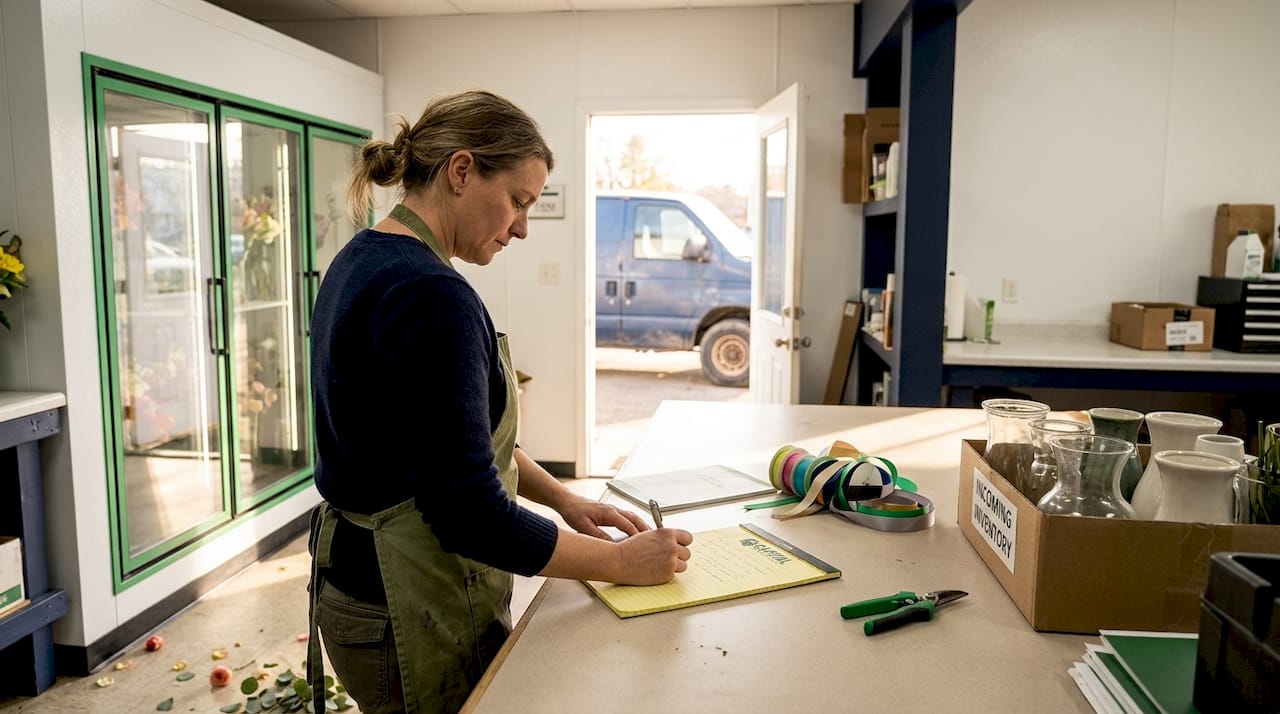
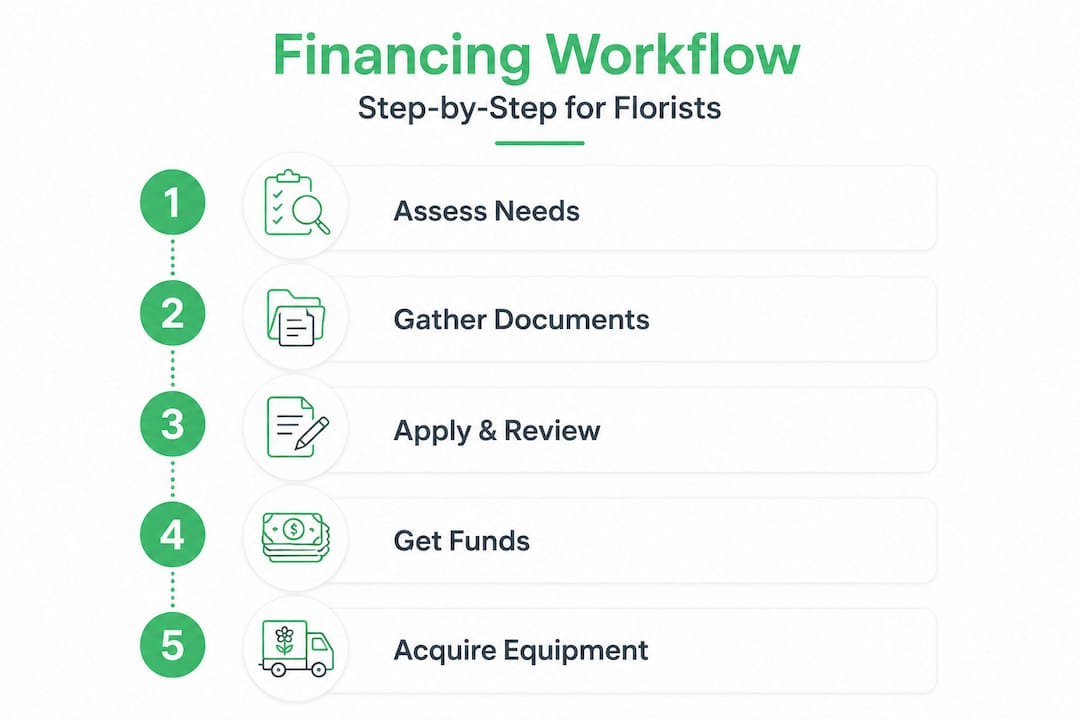
Step 1: Assess your equipment needs. Write down exactly what equipment you need, why you need it, and what problem it solves. Replacing a cooler that loses temperature overnight is a different conversation than upgrading to a larger walk-in for expansion. Be specific.
Step 2: Get vendor quotes. Contact at least two or three vendors and request formal written quotes. Lenders want to see documented costs, not estimates. Quotes also help you negotiate better terms with vendors once your financing is approved.
Step 3: Gather your financial documents. Most lenders require:
- Business tax returns (last two years)
- Personal tax returns (last two years)
- Recent bank statements (last three to six months)
- Profit and loss statement
- Balance sheet
- Business plan (required for SBA loans)
- Proof of business ownership
Step 4: Review your credit profile. Check both your personal and business credit scores. Pay down any outstanding balances if possible, and dispute any errors on your credit report before applying. Even a small improvement in your score can lower your interest rate.
Step 5: Document equipment inefficiencies. This step is often overlooked. If your current cooler causes 15% spoilage rates, write that down. If your outdated workstation slows production during peak orders, quantify it. Lenders and SBA programs respond well to documented business cases.
"A well-prepared loan application that shows clear ROI from the equipment purchase is far more persuasive than a generic request for funds. Numbers tell the story."
The table below shows typical minimum requirements by financing type:
| Financing type | Min. credit score | Min. time in business | Key documents |
|---|---|---|---|
| Equipment loan (alternative lender) | 600 | 1 year | Bank statements, tax returns, vendor quote |
| Equipment lease | 580 | 6 months to 1 year | Bank statements, vendor quote |
| SBA 7(a)/504 | 680+ | 2 years | Full business plan, financials, SBA lender |
Staying current on SBA loan updates helps you understand any recent changes to eligibility rules or documentation requirements. You can also review practical strategies to save money on equipment during the planning phase to reduce the total amount you need to finance.
Pro Tip: Create a single digital folder with all your documents organized by category. When lenders request information, you can respond within hours instead of days. Faster responses lead to faster approvals.
Step-by-step workflow: Securing funding and acquiring equipment
Now that you're ready with your documents and strategy, let's walk through the funding process step by step.
-
Research lenders (Days 1 to 5). Compare at least three lenders, including banks, credit unions, and alternative lenders. Review interest rates, terms, fees, and approval timelines. Check if they have experience working with retail or food-adjacent businesses like florists.
-
Submit your application (Days 5 to 7). Complete the application form and upload all required documents. Double-check that every document is current and accurate. Incomplete applications are the most common cause of delays.
-
Underwriting and review (Days 7 to 21). The lender reviews your financials, credit, and business history. For SBA loans, this phase can take 30 to 90 days due to additional government review requirements. Alternative lenders often complete underwriting in 24 to 72 hours.
-
Negotiate terms (Days 14 to 25). Once you receive a loan offer, review the interest rate, repayment term, prepayment penalties, and any fees. You can often negotiate on rate or term, especially if you have strong financials or competing offers from other lenders.
-
Close the loan (Days 25 to 30). Sign the final loan agreement and receive your funds. Some lenders pay the vendor directly. Others deposit funds into your business account for you to manage the purchase.
-
Order and install equipment (Days 30 to 45). Contact your vendor with the confirmed purchase order. Coordinate delivery and installation around your shop's schedule to minimize downtime. If installation requires electrical or plumbing work, schedule contractors in advance.
-
Begin repayment and track performance (Day 45 onward). Set up automatic payments to avoid missed due dates. Start tracking the equipment's performance against your pre-financing benchmarks immediately.
The full equipment financing tutorial walks through each phase in more detail, and the financing approval checklist helps you confirm you haven't missed any critical steps before submitting.
Funding timeline snapshot: Alternative lenders can approve and fund equipment loans in as little as 2 to 5 business days. SBA loans typically take 30 to 90 days from application to funding.
Pro Tip: Coordinate your loan closing date with your vendor's delivery schedule. If your funds arrive on Day 30 but the vendor needs three weeks for delivery, you can order immediately after closing and avoid any gap in operations.
Troubleshooting common pitfalls and optimizing your financing process
Even with a plan in place, some florists fall into avoidable traps. Here's how to steer clear and stay efficient.
Common mistakes that delay or derail equipment financing include:
- Incomplete documentation. Missing a single document, like a vendor quote or a recent bank statement, can pause your application for days. Use a checklist every time.
- Underestimating total costs. The purchase price is just the start. Factor in delivery, installation, training, and any required facility modifications. Underestimating costs leads to funding shortfalls mid-project.
- Applying too late. Starting your financing process two weeks before you need the equipment is rarely enough time, especially for SBA loans.
- Ignoring prepayment penalties. Some loans charge fees if you pay off the balance early. If you plan to pay ahead of schedule, confirm the prepayment terms before signing.
- Mixing personal and business finances. Lenders look for clean business bank statements. Frequent personal transfers in and out of your business account raise red flags.
Troubleshooting tips to keep your process on track:
- Set calendar reminders for document expiration dates, like bank statements older than 90 days.
- Ask your lender for a complete document checklist before starting your application.
- Request a pre-qualification review before submitting a full application to identify issues early.
- Keep vendor quotes valid by confirming pricing with your supplier before closing.
On the tax side, leasing interest is generally tax-deductible, which can meaningfully reduce the effective cost of leased equipment over time. Equipment purchases may also qualify for Section 179 deductions or bonus depreciation under current U.S. tax rules. Consult your accountant to maximize these benefits.
"Proper refrigeration equipment reduces spoilage quickly enough that the financing cost pays for itself in saved inventory, making the investment straightforward to justify."
When deciding between ownership and rental, the loan vs. leasing choice comes down to how long you plan to use the equipment and how important tax treatment is to your overall financial strategy. For a deeper look at how financing structures work in practice, the equipment financing details page covers the full range of options.
Pro Tip: Track your equipment's return on investment (ROI) from the first month of use. Document spoilage rates, production speed, and sales volume before and after the upgrade. This data becomes your strongest asset when applying for future financing.
Measuring results and planning upgrades for future growth
After your equipment upgrade, it's crucial to verify your results and set your sights on what comes next.
Start by comparing your pre-financing benchmarks to your current numbers. Key metrics to track include:
- Spoilage rate: Are you losing less inventory to temperature fluctuations or poor storage conditions?
- Labor efficiency: Does the new equipment reduce prep time per arrangement or speed up order fulfillment?
- Sales volume: Have you been able to take on more orders or expand your product line because of increased capacity?
- Energy costs: Newer refrigeration and lighting equipment often reduces monthly utility bills noticeably.
- Customer satisfaction: Fresher flowers and faster turnaround times tend to generate repeat business and positive reviews.
Signs that your current equipment may need upgrading again:
- Repair costs are climbing and approaching 30% or more of the equipment's original value annually
- You are turning away orders because of capacity limits
- Energy bills have increased without a corresponding increase in production
- Proper equipment upgrades justify themselves quickly through reduced waste and increased throughput
- Staff are spending significant time on workarounds for failing equipment
Building a periodic review cycle keeps your shop competitive. Set a reminder every six months to evaluate your equipment against current business volume and industry standards. When you identify a need, you already have a financing workflow ready to execute. Reviewing financing success stories from similar businesses can also give you realistic benchmarks for what results to expect after an upgrade.
The florists who grow consistently are the ones who treat equipment investment as an ongoing operational decision, not a one-time event.
Our take: Why efficient workflows matter more than rates for florists
Many florists spend the most energy chasing the lowest possible interest rate. That's understandable. But in our experience working with small business owners since 2009, the rate is rarely what determines whether a financing decision succeeds or fails.
What actually makes the difference is how well-organized your process is. A florist who applies with clean documents, a clear equipment justification, and a realistic repayment plan will close faster, negotiate better terms, and experience far less stress than one who scrambles to gather paperwork at the last minute. The documentation habits you build now also make every future application easier.
There's another angle worth considering. A florist who waits six months for a slightly lower rate on an SBA loan may lose thousands in spoilage and missed sales during that window. Sometimes a slightly higher rate from a faster lender is the smarter financial decision when timing is critical.
We also encourage florists to think of equipment financing as a recurring operational tool, not a one-off transaction. The shops that grow steadily are the ones that review their equipment needs regularly, maintain their financial documents year-round, and apply for financing proactively rather than reactively. Reviewing real-world examples from other small businesses reinforces how consistent, planned financing cycles outperform sporadic, urgent ones.
Build the workflow once. Use it repeatedly. That's where the real value lives.
Get fast, flexible equipment financing for your floral business
Ready to take the next step? Here's how to connect with expert resources and funding options designed for florists.
At Capital for Business, we've helped small business owners across the U.S. and Canada fund equipment upgrades quickly and affordably since 2009. Whether you're buying your first walk-in cooler or upgrading an entire production area, we have financing options that fit your timeline and budget.
Start with our equipment financing basics guide if you're new to the process. If you want to compare your options side by side, our easy loan types overview covers everything from term loans to merchant cash advances. And if you're still deciding between owning and renting, our leasing vs. purchasing breakdown will help you choose with confidence. Apply today and get a decision in as little as 24 hours.
Frequently asked questions
What documents do I need to apply for equipment financing as a florist?
You typically need a business plan, financial statements, proof of business ownership, and vendor quotes for the equipment. For SBA programs, additional documentation including a formal business plan and SBA-approved lender approval is required.
Can florists qualify for SBA loans to buy equipment?
Yes, U.S. florists can apply for SBA 7(a) or 504 loans to finance up to $5 million for equipment, though the process requires strong financials and takes longer than alternative lenders.
Is leasing equipment tax-deductible for florists?
Yes, leasing interest is tax-deductible for your business, and equipment purchases may also qualify for Section 179 deductions depending on your tax situation.
How can proper equipment reduce waste for my flower shop?
Upgrading to efficient refrigeration and storage equipment reduces spoilage quickly, often enough that the financing cost pays for itself in saved inventory within the first year.
What if my florist business is in Canada? Are financing options similar?
Canadian florists have access to equipment loans and leasing through banks and alternative lenders, but specific programs, tax rules, and government-backed options differ from U.S. SBA programs. Consult a Canadian business lender for options suited to your province and business structure.