
A business loan covenant is a condition in a loan agreement that limits or requires certain borrower behavior, and it's enforced through periodic financial tests and reporting. Covenants can restrict how you spend cash, require you to hit specific financial ratios, and trigger a technical default if you miss a test, even when every payment is current. This guide covers the main types, how to calculate the ratios lenders check, what happens after a breach, and how to negotiate terms that give your business breathing room.
TL;DR:
- Most loan covenants either require specific actions or restrict particular activities, with financial covenants focusing on numeric ratios like debt-to-EBITDA and DSCR.
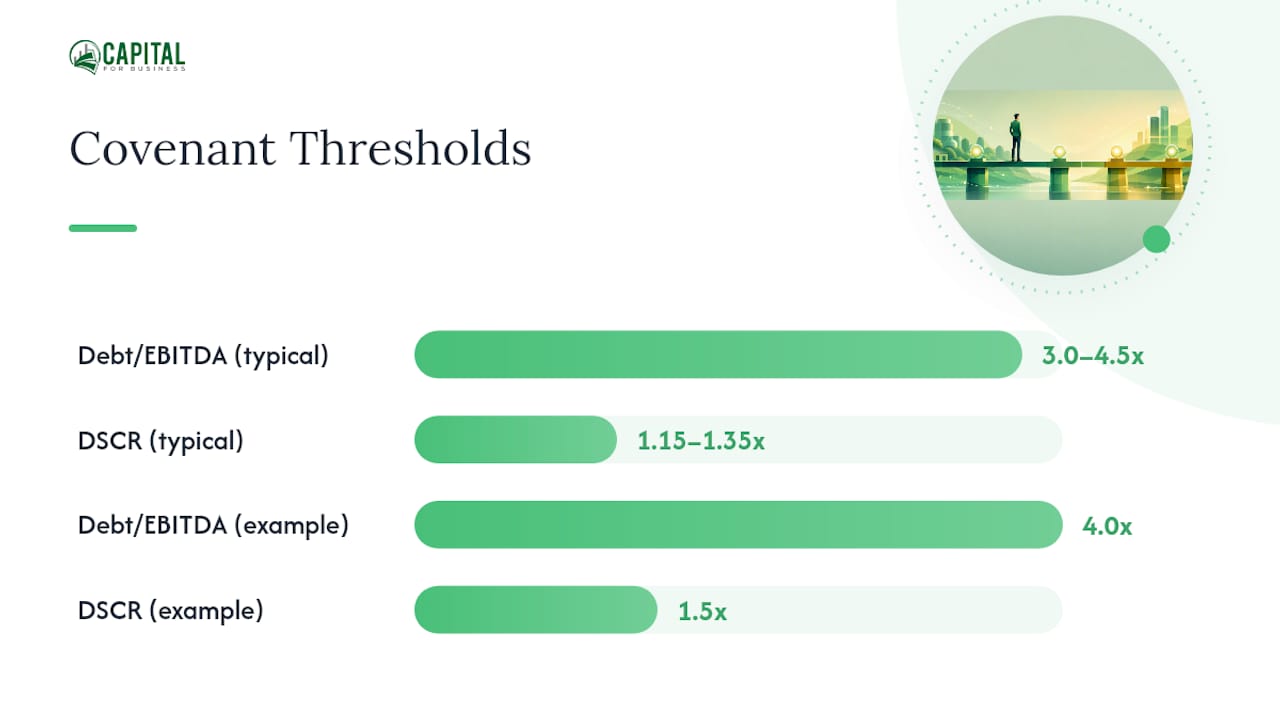
- Typical thresholds for small businesses range from 3.0x to 4.5x for debt-to-EBITDA and 1.15x to 1.35x for DSCR, but these vary based on industry and credit quality.
- Breaching a covenant typically triggers a technical default, which can be remedied through waivers, amendments, or refinancing, without immediate full repayment.
- Negotiating clear covenant definitions, testing schedules, and carve-outs before signing improves flexibility and reduces risk during downturns.
- Stress-testing covenant headroom against a 20% revenue decline helps avoid future breaches and tailor loan terms to your business's actual capacity.
Table of Contents
- What Are the Main Types of Loan Covenants?
- How Do You Calculate the Financial Covenant Ratios Lenders Test?
- Why Do Lenders Include Covenants in Loan Agreements?
- What Happens When You Breach a Loan Covenant?
- How Can You Negotiate Better Loan Covenant Terms?
- What Should You Do Before Signing or During a Near Breach?
- Capital for Business's Perspective on Fair Covenants
- Get Covenant-Aware Financing Built for Your Business
- Sources
- FAQ
What Are the Main Types of Loan Covenants?
Every business finance agreement built around covenants sorts them into a few recognizable buckets, and knowing which bucket a clause falls into tells you how much flexibility you actually have.
Affirmative (positive) covenants require you to take specific actions, like maintaining insurance, paying taxes on time, or delivering financial statements by a set deadline. Negative covenants restrict actions, capping additional debt, limiting dividend payouts, or blocking asset sales above a certain dollar threshold without lender consent.
Financial covenants are a distinct category that lives inside both. They set numeric targets tied to your balance sheet or income statement, and they split into two enforcement styles:
- Maintenance covenants get tested on a fixed schedule (monthly or quarterly) regardless of what you do, functioning like an ongoing checkup.
- Incurrence covenants only get tested when you take a specific action, such as borrowing more money or making an acquisition.
Reporting and information covenants round things out, requiring compliance certificates, audited financials, or borrowing-base reports. Some agreements also include bespoke covenants unique to an industry, like inventory turnover requirements for retailers or same store sales tests for restaurant groups. Reading each clause against these categories, as Corporate Finance Institute's covenant breakdown explains, is the fastest way to spot which ones actually threaten your operating flexibility.
How Do You Calculate the Financial Covenant Ratios Lenders Test?
Four ratios show up in nearly every commercial loan agreement, and understanding the math behind each one keeps you from getting blind sided at test time.
Debt-to-EBITDA measures total debt against earnings before interest, taxes, depreciation, and amortization. If your business carries $2 million in debt and generates $500,000 in EBITDA, your leverage ratio is 4.0x. Debt service coverage ratio (DSCR) divides net operating income by total debt service (principal plus interest). A business generating $300,000 in operating income against $200,000 in annual debt payments has a DSCR of 1.5x, meaning it earns 50% more than it needs to cover the loan.
- Interest coverage ratio: EBITDA divided by interest expense, showing how many times over you can cover interest payments alone.
- Tangible net worth: total assets minus intangible assets and total liabilities, used to confirm the business has real collateral value behind the debt.
The wording of "adjusted EBITDA" matters more than most borrowers realize. Lenders and borrowers negotiate which add-backs count, one-time legal fees, non-cash stock compensation, or owner salary normalization, and a generous add-back schedule can be the difference between passing and failing a test.
Typical threshold ranges run from 3.0x to 4.5x for debt-to-EBITDA and 1.15x to 1.35x for DSCR in conventional small-business lending, though Investopedia's covenant guide notes these numbers shift based on industry risk, collateral quality, and overall credit profile. There is no universal number. A restaurant group and a software company with identical revenue will get different thresholds because their cash flow volatility isn't the same.
Why Do Lenders Include Covenants in Loan Agreements?
Covenants exist because lenders and borrowers don't automatically want the same thing once money changes hands. A lender wants repayment protected; a borrower, left unchecked, might take on more risk than the loan was priced for. Covenants align those incentives by giving the lender an early-warning system instead of forcing them to wait for a missed payment.
That early-warning function shows up in loan pricing and structure directly. A borrower who accepts tighter maintenance covenants and stronger reporting often gets a lower rate or reduced collateral requirements, because the lender's monitoring risk drops. The Federal Reserve's Senior Loan Officer Opinion Survey tracks how lenders tighten standards, covenants included, when credit conditions turn uncertain, which is exactly why covenant strictness moves with the broader lending cycle rather than staying fixed.
What Happens When You Breach a Loan Covenant?
A payment default and a covenant breach are not the same event, and confusing them causes unnecessary panic. Payment default means you missed a scheduled payment. A covenant breach, often called a technical default, means you missed a financial or reporting test while still paying on time. Both give the lender contractual rights, but lenders typically treat technical defaults with more patience, if you communicate early.
- Waiver: the lender formally excuses the breach for that testing period without changing the contract.
- Amendment: the loan terms get renegotiated, sometimes with a fee or a rate adjustment, to reset the covenant going forward.
- Repricing: the lender raises the interest rate or adds fees to compensate for the added risk.
- Acceleration: in the most severe cases, the lender demands full repayment immediately, though this is a last resort, not a first move.
Borrowers facing a near-miss have real options too: an equity cure (injecting capital to fix the ratio before the test date), a forbearance period, operational adjustments to boost EBITDA, or refinancing with a new lender entirely.
How Can You Negotiate Better Loan Covenant Terms?
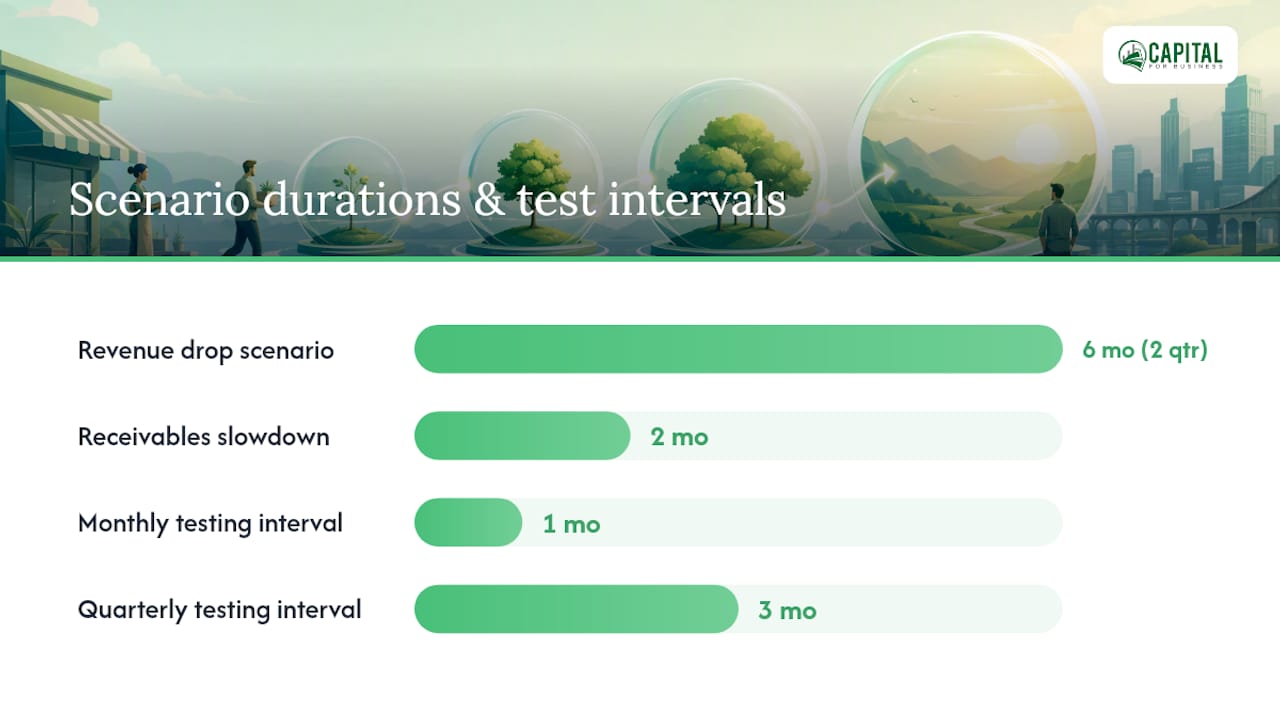
The single most useful thing you can do before signing anything is stress-test your covenant headroom against a downside scenario, not your best-case forecast. Model what happens to your debt-to-EBITDA ratio if revenue drops 20% for two quarters, or if receivables slow down for two months. If that scenario breaches a covenant, you need more cushion before you sign, not after.
Beyond stress testing, a few negotiation points make an outsized difference:
- Push for a clear, favorable definition of adjusted EBITDA, including add-backs specific to your business.
- Negotiate the calculation date and testing frequency; quarterly testing gives you more room to recover than monthly.
- Ask for carve-outs on permitted capital expenditures and permitted additional debt so growth spending doesn't automatically trip a covenant.
- Request a step-down or step-up structure, where thresholds loosen or tighten gradually over the loan term instead of staying static.
Pro Tip: Build a one-page covenant dashboard you update monthly, showing the actual ratio, the required threshold, your headroom, and what's driving any change. Weak or vague covenant language is one of the risk factors Harvard Business School research on credit covenants associates with worse outcomes for both sides, so clarity protects you as much as it protects the lender.
What Should You Do Before Signing or During a Near Breach?
A short pre-signing routine catches most covenant problems before they become expensive ones.
- Model each proposed covenant against your last two years of financials and a realistic downside case, not just projections.
- Confirm who inside your company owns monthly compliance reporting and which documents the lender actually requires.
- Negotiate an equity cure right, a grace period for missed tests, and a clear amendment process before you need any of them.
- If you're already near a breach, prepare a remediation plan and reach out to your lender before the test date, not after.
Reviewing your term sheet before signing with this checklist in hand turns covenant negotiation from a reactive scramble into a routine part of underwriting.
Capital for Business's Perspective on Fair Covenants
Since 2009, lenders have observed that covenants written for a $50 million company rarely fit a $2 million one. Stepped thresholds, clear EBITDA definitions, and carve-outs for planned capital spending matter more to a small borrower than to a large one, because a single bad quarter carries proportionally more weight. Fair covenant design isn't about loosening every requirement. It's about writing terms a growing business can actually live inside without a routine slowdown becoming a contract crisis.
— Capital
Get Covenant-Aware Financing Built for Your Business
Some lenders offer small business owners a faster path to funding than the drawn-out underwriting cycles typical of banks and credit unions, often delivering a decision in as little as 24 hours. Whether you need working capital, a line of credit, equipment financing, or a term loan, our team structures terms around what your business can realistically sustain, not a one-size-fits-all template.

If you're comparing offers and want a second set of eyes on the covenant language before you sign, or you need financing that fits a business banks have already turned down, talk to a loan specialist about your options. Explore SBA loan terms or start a funding request today to see what your business qualifies for.
Sources
For readers who want to go deeper: the Federal Reserve's Small Business Lending Survey tracks lending trends, the FDIC's supervision manual covers lender monitoring standards, and Investopedia and Corporate Finance Institute both offer clear covenant definitions and examples.
This article is general information, not a substitute for advice from a qualified financial advisor. Consult a qualified financial professional about your own circumstances before acting on anything here.
- Small Business Lending Survey (SLOOS) — Federal Reserve (Apr 2026)
- Covenants in contracts: Definitions and examples — Investopedia
- Loan covenant — Corporate Finance Institute
- Weak credit covenants (working paper) — Harvard Business School
FAQ
What Are Some Examples of Loan Covenants?
Common examples include maintaining a debt-to-EBITDA ratio below a set multiple, keeping DSCR above 1.15x to 1.35x, restricting additional debt without lender consent, and requiring monthly financial reporting.
What Are the Different Types of Loan Covenants?
The main categories are affirmative covenants (required actions), negative covenants (restricted actions), and financial covenants (numeric performance tests), with maintenance and incurrence describing how often each financial test applies.
What Are the Three Types of Covenants?
Most agreements organize covenants into affirmative, negative, and financial categories, though reporting and information covenants often appear as a practical fourth grouping.
What Are Business Covenants?
A business covenant is any contractual condition in a financing agreement that requires or restricts borrower behavior, enforced through periodic testing, reporting, or both.
Does Capital for Business Help Structure Loans Around Covenants?
Yes. Capital for Business works with small business owners on working capital loans, lines of credit, term loans, and equipment financing, structuring terms to match what a growing business can realistically sustain.