
The strongest alternatives to iBank.ca.gov programs are Community Development Financial Institutions (CDFIs), U.S. Small Business Administration (SBA) loans, and private conventional bank financing. Each path serves a different business profile, and knowing which fits your situation saves time and protects your capital.
Here are the main options worth exploring:
- CDFIs: Mission-driven lenders that work with borrowers who have lower credit scores, limited collateral, or prior loan defaults. They offer flexible repayment terms and rates comparable to commercial banks.
- SBA loans: Federal programs with defined eligibility standards. Strong for established businesses with solid documentation, but strict on ownership and credit requirements.
- Private conventional bank financing: The primary route for commercial real estate when state guarantees are unavailable, though it carries more lender risk without a state backstop.
- State-level loan guarantee programs: Several states run programs modeled after California's iBank structure, providing credit enhancements through local financial development corporations.
- Avoid: High-cost online lenders and Merchant Cash Advances (MCAs) with rapid repayment schedules that can strain cash flow within months.
How iBank's Small Business Loan Guarantee Program actually works
IBank's Small Business Loan Guarantee Program does not lend money directly to businesses. Instead, it acts as a credit enhancer, partnering with seven Financial Development Corporations (FDCs) across California to back loans made by private financial institutions. That state-backed guarantee reduces lender risk, which is what makes financing accessible to businesses that would otherwise be declined.
Eligible uses include start-up costs, construction, inventory, working capital, business expansion, and lines of credit. The program serves businesses throughout California and has supported hundreds of small businesses each year since its founding in 1968.
Key program features include:
- Credit enhancement model: iBank guarantees the loan; a private lender originates it.
- FDC partnerships: Seven regional FDC partners process guarantees and provide technical assistance.
- Eligible uses: Working capital, equipment, construction, agriculture, and more.
- Flexible structures: Guarantees can be combined with conventional financing.
- Eligibility: Lawful permanent residents and certain visa holders may qualify alongside U.S. citizens.
What are the best financing alternatives to iBank programs?
Small businesses that do not qualify for iBank's program, or that need financing outside California, have several credible paths. The right choice depends on your credit profile, loan purpose, and how quickly you need funds.
- CDFIs: These community-based organizations specialize in borrowers who don't meet traditional bank criteria. They offer interest rates similar to commercial banks but with more flexible underwriting. CDFIs are certified responsible lenders and are not predatory.
- SBA loans: The SBA sets federal lending standards and works through approved private lenders. SBA 7(a) loans cover working capital, equipment, and real estate. The eligibility requirements are stricter than iBank's state-backed model, particularly around ownership structure and prior defaults.
- Private conventional bank financing: For commercial real estate purchases, private bank loans remain the primary alternative when state guarantees are not available. Rates and terms vary by lender, and down payment requirements are generally higher without a guarantee program backing the deal. Understanding commercial loan down payment requirements before applying helps you plan your capital structure realistically.
- Microloans: Smaller loan amounts, often through CDFIs or nonprofit lenders, suited for early-stage businesses or those needing under $50,000.
- Lines of credit: Revolving credit facilities that give businesses ongoing access to capital for operating expenses without reapplying each time.
- Equipment financing: Loans or leases tied specifically to equipment purchases, where the equipment itself serves as collateral.
- State and local grant programs: Some states and municipalities offer grants or low-interest loans for specific industries, minority-owned businesses, or businesses in underserved communities.
Pitfalls to avoid when looking for iBank alternatives
Not every lender offering fast capital is a safe choice. High-cost online lenders and MCA products often carry steep interest rates and require repayment in as little as 12 months, which can put serious pressure on a business's cash flow before it has time to grow.
Warning signs to watch for:
- Repayment schedules under 18 months with no flexibility
- Factor rates instead of annual percentage rates (APRs), which obscure the true cost
- No clear disclosure of fees before signing
- Pressure to accept terms without time to review
Pro Tip: Before signing any loan agreement, ask the lender for the full APR, all origination fees, and the total repayment amount. A legitimate lender will provide this without hesitation.
Lender variability is real across all financing types. Even within SBA-approved lenders, fees and rates differ. The same loan guarantee program can produce very different costs depending on which lender you choose. Shopping at least three lenders before committing is a practical standard, not just a suggestion. You can also review merchant cash advance risks to understand why MCAs are often a last resort rather than a first option.
How government programs distribute funds through private lenders
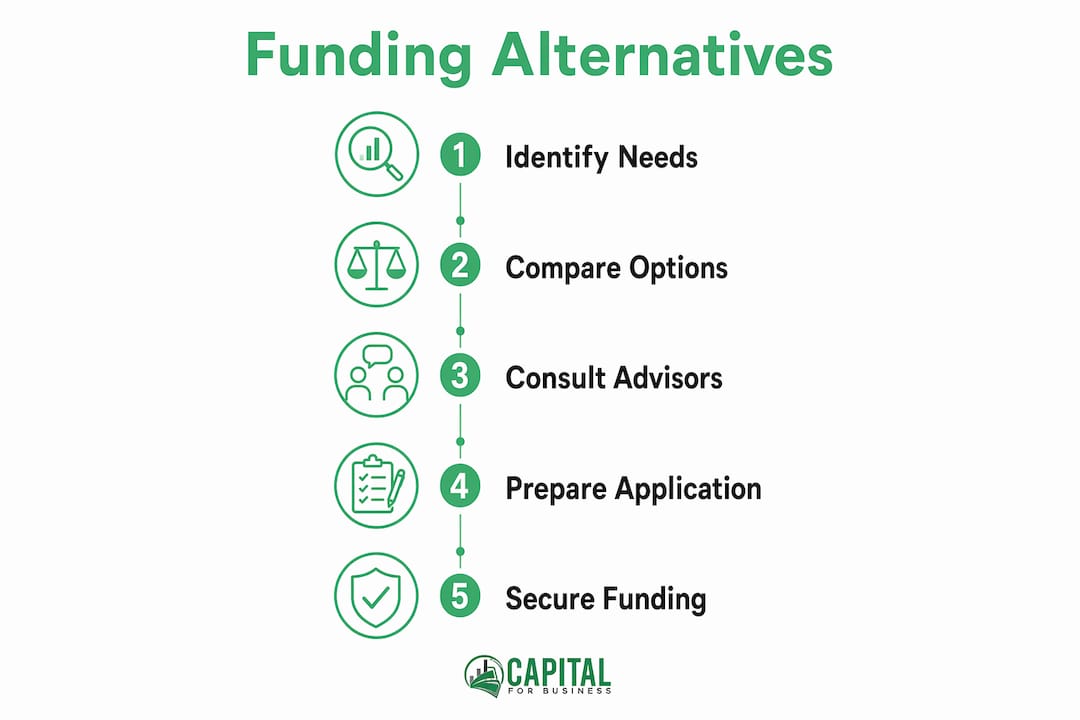
A common misconception is that government programs like iBank or CalHFA lend money directly to applicants. They do not. CalHFA does not lend directly to consumers; it works through approved private lenders who originate the loans and set their own fees. IBank operates the same way through its FDC partners.
This distinction matters because:
- The lender you choose directly affects your interest rate, origination fees, and loan conditions.
- You apply through a participating private lender, not through the government agency itself.
- Two borrowers using the same state program can end up with meaningfully different loan costs based on lender selection.
- Loan shopping among qualified lenders is not just permitted; it is expected and encouraged.
Understanding this model helps you approach the process with the right expectations. The government program sets the guarantee or subsidy structure; the private lender sets the price.
How to choose the right alternative financing source
Selecting the right lender starts with an honest assessment of your business profile. Ownership status, credit history, collateral, and loan purpose all affect which programs you can access and on what terms.
- Check SBA vs. state program eligibility separately. SBA loans have specific ownership and citizenship requirements that state-backed programs sometimes bypass, making iBank-style guarantees a better fit for certain deal structures.
- Prioritize CDFIs for underserved profiles. If your credit score is below conventional bank thresholds or you lack collateral, a CDFI is often the most practical starting point.
- Evaluate total loan cost, not just the interest rate. Origination fees, prepayment penalties, and guarantee fees all add to the real cost of borrowing.
- Verify lender credentials. Look for CDFI certification, SBA-approved lender status, or enrollment in a recognized state loan guarantee program.
Pro Tip: Work with a Small Business Development Center (SBDC) advisor before applying. They provide free guidance on matching your business profile to the right program and can help you prepare a stronger application.
Combining funding sources is also worth considering. A CDFI microloan paired with a working capital loan can cover both immediate operating needs and longer-term growth without overextending on a single debt obligation.

Capitalforbusiness offers fast, flexible funding when programs fall short
When state programs have eligibility gaps or processing timelines that don't fit your situation, Capitalforbusiness provides a direct path to funding without the bureaucratic delays. Since 2009, Capitalforbusiness has worked with business owners across hundreds of industries, offering small business loans in California up to $500,000, working capital, equipment financing, and business lines of credit.
The application process is straightforward, the terms are transparent, and approvals move faster than most state-backed programs. Whether you need capital for expansion, inventory, or day-to-day operations, Capitalforbusiness covers a wide range of small business loan types suited to different credit profiles and business needs. If you've hit a wall with traditional lenders or government programs, it's worth exploring what Capitalforbusiness can offer.
Key Takeaways
CDFIs, SBA loans, and private conventional bank financing are the three most reliable iBank.ca.gov alternatives, each suited to a different business profile and loan purpose.
| Point | Details |
|---|---|
| iBank is not a direct lender | It guarantees loans made by private FDC partners; you apply through a participating lender. |
| CDFIs serve underserved borrowers | They offer flexible underwriting and rates comparable to commercial banks for businesses with limited credit history. |
| SBA loans have strict eligibility | Federal standards exclude some ownership structures that state-backed programs like iBank can accommodate. |
| Avoid MCAs for long-term needs | MCA products can require rapid repayment within a relatively short period, threatening business cash flow. |
| Capitalforbusiness fills the gap | Fast approvals and a wide loan range make it a practical option when state programs don't fit your timeline or profile. |
FAQ
What is iBank's Small Business Loan Guarantee Program?
IBank's program is a state-backed credit enhancement that encourages private lenders to fund small businesses facing capital access barriers. It operates through seven Financial Development Corporation partners across California.
Are CDFIs a safe alternative to iBank financing?
Yes. CDFIs are certified, mission-driven lenders enrolled in programs like IBank's Loan Guarantee Program. They are considered responsible, non-predatory lenders that offer flexible terms for borrowers who don't meet traditional bank criteria.
Can non-U.S. citizens access iBank or alternative programs?
IBank's program extends eligibility to lawful permanent residents and certain visa holders. SBA loan eligibility is stricter on citizenship and ownership requirements, so state-backed programs often provide broader access.
Why do interest rates vary across lenders in the same program?
Each participating lender sets its own fees and rates within program guidelines. Borrowers should compare at least three lenders before committing, since costs can differ meaningfully even within the same guarantee program.
What should I do if I don't qualify for iBank or SBA loans?
Start with a CDFI or explore private lenders like Capitalforbusiness, which offer working capital, equipment financing, and business lines of credit with faster approvals and flexible eligibility requirements.