
Every small business owner knows the stress of meeting payroll, stocking inventory, or upgrading equipment when cash flow suddenly tightens. Finding reliable financing matters because these everyday needs can make or break growth plans in American and Canadian markets. This article clears up confusing myths about business funding, introduces innovative options beyond traditional loans, and reveals how the right financing strategies drive competitive advantage and lasting success.
Table of Contents
- Defining Business Financing and Common Misconceptions
- Types of Small Business Financing Options
- How Financing Supports Daily Operations and Growth
- Eligibility, Documentation, and Application Requirements
- Risks, Costs, and Choosing the Best Funding Solution
Key Takeaways
| Point | Details |
|---|---|
| Diverse Financing Options | Entrepreneurs should explore various financing methods such as debt and equity to find the best fit for their needs and business stage. |
| Understanding Misconceptions | Many business owners mistakenly believe that perfect credit is necessary for funding, overlooking alternative options that are available. |
| Financial Documentation is Key | Comprehensive financial documentation is essential for a successful funding application, including a solid business plan and up-to-date statements. |
| Assess Risks and Costs | Businesses must evaluate risks and associated costs of financing to make informed decisions that support long-term growth and stability. |
Defining Business Financing and Common Misconceptions
Business financing represents the strategic process of securing funds to support a company's operational and growth objectives. Small business financing methods have dramatically evolved with emerging financial technologies, offering entrepreneurs more flexible funding opportunities than ever before.
At its core, business financing encompasses several key funding approaches:
- Self-financing: Using personal savings or assets
- Credit-based options: Business credit cards and lines of credit
- Bank loans: Traditional small business lending
- Alternative financing: Crowdfunding, peer-to-peer lending
- Equity investments: Venture capital and angel investors
Many small business owners harbor misconceptions about financing that can hinder their growth potential. Common myths include believing that only perfect credit qualifies for funding or that all financing options carry identical terms and risks.
The reality is far more nuanced. Financing strategies vary widely, with each method presenting unique advantages and potential drawbacks. Some entrepreneurs mistakenly assume traditional bank loans represent their sole legitimate funding pathway, overlooking innovative alternatives like invoice trading or mobile payment platforms.
Pro tip: Research multiple financing options and compare their specific terms, interest rates, and repayment structures before committing to any single funding method.
Types of Small Business Financing Options
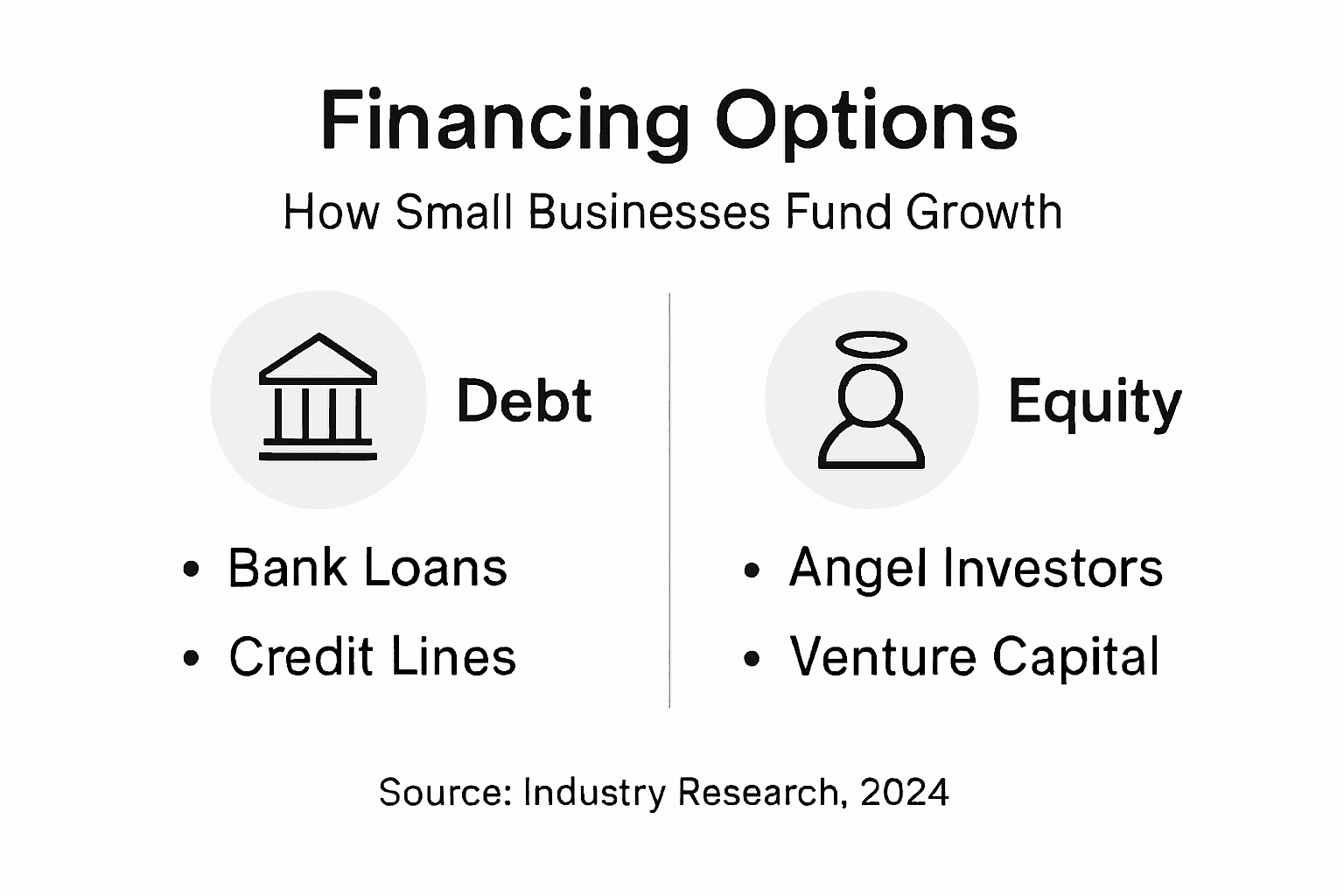
Small businesses have multiple financing paths to support their growth and operational needs. Comparative financing analysis reveals that entrepreneurs can choose from diverse funding strategies tailored to their specific business requirements and growth stages.
The primary types of small business financing include:
-
Debt Financing:
- Bank loans
- Lines of credit
- Equipment financing
- Small business administration (SBA) loans
-
Equity Financing:
- Venture capital
- Angel investors
- Private equity
- Crowdfunding platforms
Debt financing involves borrowing money that must be repaid with interest, typically through structured loan agreements. These options provide immediate capital without surrendering company ownership, making them attractive for businesses seeking financial flexibility.

Equity financing requires business owners to exchange partial company ownership for investment capital. While this approach can provide substantial funding, it also means sharing decision-making power and potential future profits with investors.
Some businesses utilize hybrid financing models that combine debt and equity strategies, allowing for more nuanced funding approaches that balance risk and growth potential.
Here's a quick comparison of debt and equity financing approaches:
| Criteria | Debt Financing | Equity Financing |
|---|---|---|
| Ownership Impact | No ownership dilution | Partial ownership given up |
| Repayment Requirement | Regular payments with interest | No repayment, but profit sharing |
| Decision Control | Owner retains full control | Investors may influence decisions |
| Typical Funding Amount | Often lower, fixed value | Potentially higher, variable amount |
| Best For | Stable, cash-flow positive businesses | High-growth startups needing capital |
Different financing options suit different business stages and objectives. Carefully evaluate your company's specific needs before selecting a funding strategy.
Pro tip: Consult with a financial advisor to develop a comprehensive financing strategy that aligns with your specific business goals and growth trajectory.
How Financing Supports Daily Operations and Growth
Strategic financial management plays a critical role in supporting small businesses through various operational and growth challenges. Financing enables companies to maintain consistent cash flow, invest in essential resources, and navigate unexpected market fluctuations.
Financing supports daily operations through several key mechanisms:
-
Inventory Management:
- Purchase necessary stock
- Maintain adequate supply levels
- Respond quickly to market demand
-
Equipment Acquisition:
- Replace outdated machinery
- Upgrade technology
- Improve operational efficiency
-
Staffing and Talent Development:
- Hire key personnel
- Provide training programs
- Support workforce expansion
Working capital represents the financial lifeblood of small businesses, allowing companies to cover operational expenses, manage short-term obligations, and seize growth opportunities. Without adequate financing, businesses risk becoming stagnant or unable to respond to market changes.
Technology-driven financial strategies can further enhance operational capabilities. By leveraging financial tools and analytics, businesses can make more informed decisions, optimize resource allocation, and create more robust growth strategies.
Effective financing is not just about obtaining funds, but strategically using those resources to drive sustainable business growth and competitive advantage.
Pro tip: Develop a comprehensive financial plan that anticipates both immediate operational needs and long-term growth objectives, allowing for flexible and strategic resource allocation.
Eligibility, Documentation, and Application Requirements
Small business funding requirements involve a comprehensive evaluation of a company's financial health, operational capacity, and growth potential. Understanding these criteria is crucial for entrepreneurs seeking financial support.
Typical eligibility criteria include:
-
Business Structure:
- Registered legal business entity
- Minimum operational period (usually 6-12 months)
- Specific industry qualifications
-
Financial Documentation:
- Personal and business tax returns
- Profit and loss statements
- Balance sheets
- Bank statements
-
Credit Requirements:
- Minimum credit score threshold
- Debt-to-income ratio
- Previous payment history
- Outstanding debt levels
Credit scores play a pivotal role in financing eligibility, with most lenders requiring a minimum score between 620 and 680. Businesses with stronger credit profiles typically access more favorable loan terms and higher funding amounts.
The application process demands meticulous preparation. Entrepreneurs must compile a comprehensive business plan that demonstrates financial stability, market understanding, and clear growth strategies. This document serves as a critical tool for lenders to assess potential risk and business viability.
Successful financing applications combine strong financial documentation, clear business objectives, and a compelling narrative of future growth potential.
Pro tip: Gather all financial documents in advance and consider a professional review to ensure your application presents the most favorable and accurate representation of your business.
Risks, Costs, and Choosing the Best Funding Solution
Small business financing risks represent complex challenges that entrepreneurs must carefully navigate to ensure long-term financial stability. Understanding potential pitfalls is crucial for making informed funding decisions.
Key financial risks include:
-
Interest Rate Risks:
- Variable rate fluctuations
- Potential unexpected payment increases
- Long-term cost implications
-
Collateral Risks:
- Personal asset exposure
- Potential property or equipment seizure
- Credit score impact
-
Repayment Challenges:
- Cash flow disruptions
- Penalty fees for missed payments
- Potential default consequences
Funding costs extend beyond simple interest rates, encompassing origination fees, processing charges, and potential prepayment penalties. Businesses must carefully analyze the total financial burden associated with each funding option.
Comparing funding solutions requires a comprehensive evaluation of multiple factors. Entrepreneurs should assess their specific business needs, current financial health, and long-term growth objectives when selecting a financing strategy.
Key risks and costs to consider when choosing business funding solutions:
| Risk or Cost Factor | Potential Impact | Mitigation Strategy |
|---|---|---|
| Variable Interest Rates | Payment unpredictability | Fixed-rate agreements |
| Origination Fees | Increased total cost | Negotiate lower fees |
| Collateral Exposure | Asset loss risk | Use unsecured loans if possible |
| Penalty Charges | Higher long-term expenses | Ensure cash flow, timely payments |
Not all funding risks are negative. Calculated risks can provide opportunities for significant business expansion and competitive advantage.
Pro tip: Create a detailed financial projection that includes worst-case scenarios to fully understand the potential impacts of different funding options before making a final decision.
Unlock the Growth Potential of Your Small Business with the Right Financing
The article highlights the critical challenge many small business owners face: securing flexible and reliable financing to manage daily operations and fuel growth. With common pain points like navigating eligibility requirements, understanding financing risks, and selecting the best funding solution, business owners need trusted financial partners who offer diverse options beyond traditional loans. Whether you require working capital, equipment financing, or a business line of credit, having access to tailored funding strategies can turn your growth vision into reality.
At Capital for Business, we understand these challenges firsthand. Our experience serving hundreds of industries nationwide and in Canada means we provide fast, efficient financial solutions even when banks say no. We offer small business loans, merchant cash advances, credit card processing, and more, all designed to support your unique business goals and help you overcome those common financing hurdles.
Ready to move beyond financing misconceptions and secure the funds your business deserves?

Explore how small business financing can power your operations and growth today. Partner with us to get the funding you need quickly and affordably. Visit Capital for Business now and take the first step toward unlocking your company’s full potential.
Frequently Asked Questions
Why is financing important for small businesses?
Financing is essential for small businesses as it provides the necessary capital to cover operational expenses, invest in growth opportunities, and maintain consistent cash flow. Without adequate funding, businesses may struggle to meet market demands or expand effectively.
What types of financing options are available for small businesses?
Small businesses can explore various financing options, including debt financing (like bank loans and lines of credit), equity financing (such as venture capital and angel investments), and alternative options like crowdfunding and peer-to-peer lending.
How do I determine the right financing option for my business?
To choose the right financing option, evaluate your business's specific needs, financial health, and growth objectives. Consider factors such as ownership impact, repayment requirements, and the amount of funding needed to align with your company's goals.
What documentation is typically required when applying for business financing?
Common documentation required for business financing applications includes personal and business tax returns, profit and loss statements, balance sheets, bank statements, and a comprehensive business plan that outlines financial stability and growth strategies.
Recommended
- Small Business Funding Explained: Key Paths to Growth
- Debt vs. Equity Financing for Small Business Expansion
- Why Access Small Business Funding: Unlocking Growth
- 8 Solutions to Sustained Business Growth: Financial Mastery for Small Business Owners |
- Role of Accountancy for Growth – Impact on Business Success