
Contractors face a persistent challenge: paying for materials, labor, and permits upfront while waiting 30 to 90 days for client payments. This timing mismatch creates cash flow gaps that can stall operations, delay payroll, and limit growth opportunities. Business loans bridge these gaps, enabling contractors to maintain smooth operations and invest strategically. Understanding how different loan types address specific cash flow needs helps contractors choose the right financing solutions.
Table of Contents
- Understanding Contractor Cash Flow Needs
- Why Contractors Need Business Loans
- Types of Loans for Contractors and Their Uses
- Seasonal and Operational Challenges for Contractors
- Loan Qualification Factors and Common Misconceptions
- Strategic Use of Multiple Loans and Practical Applications
- Explore Flexible Business Loan Options for Contractors
- Frequently Asked Questions
Key takeaways
| Point | Details |
|---|---|
| Cash flow timing gaps | Contractors pay upfront costs but face delayed client payments, creating operational challenges. |
| Loan types serve different needs | Working capital loans, equipment financing, and credit lines address specific contractor requirements. |
| Lender qualification criteria | Credit score, collateral, business plan, and industry experience determine loan approval. |
| Strategic loan combinations | Using multiple loan products simultaneously supports financial resilience and operational stability. |
| Seasonal and operational risks | Labor shortages, material price volatility, and seasonal slowdowns increase financing demands. |
Understanding contractor cash flow needs
Contractors operate in a unique financial environment where expenses arrive before revenue. You typically purchase materials, pay subcontractors, and secure permits before starting work. Client payments arrive weeks or months later, creating a gap between spending and income.
Contractors pay materials and labor upfront but face payment delays of 30 to 90 days, a reality that strains even well-managed businesses. Project-based revenue cycles compound this challenge. Unlike businesses with steady monthly income, contractors experience irregular cash flow tied to project completion milestones.
Upfront costs include several categories:
- Materials and supplies purchased before project start
- Subcontractor deposits and labor payments
- Permit fees and regulatory compliance costs
- Equipment rentals or purchases
- Insurance premiums and bonding requirements
Managing timing mismatches between expenses and revenue represents a core operational challenge. You need cash available when suppliers demand payment, even when clients haven't paid you yet. This dynamic makes how business loans work in construction essential knowledge for maintaining healthy operations.
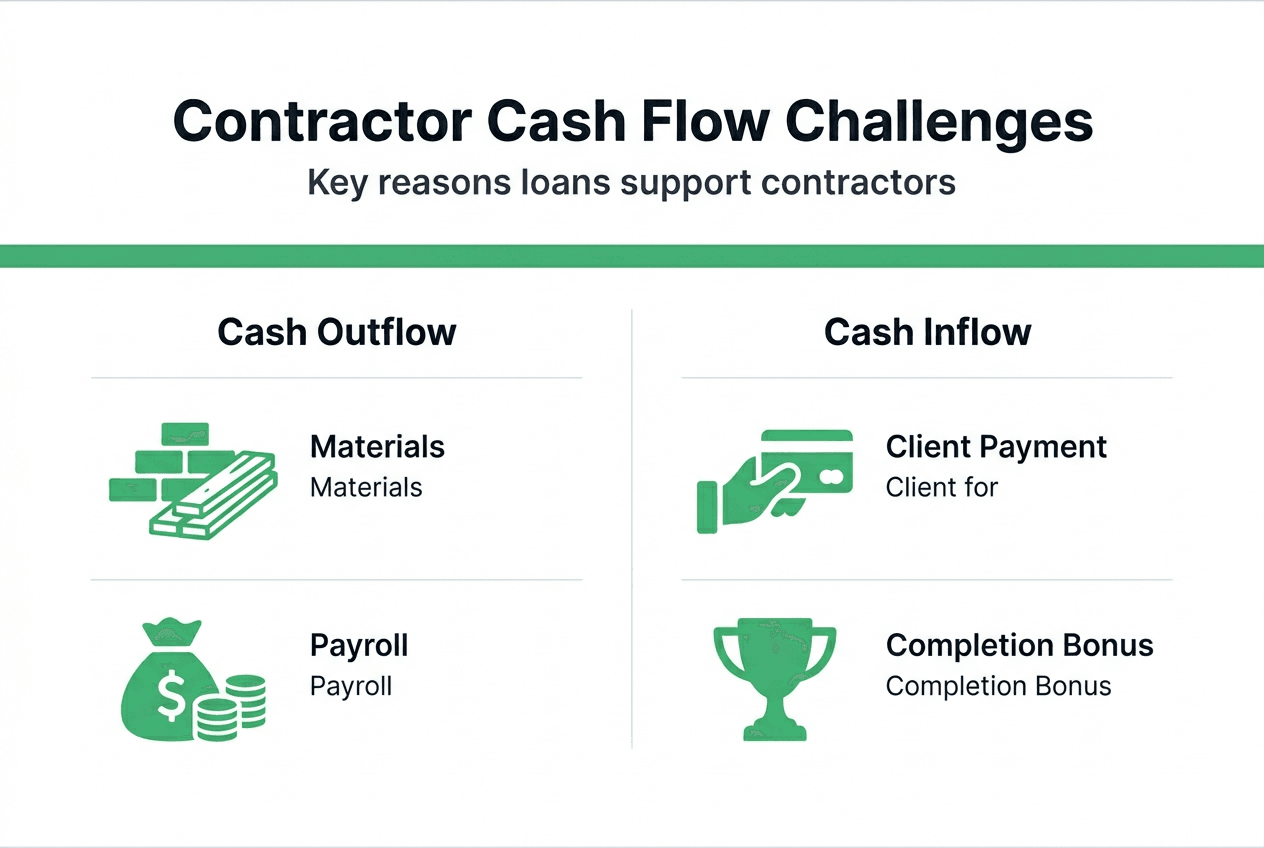
The gap widens during growth phases. Taking on larger projects or multiple simultaneous jobs increases upfront capital requirements exponentially. Without adequate financing, you may need to turn down profitable opportunities simply because you lack the cash to cover initial expenses.
Why contractors need business loans
Business loans prevent operational disruptions caused by payment delays. When client payments arrive late, you still need to meet payroll, pay suppliers, and cover ongoing expenses. Loans bridge operating expense gaps caused by delayed payments and help maintain critical business relationships.

Timely payments to employees and suppliers protect your reputation and operations. Missing payroll damages team morale and can lead to skilled worker departures. Late supplier payments may result in restricted credit terms or refusal to extend net payment options on future orders.
Financing enables strategic purchasing decisions. Buying materials in bulk often reduces per-unit costs significantly, but requires substantial upfront capital. Loans provide the funds to capitalize on volume discounts without depleting operating reserves.
Growth opportunities require immediate capital investment. Expanding your service area, hiring additional crews, or bidding on larger projects demands financial resources before revenue increases materialize. Business loans supply the capital needed to scale operations without waiting for accumulated profits.
Equipment purchases represent another critical financing need. Specialized machinery costs tens or hundreds of thousands of dollars. Rather than draining cash reserves, loans spread these costs over time while the equipment generates revenue. This approach preserves working capital for daily operations.
Pro Tip: Calculate your average payment cycle length and maintain a financing cushion covering at least 1.5 times that period to weather unexpected delays.
Understanding construction business loan options helps you match financing to specific operational needs rather than applying for generic business funding.
Types of loans for contractors and their uses
Different loan products serve distinct contractor financing needs. Selecting the appropriate type maximizes benefits while minimizing costs.
Working capital loans address short-term operating expenses like payroll, materials, and supplier payments. These loans typically offer fixed repayment terms and lump-sum funding. Use them when you need immediate cash to cover a defined expense period, such as bridging a 60-day payment gap on a major project.
Equipment financing spreads the cost of expensive machinery over several years. Rather than paying $150,000 upfront for an excavator, you make monthly payments while the equipment generates project revenue. The equipment itself often serves as loan collateral, potentially offering better rates than unsecured financing.
Business lines of credit provide flexible, revolving funds. You draw money as needed and pay interest only on the amount used. This flexibility makes credit lines ideal for managing unpredictable cash flow fluctuations. When a client payment arrives, you can pay down the balance and reduce interest costs.
| Loan Type | Best For | Typical Terms | Key Advantage |
|---|---|---|---|
| Working Capital | Operational expenses | 6 months to 3 years | Quick access to lump sum |
| Equipment Financing | Machinery purchases | 3 to 7 years | Equipment serves as collateral |
| Line of Credit | Flexible cash needs | Revolving, ongoing | Pay interest only on funds used |
| Term Loans | Large investments | 1 to 10 years | Predictable payments |
Each loan type protects cash flow differently. Working capital loans provide immediate relief during payment delays. Equipment financing preserves cash reserves for operations. Lines of credit offer safety nets for unexpected expenses or opportunities.
Exploring commercial business loan types and benefits reveals how combining products strategically addresses multiple financial needs simultaneously. Learning how to use business loans for growth helps contractors move beyond survival mode to expansion planning.
Seasonal and operational challenges for contractors
Seasonal fluctuations create predictable yet challenging revenue patterns. Winter months often bring fewer projects in many regions, reducing income while fixed costs like equipment payments, insurance, and administrative expenses continue. Loans help bridge these lean periods without laying off skilled workers or defaulting on obligations.
Labor shortages significantly impact contractor finances. 94% of construction firms reported labor shortages pushing costs up, increasing financing needs. When you need to offer higher wages to attract qualified workers, working capital becomes even more critical.
Material price volatility introduces sudden cost spikes that can devastate project budgets. Lumber, steel, and fuel prices fluctuate based on global market conditions. A project bid based on current prices may face 15% to 25% higher material costs by the time work begins. Financing helps absorb these unexpected increases without abandoning jobs or sacrificing profit margins.
Operational challenges that increase financing demands include:
- Weather delays extending project timelines and payroll periods
- Equipment breakdowns requiring emergency repairs or replacements
- Regulatory changes mandating compliance investments
- Client financial problems causing payment defaults
- Competitive bidding pressure reducing profit margins
Careful loan planning prevents defaults during difficult periods. Overextending credit during peak seasons can lead to problems when revenue drops. Structure loan repayments to align with your annual revenue cycle, concentrating payments during high-earning months.
Pro Tip: Build a seasonal cash flow projection showing monthly revenue and expenses over a full year. Use this model to time loan applications and structure repayment schedules that match your revenue patterns.
Understanding how to transition your contracting business in winter helps manage seasonal challenges beyond financing alone.
Loan qualification factors and common misconceptions
Lenders evaluate several factors when considering contractor loan applications. Lenders evaluate credit score, collateral, business plan, and industry experience due to contractor business risks. Your personal and business credit scores signal repayment reliability to lenders.
Collateral requirements reflect construction industry risks. Project delays, client defaults, and economic downturns affect contractors disproportionately. Lenders mitigate these risks by securing loans against equipment, real estate, or other assets. Equipment financing naturally uses the purchased machinery as collateral.
A solid business plan demonstrates operational understanding and financial management capability. Lenders want evidence that you understand your market, have reliable project pipelines, and manage costs effectively. Include detailed cash flow projections showing how loan proceeds will be used and repaid.
Industry experience significantly improves approval odds. Lenders favor contractors with established track records over startups. Years in business, completed project portfolios, and industry certifications strengthen applications. New contractors may need larger down payments or higher interest rates to offset perceived risk.
Common misconceptions about contractor loans:
- Believing loans are only for business expansion, not operational needs
- Assuming approval is guaranteed based on project backlog alone
- Thinking minimal documentation is required for small loan amounts
- Expecting instant approvals without financial statement review
- Underestimating the importance of personal credit scores
Contractor loans are often misunderstood as only growth tools, but many contractors use them to manage operations and cash flow.
The reality is that most contractor financing addresses operational cash flow rather than expansion. Maintaining smooth operations during payment delays prevents the disruptions that damage client relationships and reputation.
Avoiding small business financing mistakes starts with understanding lender perspectives and preparing thorough applications that address their key concerns.
Strategic use of multiple loans and practical applications
Sophisticated contractors combine loan products to address different financial needs simultaneously. A line of credit handles unpredictable cash flow fluctuations while equipment loans finance machinery purchases. This approach matches financing costs to specific uses.
Using a line of credit for flexible cash flow management provides several advantages. You maintain access to emergency funds without paying interest on unused amounts. When a client payment arrives late, you draw from the line to cover payroll. Once the payment arrives, you repay the balance and reduce interest charges.
Equipment loans spread high-cost asset payments over multiple years. Purchasing a $200,000 excavator with a five-year loan creates predictable monthly payments of approximately $3,800 (assuming 6% interest). The equipment generates project revenue while you gradually pay off the loan, preserving tens of thousands in working capital.
Practical loan combination example:
- Establish a $75,000 line of credit for operational flexibility
- Secure a $150,000 equipment loan for a new backhoe
- Obtain a $50,000 working capital loan to bridge a 90-day payment gap on a major project
- Maintain equipment financing separately for a truck fleet upgrade
This strategy provides operational stability through the credit line, capital equipment through dedicated financing, and project-specific cash flow through working capital loans. Interest paid only on funds actually drawn from the line of credit minimizes financing costs.
| Financing Scenario | Recommended Product | Typical Amount | Repayment Period |
|---|---|---|---|
| Cover payroll during payment delay | Working capital loan | $25,000 to $100,000 | 6 to 18 months |
| Purchase excavator | Equipment financing | $100,000 to $300,000 | 3 to 7 years |
| Manage irregular expenses | Line of credit | $50,000 to $200,000 | Revolving |
| Fund major expansion | Term loan | $100,000+ | 3 to 10 years |
Multiple loans help avoid project delays during payment gaps. Rather than declining a profitable project because you lack upfront capital, you draw on your line of credit or working capital loan. This ability to accept opportunities regardless of current cash position drives long-term growth.
Maintaining financial stability requires disciplined loan use. Track each loan's purpose, terms, and repayment schedule. Ensure total monthly loan payments don't exceed 25% to 30% of average monthly revenue. Higher ratios increase default risk during slow periods.
Accessing working capital loan options specifically designed for contractor cash flow needs ensures you have appropriate financing tools available when opportunities or challenges arise.
Explore flexible business loan options for contractors
Managing contractor cash flow requires financing partners who understand construction industry dynamics. Capital For Business offers tailored loan solutions designed for contractors facing seasonal fluctuations, payment delays, and growth opportunities.

Our working capital loans bridge gaps between project expenses and client payments, ensuring you never miss payroll or supplier deadlines. Equipment financing spreads machinery costs over manageable terms while preserving operating cash. Flexible credit lines provide safety nets for unexpected expenses or opportunities.
Fast approvals and funding help you act quickly when opportunities arise. Our team understands construction business cycles and structures repayment terms that align with contractor revenue patterns. Whether you need $25,000 to cover a short-term gap or $250,000 for major equipment purchases, we offer solutions that fit your specific situation.
Explore types of easy small business loans that match your immediate needs. Review equipment financing options for machinery purchases. Discover working capital loan benefits for managing operational cash flow. Our financing experts help contractors build financial resilience through strategic loan combinations.
Frequently asked questions
Why do contractors often need loans to manage cash flow?
Contractors pay for materials, labor, and permits upfront but wait 30 to 90 days for client payments. This timing mismatch creates cash flow gaps that loans bridge, ensuring continuous operations. Without financing, contractors must turn down profitable projects or risk missing critical payments.
What type of loan works best for purchasing construction equipment?
Equipment financing offers the best terms for machinery purchases because the equipment itself serves as collateral. These loans typically feature longer repayment periods (three to seven years) and lower interest rates than unsecured options. Monthly payments spread costs while the equipment generates project revenue.
How do lines of credit differ from working capital loans for contractors?
Lines of credit provide revolving access to funds, and you pay interest only on amounts drawn. Working capital loans deliver lump-sum funding with fixed repayment terms. Credit lines suit unpredictable cash flow needs, while working capital loans work better for defined expense periods like bridging a specific payment delay.
What do lenders look for when evaluating contractor loan applications?
Lenders assess credit scores, collateral availability, business plans, and industry experience. They want evidence of reliable project pipelines, effective cost management, and financial stability. Strong applications include detailed cash flow projections showing exactly how loan proceeds will be used and repaid.
Can contractors use multiple loans simultaneously without overextending?
Yes, strategic use of multiple loan products addresses different needs without overextension. The key is ensuring total monthly loan payments stay below 25% to 30% of average monthly revenue. Contractors commonly maintain a credit line for flexibility, equipment loans for machinery, and working capital loans for project-specific gaps.
How do seasonal slowdowns affect contractor financing needs?
Seasonal revenue drops don't eliminate fixed costs like equipment payments and insurance. Loans help contractors maintain operations and retain skilled workers during slow periods. Smart contractors structure loan repayments to concentrate payments during high-earning months, reducing financial stress during seasonal downturns.
Recommended
- How Business Loans Work for Construction Pros
- Construction Business Loans: Unlocking Project Growth
- Why Real Estate Investors Need Business Loans | Capital For Business
- 7 Essential Construction Business Funding Tips for Growth
- ivoliq - Buchhaltung für Freelancer: Zeit tracken, Rechnungen erstellen, Steuern berechnen
- 7 Essential Swiss Banking Tips for Entrepreneurs