
Facing rejection from traditional banks can feel discouraging when you are working to grow your Canadian business. Many small business owners struggle to secure capital, often due to strict lending criteria and the funding gap highlighted by research. Retail and service entrepreneurs need reliable financial solutions that reflect their unique challenges. This guide sheds light on alternative funding approaches and clarifies common misconceptions, helping Canadian owners make informed decisions about expanding their operations.
Table of Contents
- Defining Small Business Funding and Misconceptions
- Types of Funding for Small Businesses
- How Alternative Funding Solutions Work
- Eligibility and Approval Requirements Explained
- Financial Implications: Costs and Benefits
- Risks, Pitfalls, and Common Mistakes to Avoid
Key Takeaways
| Point | Details |
|---|---|
| Understanding Small Business Funding | Small business funding encompasses various financial avenues including loans, grants, and alternative financing. Entrepreneurs should be aware of misconceptions regarding the ease of securing these funds. |
| Types of Funding Available | Small businesses can choose from debt financing, equity financing, government support, and alternative funding options, each with unique advantages and considerations. |
| Evaluating Alternative Funding | Alternative funding solutions offer flexible and innovative access to capital, but entrepreneurs must carefully assess cost structures and potential risks. |
| Avoiding Common Mistakes | To increase funding success, businesses should prepare comprehensive applications, understand funding terms, and conduct thorough research on different financing options. |
Defining Small Business Funding and Misconceptions
Small business funding represents a complex financial ecosystem designed to provide capital for entrepreneurs and small enterprise growth. Funding landscape research reveals that understanding this terrain requires dispelling common misconceptions and recognizing diverse financial pathways beyond traditional bank loans.
At its core, small business funding encompasses multiple financial resources, including:
- Bank loans and lines of credit
- Government grants and assistance programs
- Private equity and venture capital investments
- Alternative lending platforms
- Crowdfunding and peer-to-peer financing
- Angel investor networks
Many entrepreneurs mistakenly believe that securing funding is straightforward, but the reality is far more nuanced. The funding gap represents a significant challenge, particularly for small and medium businesses struggling to access capital. Research indicates that information asymmetry and complex qualification criteria often prevent businesses from identifying appropriate funding sources.
Small businesses face unique financial constraints that require strategic, diversified approaches to funding acquisition.
Non-traditional funding sources have dramatically expanded in recent years, offering more flexible alternatives to conventional financing. Small business financing strategies now include innovative solutions like fintech platforms, which are reshaping how entrepreneurs access capital.
Pro tip: Before pursuing funding, conduct thorough research on multiple financing options and prepare a comprehensive business plan that demonstrates your venture's potential.
Types of Funding for Small Businesses
Small businesses have multiple financing options available to support their growth and operational needs. Government finance mechanisms reveal a diverse landscape of funding strategies designed to address different business stages and sector requirements.
The primary types of business funding include:
- Debt Financing
- Bank loans
- Line of credit
- Equipment financing
- Commercial mortgages
- Equity Financing
- Venture capital
- Angel investors
- Private equity
- Crowdfunding platforms
- Government Support
- Small business grants
- Loan guarantee programs
- Tax incentive programs
- Alternative Funding
- Merchant cash advances
- Peer-to-peer lending
- Invoice factoring
- Microlending
Each funding type comes with unique advantages and considerations. Debt financing provides immediate capital while maintaining business ownership, whereas equity financing involves trading partial ownership for investment. Small business funding strategies demonstrate that successful entrepreneurs often combine multiple funding sources to create a comprehensive financial strategy.
Selecting the right funding mix requires understanding your business's specific financial needs, growth stage, and long-term objectives.
The complexity of funding options means entrepreneurs must carefully evaluate each approach. Factors like interest rates, repayment terms, potential equity dilution, and qualification requirements significantly impact funding decisions. Some methods work better for specific industries or business growth stages, making thorough research essential.

Pro tip: Develop a comprehensive business plan and financial projection before approaching potential funding sources to increase your credibility and funding success rate.
How Alternative Funding Solutions Work
Alternative funding methods represent innovative financial strategies designed to provide small businesses with flexible capital access beyond traditional banking systems. These solutions emerge as powerful alternatives for entrepreneurs facing challenges with conventional lending requirements.
The primary alternative funding mechanisms include:
- Crowdfunding
- Reward-based platforms
- Equity crowdfunding
- Donation-based campaigns
- Debt crowdfunding
- Peer-to-Peer Lending
- Online lending platforms
- Direct investor connections
- Flexible repayment terms
- Lower qualification barriers
- Fintech Financing
- Digital lending algorithms
- Rapid approval processes
- Data-driven credit assessment
- Mobile financing applications
- Revenue-Based Financing
- Payment based on business income
- Percentage-driven repayment
- Flexible funding structures
- Low upfront collateral requirements
Alternative finance platforms leverage technology to create more inclusive funding environments. These solutions typically use advanced algorithms and data analysis to assess business potential, often providing faster and more accessible funding compared to traditional bank loans.
Alternative funding solutions prioritize business potential over rigid financial history, creating opportunities for innovative entrepreneurs.
The complexity of alternative funding requires careful evaluation. While these methods offer greater flexibility, they may also involve higher interest rates or more complex terms. Entrepreneurs must thoroughly understand each funding mechanism's specific requirements, potential risks, and long-term financial implications before committing to any alternative financing strategy.
Pro tip: Compare multiple alternative funding sources and carefully analyze their total cost of capital, not just the initial interest rate.
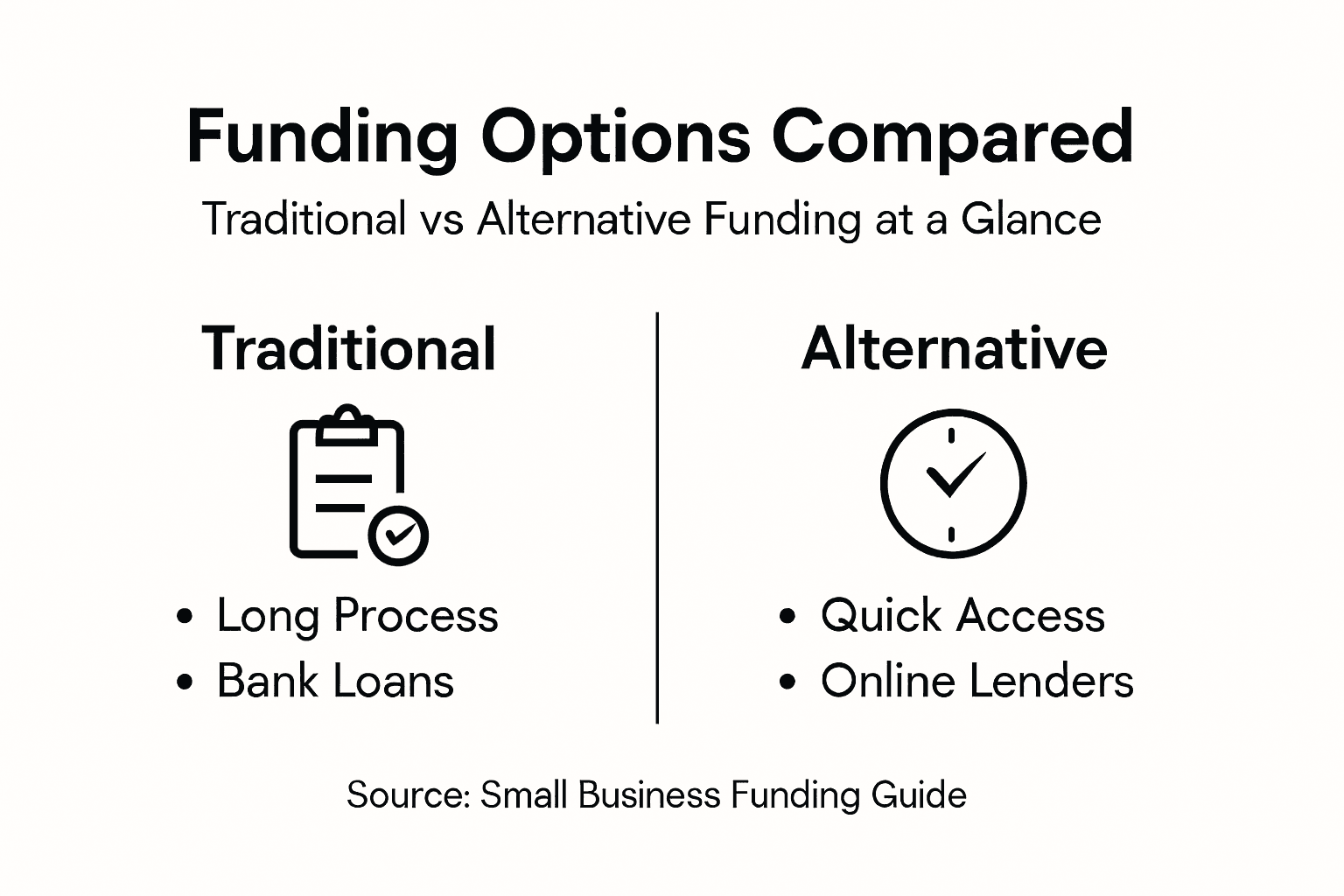
Here's a side-by-side look at how traditional and alternative funding sources differ for small businesses:
| Aspect | Traditional Funding | Alternative Funding |
|---|---|---|
| Approval Speed | Weeks to months | Often within days |
| Qualification Criteria | Strict and document-heavy | Flexible and technology-driven |
| Typical Collateral | Often required | Frequently not required |
| Ownership Impact | No equity loss | May include revenue sharing or equity |
| Cost Structure | Fixed interest rates | Variable costs and fees |
| Ideal Business Stage | Established, proven track record | Startups and early-stage ventures |
Eligibility and Approval Requirements Explained
Government support programs establish complex eligibility criteria that small businesses must navigate carefully when seeking funding. Understanding these requirements is crucial for successfully securing financial support and avoiding potential rejection.
The core eligibility components typically include:
- Financial Documentation
- Detailed business financial statements
- Tax returns for past 2-3 years
- Profit and loss statements
- Balance sheet reports
- Business Profile Requirements
- Minimum operational duration
- Revenue threshold levels
- Industry-specific qualifications
- Legal business registration
- Credit and Performance Metrics
- Personal and business credit scores
- Debt-to-income ratio
- Previous loan repayment history
- Collateral availability
- Strategic Business Elements
- Comprehensive business plan
- Growth projections
- Market analysis documentation
- Operational sustainability evidence
Funding approval processes involve rigorous assessment of multiple business performance indicators. Lenders and investors evaluate not just current financial health, but also potential future performance and risk mitigation strategies.
Successful funding approval requires demonstrating both financial stability and strategic vision for business growth.
Different funding sources maintain unique approval requirements. Traditional bank loans often demand more stringent documentation, while alternative lenders might use more flexible, technology-driven evaluation methods. Understanding these nuanced differences can help businesses target the most appropriate funding sources and prepare compelling applications.
Pro tip: Prepare a comprehensive application folder with all required documentation organized systematically before approaching potential funding sources.
Financial Implications: Costs and Benefits
Strategic funding research reveals that small business funding involves a complex balance between financial costs and potential strategic advantages. Understanding these nuanced implications is crucial for entrepreneurs seeking sustainable growth and financial stability.
The primary financial considerations include:
- Direct Financial Costs
- Interest rates
- Origination fees
- Processing charges
- Potential prepayment penalties
- Indirect Financial Impacts
- Equity dilution
- Cash flow management
- Potential tax implications
- Reporting requirements
- Strategic Benefits
- Accelerated business growth
- Enhanced market competitiveness
- Innovation funding
- Expanded operational capabilities
- Long-Term Financial Considerations
- Credit score implications
- Future borrowing potential
- Investor relationships
- Financial credibility
Alternative funding sources demonstrate that financial implications extend beyond immediate monetary transactions. Each funding method carries unique risk-reward profiles that require careful strategic evaluation.
Successful business funding is not about accessing capital, but strategically leveraging financial resources for sustainable growth.
Entrepreneurs must conduct thorough cost-benefit analyses, considering not just immediate financial requirements but long-term strategic implications. This approach helps businesses select funding sources that align with their growth objectives and financial capabilities, minimizing potential risks while maximizing opportunities.
Pro tip: Create a comprehensive financial projection that includes potential funding costs and anticipated returns before committing to any financing option.
The table below summarizes potential costs and benefits entrepreneurs should weigh when considering business funding options:
| Decision Factor | Financial Cost Example | Strategic Benefit Example |
|---|---|---|
| Interest Rates | 6% loan annual rate | Low-cost growth capital |
| Equity Dilution | 10% of company share | Access to investor guidance |
| Collateral Required | Business property lien | Larger funding amount possible |
| Documentation Demand | 2 years' tax returns | Enhanced credibility with lenders |
Risks, Pitfalls, and Common Mistakes to Avoid
Small business funding research reveals critical risks entrepreneurs must navigate when seeking financial support. Understanding potential pitfalls is essential for maintaining financial health and ensuring sustainable business growth.
The most significant funding risks include:
- Financial Overextension
- Taking excessive loans
- Misaligning debt with revenue
- Ignoring repayment capacity
- High-interest debt traps
- Documentation Errors
- Incomplete application materials
- Inaccurate financial statements
- Inconsistent business records
- Lack of comprehensive business plans
- Strategic Misconceptions
- Misunderstanding funding terms
- Overlooking hidden fees
- Failing to compare multiple options
- Neglecting long-term financial implications
- Compliance and Legal Risks
- Violating lending agreements
- Insufficient regulatory understanding
- Inadequate risk management
- Poor financial reporting
Funding landscape recommendations emphasize the importance of comprehensive due diligence and strategic financial planning. Entrepreneurs must develop a holistic understanding of funding mechanisms beyond immediate capital requirements.
Successful funding strategies require meticulous preparation, realistic projections, and a deep understanding of financial obligations.
Navigating the complex funding landscape demands proactive risk management. Small businesses must develop robust financial strategies, maintain transparent documentation, and continuously assess their funding approaches to minimize potential negative consequences and maximize growth opportunities.
Pro tip: Consult with financial advisors and thoroughly review all funding agreements before signing to identify potential hidden risks and complications.
Unlock Your Small Business Potential with Reliable Funding Solutions
Navigating the complex landscape of small business funding can feel overwhelming, especially when traditional banks impose strict qualification criteria and slow approval processes. If you are facing the challenge of securing flexible capital to support your growth, upgrade operations, or manage cash flow consider options that prioritize your business potential and provide fast, efficient access to funds. The article highlights key funding types and strategic approaches that every entrepreneur should understand before seeking financing to avoid costly pitfalls and maximize long-term benefits.
At Capital for Business, we know how critical it is to move quickly and confidently. Since 2009 we have empowered business owners across the United States and Canada with tailored financial products including small business loans working capital merchant cash advances equipment financing and business lines of credit. Our team stands ready to help you overcome funding gaps and leverage diverse financing options aligned with your growth stage without sacrificing equity or enduring lengthy approval hurdles.
Don’t let complicated eligibility requirements and confusing funding alternatives hold back your business success. Visit Capital for Business today to explore our comprehensive funding solutions designed specifically for small businesses like yours. Discover how our proven lending expertise can unlock the capital you need now so you can focus on growth and seize new opportunities with confidence.
Frequently Asked Questions
What are the main types of small business funding available?
Small business funding options include debt financing (bank loans, lines of credit), equity financing (venture capital, angel investors), government support (grants, loan guarantees), and alternative funding (crowdfunding, peer-to-peer lending).
How do alternative funding solutions differ from traditional bank loans?
Alternative funding solutions often provide faster approval, less stringent qualification criteria, and more flexible repayment terms compared to traditional bank loans, which typically require extensive documentation and time.
What are the eligibility requirements for securing small business funding?
Eligibility requirements generally include financial documentation (like tax returns, profit and loss statements), operational history, credit scores, and a well-prepared business plan showcasing growth potential and market analysis.
What are common mistakes to avoid when seeking small business funding?
Common mistakes include financial overextension, documentation errors, misunderstanding funding terms, and neglecting long-term implications of the funding. Conducting thorough research and preparation can help avoid these pitfalls.
Recommended
- Small Business Funding Explained: Key Paths to Growth
- Master Business Loan Application Workflow for Success
- 8 Solutions to Sustained Business Growth: Financial Mastery for Small Business Owners |
- Debt vs. Equity Financing for Small Business Expansion
- Role of Accountancy for Growth – Impact on Business Success
- loan - Finblog