
Many small business owners assume all business loans require collateral, but that's not true. Unsecured business loans provide financing without pledging assets, making them an accessible option for businesses that lack substantial collateral or prefer not to risk personal property. This guide explains what unsecured business loans are, how they work, their benefits and risks, and when they make sense for your business. You'll learn eligibility requirements, application steps, and how these loans compare to secured alternatives so you can make informed financing decisions.
Table of Contents
- What is an unsecured business loan? Understanding the basics
- Benefits and risks of unsecured business loans for small businesses
- How unsecured loans compare to secured loans: key differences
- How to apply for an unsecured business loan: step by step guide
- Explore flexible business loan options at Capital For Business
- Frequently asked questions
Key takeaways
| Point | Details |
|---|---|
| No collateral required | Unsecured business loans rely on creditworthiness rather than asset pledges, reducing personal risk. |
| Faster approval process | Without collateral appraisals, unsecured loans typically process quicker than secured financing options. |
| Higher interest rates | Lenders charge more to offset increased risk when no assets back the loan. |
| Credit requirements matter | Strong credit scores and business revenue history are essential for approval and favorable terms. |
| Flexible use cases | Funds can support working capital, expansion, inventory purchases, or managing cash flow gaps. |
What is an unsecured business loan? Understanding the basics
An unsecured business loan is financing that doesn't require you to pledge collateral like equipment, real estate, or inventory. Lenders approve these loans based on your credit profile, business revenue, and financial health rather than asset value. This makes them particularly attractive for service businesses, startups, or companies that lack substantial physical assets.
Eligibility centers on several key factors. Your personal and business credit scores play a major role, with most lenders preferring scores above 650. Revenue consistency matters too, lenders want to see steady cash flow demonstrating your ability to repay. Time in business also influences approval, with many lenders requiring at least six months to two years of operating history.
Typical loan amounts for unsecured financing range from $5,000 to $500,000, though most small businesses receive between $25,000 and $250,000. Terms usually span six months to five years, with shorter terms common for smaller amounts. The application process involves submitting financial statements, tax returns, bank statements, and business documentation.
Common lenders include online lenders, alternative finance companies, and some traditional banks. Online lenders often provide the fastest approvals, sometimes within 24 to 48 hours. Alternative finance companies like Capital For Business specialize in serving businesses that banks might decline, offering different types of easy small business loans tailored to various credit profiles.
Application requirements typically include:
- Personal and business credit reports
- Two years of business tax returns
- Three to six months of bank statements
- Profit and loss statements
- Business plan or use of funds explanation
Pro Tip: Before applying, check your credit reports for errors and dispute any inaccuracies. Even small corrections can improve your score enough to qualify for better rates.
The lending process moves faster than secured loans because lenders skip collateral appraisals and title searches. Once approved, funds often arrive within days rather than weeks. This speed makes unsecured loans ideal when you need capital quickly for time sensitive opportunities or urgent business needs.
Benefits and risks of unsecured business loans for small businesses
Unsecured loans offer distinct advantages that make them appealing for many small business scenarios. The most obvious benefit is eliminating collateral risk. You won't lose equipment, property, or other assets if business challenges prevent repayment. This protection provides peace of mind, especially for owners who've invested personal savings into their companies.

Speed represents another major advantage. Without collateral evaluations, unsecured loans process faster, often approving within days. This quick access helps businesses seize growth opportunities, manage unexpected expenses, or bridge cash flow gaps before they become critical problems.
Flexibility in fund usage gives you control over how to deploy capital. Unlike equipment financing or real estate loans tied to specific purchases, unsecured loans let you allocate money where it's needed most. You might use funds for inventory, marketing campaigns, hiring, renovations, or covering seasonal revenue dips.
Key benefits include:
- No risk to personal or business assets
- Faster application and approval timelines
- Flexible spending without restrictions
- Simpler application process with less documentation
- Builds business credit when managed responsibly
However, these advantages come with tradeoffs. Interest rates on unsecured loans typically run higher than secured alternatives, sometimes significantly so. Lenders charge premium rates because they assume greater risk without collateral backing. Rates might range from 8% to 40% or more depending on your credit profile and lender policies.
Loan amounts tend to be lower too. While secured loans might reach millions for qualified businesses, unsecured financing rarely exceeds $500,000 and often caps much lower. This limitation can restrict your ability to fund major expansions or large equipment purchases.
Credit requirements are stricter. Lenders scrutinize your credit history, revenue patterns, and financial ratios more carefully when no assets secure the debt. Businesses with credit challenges face higher rates or outright denials from traditional lenders.
"Managing unsecured debt requires discipline. The lack of collateral doesn't mean the loan is less serious. Default damages your credit severely and can trigger personal liability if you've signed a personal guarantee."
Pro Tip: Calculate your debt service coverage ratio before borrowing. Divide your annual net operating income by total annual debt payments. Lenders prefer ratios above 1.25, meaning you generate $1.25 in income for every dollar of debt service.
Fees can add up quickly. Origination fees, processing charges, and prepayment penalties sometimes increase the true cost beyond the stated interest rate. Always calculate the annual percentage rate to understand total borrowing costs.
Personal guarantees are common. Even though the loan is unsecured by business assets, lenders often require owners to personally guarantee repayment. This guarantee means your personal assets could be at risk if the business defaults, partially negating the no collateral benefit.
How unsecured loans compare to secured loans: key differences
Secured loans require borrowers to pledge specific assets as collateral. Equipment financing uses the purchased equipment as security. Real estate loans are backed by property. If you default, lenders can seize and sell these assets to recover their money. This collateral reduces lender risk, enabling lower interest rates and higher loan amounts.
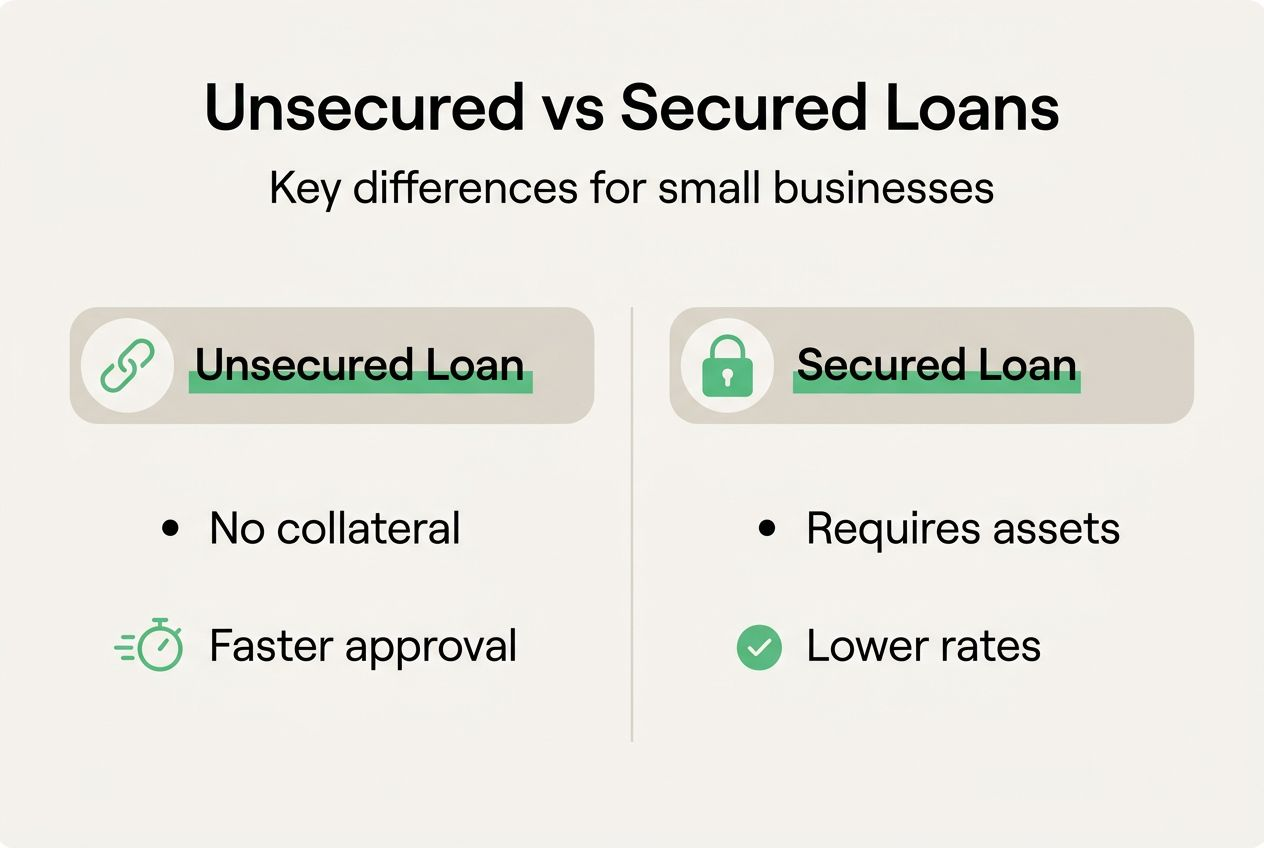
The fundamental differences between loan types affect every aspect of borrowing:
| Feature | Unsecured Loans | Secured Loans | | --- | --- | | Collateral requirement | None | Required (equipment, property, inventory) | | Interest rates | Higher (8% to 40%+) | Lower (5% to 15%) | | Loan amounts | $5,000 to $500,000 | $10,000 to $5,000,000+ | | Approval timeline | 1 to 5 days | 2 to 8 weeks | | Credit score needs | Higher (typically 650+) | More flexible (sometimes 600+) | | Risk to assets | Personal guarantee only | Direct asset seizure possible |
Interest rate differences stem directly from risk levels. Secured loans offer lower rates because collateral provides lenders a recovery path if you default. Unsecured lenders lack this safety net, so they charge more to compensate for potential losses.
Approval speed varies dramatically. Secured loans require appraisals, title searches, lien filings, and legal documentation, processes that take weeks. Unsecured loans skip these steps, moving straight to credit and financial analysis. This efficiency explains why unsecured financing works better for urgent needs.
Loan amounts reflect risk tolerance. Lenders feel comfortable extending larger sums when valuable collateral backs the loan. A $2 million piece of equipment can secure a $1.5 million loan. Without collateral, lenders cap exposure based solely on your ability to repay from business income, naturally limiting loan sizes.
Businesses choose between loan types based on specific circumstances:
- Choose unsecured when you need funds quickly, lack substantial assets, or want to avoid collateral risk
- Choose secured when you're making large asset purchases, need lower rates, or can offer valuable collateral
- Choose unsecured for working capital, marketing, or operational expenses
- Choose secured for equipment, real estate, or major capital investments
Some businesses use both strategically. You might take a secured equipment loan for machinery purchases while maintaining an unsecured line of credit for cash flow management. This combination optimizes costs while preserving flexibility.
How to apply for an unsecured business loan: step by step guide
Successful applications require preparation and attention to detail. Following a structured approach improves approval odds and speeds processing. Start gathering documents and information well before you actually need funding to avoid rushed mistakes.
-
Assess your financing needs precisely. Calculate exactly how much you need and how you'll use the funds. Lenders want specific plans, not vague requests. Document expected returns or cost savings to demonstrate the loan makes business sense.
-
Check your credit scores and reports. Review both personal and business credit before applying. Dispute any errors and address negative items if possible. Understanding your credit position helps you target appropriate lenders and anticipate likely terms.
-
Organize required documentation. Gather tax returns, financial statements, bank statements, and business licenses. Having everything ready accelerates the process once you apply. Missing documents cause delays and sometimes denials.
-
Research and compare lenders. Different lenders serve different business profiles. Banks prefer established companies with strong credit. Online lenders and alternative finance companies work with newer businesses or those with credit challenges. Review terms, rates, and requirements before choosing where to apply.
-
Complete the application accurately and thoroughly. Incomplete or inconsistent information triggers additional questions or rejections. Double check figures, dates, and details. Many lenders now offer online applications that pre validate data entry, reducing errors.
-
Respond quickly to lender requests. Underwriters may ask for clarification or additional documents. Fast responses keep your application moving and demonstrate reliability. Delays signal disorganization or lack of seriousness.
-
Review the loan offer carefully before accepting. Examine interest rates, fees, repayment terms, prepayment penalties, and any covenants or restrictions. Calculate total repayment costs and verify monthly payments fit your budget. Don't rush this step even if you need funds urgently.
-
Understand the personal guarantee. Most unsecured loans require owners to personally guarantee repayment. Read this agreement carefully and understand the implications for your personal finances if the business struggles.
Pro Tip: Maintain organized financial records year round, not just when seeking loans. Streamlined documentation speeds approvals and positions your business as professional and creditworthy, often resulting in better terms.
Common mistakes that hurt applications include applying for too much or too little, providing inconsistent information across documents, lacking a clear use of funds explanation, and applying to multiple lenders simultaneously without understanding how inquiries affect credit scores.
Timing matters too. Apply when your business shows strong recent performance. Lenders focus heavily on the most recent three to six months of financial activity. If you've had a slow quarter, waiting for stronger results might improve your approval chances and terms.
Explore flexible business loan options at Capital For Business
Capital For Business specializes in helping small businesses access the funding they need, even when traditional banks say no. We offer various unsecured loan products designed for real world business challenges, with loan amounts up to $500,000 and flexible repayment terms that match your cash flow.
Our streamlined application process delivers decisions quickly, often within 24 hours. We understand that opportunities don't wait, and neither should your financing. Whether you're managing seasonal fluctuations, investing in growth, or covering unexpected expenses, we have solutions that work.
We also serve businesses with less than perfect credit through specialized bad credit business loans that focus on your current business performance rather than past credit challenges. Our team provides expert guidance throughout the application journey, helping you understand options and choose the right funding solutions for your specific situation. Explore our types of easy small business loans to find the perfect fit for your business needs.
Frequently asked questions
What is an unsecured business loan?
An unsecured business loan provides financing without requiring collateral like property or equipment. Lenders approve these loans based on your creditworthiness, business revenue, and financial health rather than asset value. This makes them accessible for businesses lacking substantial collateral or those wanting to avoid risking personal assets.
Can I get an unsecured business loan with bad credit?
Yes, some lenders specialize in serving businesses with credit challenges, though terms will be less favorable than for strong credit borrowers. You'll likely face higher interest rates, lower loan amounts, and stricter repayment terms. Capital For Business offers bad credit business loans designed specifically for businesses working to rebuild credit while accessing necessary capital.
What are the typical interest rates on unsecured business loans?
Interest rates for unsecured business loans typically range from 8% to 40% or higher, depending on your credit profile, business revenue, time in business, and lender policies. Strong credit businesses might secure rates in the single digits, while those with credit challenges often pay 25% or more. Always compare the annual percentage rate, which includes fees, to understand true borrowing costs.
How fast can I get an unsecured business loan approved?
Unsecured loans often approve within one to five business days because lenders don't need to appraise collateral or conduct title searches. Some online lenders provide same day approvals for qualified businesses. After approval, funds typically arrive within two to seven days, making unsecured loans ideal for time sensitive financing needs or urgent business opportunities.
Recommended
- Business loan guide 2026: step by step for small business
- Advantages and Disadvantages of Unsecured Business Line of Credit
- The Ultimate Guide to Business Loans for Bad Credit
- Business financing tips 2026: smart strategies
- Complete Guide to Blogging for Business Success | Take Action Blog | Take Action
- Unique Business Card Ideas Guide for Strategic Branding – BcardsCreation