
Acquiring essential equipment can feel overwhelming when you're running a small business. The cost of machinery, vehicles, or technology often stretches beyond available cash reserves, forcing you to explore financing options that seem complex and intimidating. This guide breaks down the equipment financing process into clear, manageable steps so you can secure the tools your business needs to grow without the confusion or stress that typically comes with navigating lender requirements and approval processes.
Table of Contents
- Key takeaways
- Assess your equipment needs and prepare essential documents
- Decide between buying and leasing equipment
- Shop lenders, apply for financing, and secure approval
- Close the deal and receive your equipment
- Explore tailored equipment financing solutions for your business
- Frequently asked questions
Key Takeaways
| Point | Details |
|---|---|
| Define equipment needs | Identify the exact make, model, and specifications and request quotes from at least three vendors to compare price and terms. |
| Prepare financials early | Assemble two years of tax returns, profit and loss statements, balance sheets, and bank statements for the past six months, plus personal returns if the business lacks history. |
| Project future cash flow | Include a cash flow projection showing how the new equipment will generate revenue or reduce costs and how payments fit into operating expenses. |
| Assess buy or lease | Compare ownership benefits with leasing impacts on cash flow and flexibility to guide the decision. |
| Know DSCR threshold | Calculate the debt service coverage ratio and aim for a threshold above 1.25 to gauge financing affordability. |
Assess your equipment needs and prepare essential documents
Before approaching any lender, you need absolute clarity on what equipment your business requires and why. Start by identifying the specific machinery, vehicles, or technology that will directly impact your operations or revenue generation. Don't just list general categories. Detail the exact make, model, and specifications that match your business requirements.
Request quotes from at least three vendors for each piece of equipment. This comparison shopping serves two purposes: you'll discover the true market price and demonstrate to lenders that you've done your homework. Vendors often provide different pricing structures, warranties, and service packages that can significantly affect your total cost of ownership.
Pro Tip: Create a simple spreadsheet comparing equipment quotes side by side, including purchase price, warranty terms, maintenance costs, and expected lifespan. This document becomes a powerful tool when discussing your needs with lenders.
Gather your financial documentation systematically. Lenders want to see your last two years of business tax returns, profit and loss statements, balance sheets, and bank statements from the past six months. If you're a newer business without two years of history, personal financial statements and tax returns become more important. The equipment financing process involves assessing equipment needs and preparing these financial documents for lender applications.
Your business plan should clearly articulate how the new equipment will generate revenue or reduce costs. Include projected cash flow showing how you'll make payments while maintaining operational expenses. Lenders evaluate not just your past performance but your future capacity to service debt.
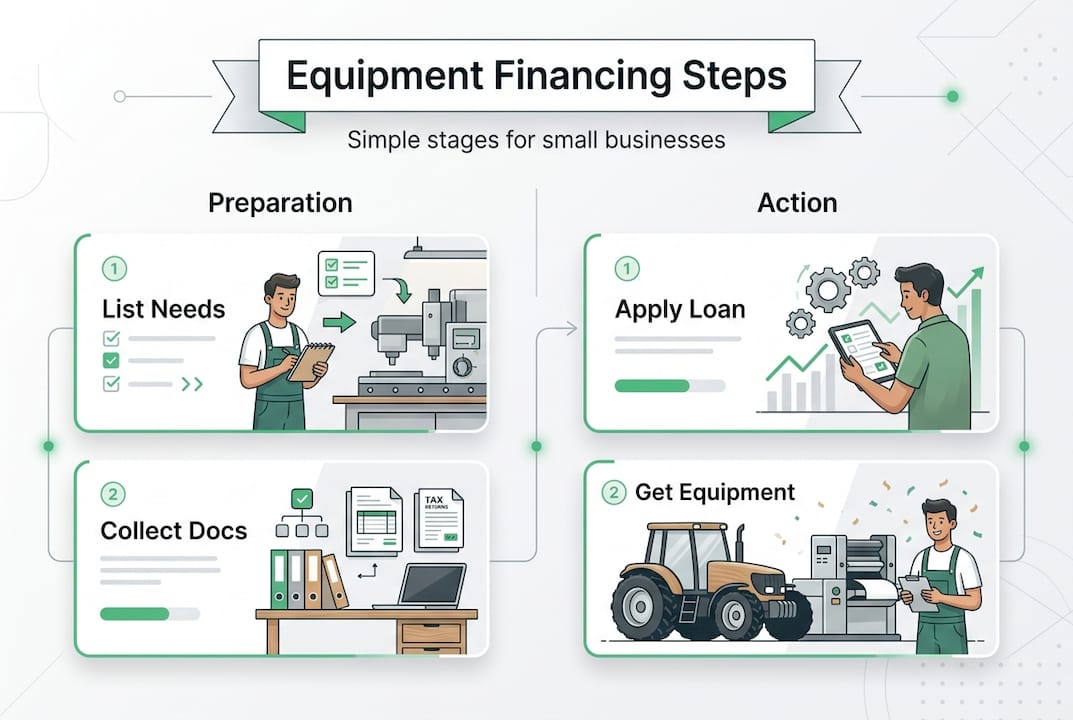
Review your current debt obligations carefully. Calculate your debt service coverage ratio by dividing your net operating income by total debt service. Most lenders prefer seeing a ratio above 1.25, meaning you generate $1.25 in cash flow for every dollar of debt payment. Understanding this number before applying helps you gauge realistic financing amounts.
Compile business licenses, insurance certificates, and any industry certifications. Some lenders require proof of proper insurance coverage before approving equipment financing. Having these documents organized in a digital folder allows you to respond instantly to lender requests, which can shave days or weeks off the approval timeline.
Explore various equipment financing options to understand which documentation requirements apply to your specific situation. Different financing structures may require additional paperwork or have varying qualification standards.
Decide between buying and leasing equipment
The buy versus lease decision fundamentally shapes your cash flow, tax strategy, and operational flexibility. Purchasing equipment means you own the asset outright once financing is paid off, building equity on your balance sheet. This ownership allows you to modify, customize, or resell equipment as your business needs evolve.
Buying typically requires either significant upfront capital or a loan with monthly payments that include both principal and interest. While this creates a larger immediate financial commitment, you benefit from depreciation deductions and potential Section 179 tax benefits that can offset a substantial portion of equipment costs in the purchase year.
Pro Tip: Section 179 allows businesses to deduct the full purchase price of qualifying equipment up to specific limits in the year it's placed in service, rather than depreciating it over several years. This can create significant tax savings for profitable businesses.
Leasing preserves working capital because it generally requires lower upfront costs than purchasing. Monthly lease payments are often fully tax deductible as business expenses, simplifying your accounting. You avoid obsolescence risk since you can upgrade to newer technology when your lease term ends, which matters significantly for industries where equipment becomes outdated quickly.
However, leasing means you never build equity in the asset. Over the long term, you may pay more in total costs compared to purchasing, especially if you keep equipment for many years. Lease agreements often include restrictions on equipment use, maintenance requirements, and penalties for early termination or excessive wear.
Choosing to buy or lease equipment affects cash flow and business flexibility, so understanding your specific operational and financial situation is crucial.
| Factor | Buying | Leasing |
|---|---|---|
| Ownership | You own the asset and build equity | Lender retains ownership throughout term |
| Upfront costs | Higher down payment typically required | Lower initial cash outlay |
| Tax treatment | Depreciation and Section 179 deductions | Lease payments fully deductible |
| Flexibility | Keep equipment indefinitely, modify freely | Easy upgrades at term end, usage restrictions |
| Long-term cost | Lower total cost if kept many years | Higher total cost over extended periods |
Your business size, industry, and growth trajectory should guide this decision. Rapidly growing companies in technology sectors often prefer leasing to maintain flexibility and access to current equipment. Established businesses in stable industries with predictable equipment lifespans typically benefit more from purchasing.
Consider your cash flow patterns carefully. If your business experiences seasonal revenue fluctuations, lower monthly lease payments might provide breathing room during slower periods. Conversely, if you have strong, consistent cash flow, purchasing builds assets that strengthen your balance sheet for future financing needs.
Understand the differences between equipment leasing and equipment financing to make an informed choice that aligns with your business strategy and financial goals.
Shop lenders, apply for financing, and secure approval
Lender selection dramatically impacts your financing costs and terms. Start by researching traditional banks, credit unions, online lenders, and equipment financing specialists. Each category offers distinct advantages: banks typically provide lower rates for well qualified borrowers, online lenders offer speed and convenience, while equipment specialists understand industry specific needs and may approve deals others reject.
Compare interest rates, but don't stop there. Examine the annual percentage rate, which includes fees and gives you the true cost of borrowing. Review payment schedules, prepayment penalties, down payment requirements, and whether rates are fixed or variable. Some lenders offer seasonal payment structures or deferred payment options that might better match your cash flow patterns.
Pro Tip: Request a loan estimate or term sheet from each lender you're seriously considering. These documents standardize the presentation of terms, making apples to apples comparisons much easier than trying to decode different lender proposals.
Prepare a complete application package before submitting to any lender. Incomplete applications trigger delays and sometimes automatic rejections. Include all financial statements, tax returns, business plans, equipment quotes, and supporting documents in your initial submission. This professionalism signals that you're a serious, organized borrower.
U.S. equipment loan approval rates average about 79%, with monthly volumes around $10.5 billion, demonstrating strong market accessibility for qualified businesses. However, approval depends heavily on your financial health, credit history, time in business, and documentation quality.
Follow this application sequence for best results:
- Submit to your top choice lender first if you have strong credit and financials, allowing you to secure favorable terms quickly
- Apply to multiple lenders simultaneously if your credit is marginal, maximizing approval chances without wasting time on sequential applications
- Respond to lender inquiries within 24 hours to demonstrate reliability and keep your application moving through underwriting
- Provide additional documentation immediately when requested rather than waiting or negotiating about requirements
- Maintain communication throughout the process by checking in weekly if you haven't heard back, showing your continued interest
Understand that lenders evaluate five key factors: credit score, time in business, revenue and profitability, existing debt obligations, and the equipment's value as collateral. Equipment that holds its value well and has strong resale markets improves your approval odds because it reduces lender risk.
"The equipment itself serves as collateral, which generally makes equipment financing easier to obtain than unsecured business loans. Lenders have tangible assets to recover if the loan defaults, allowing them to extend credit to businesses that might not qualify for traditional financing."
Explore different types of business loans to understand how equipment financing compares to other funding options and why it might offer advantages for your specific situation.
Be prepared to explain any credit issues, gaps in business history, or unusual financial patterns. Lenders appreciate transparency and often work with borrowers who proactively address potential concerns rather than hoping they go unnoticed.
Close the deal and receive your equipment
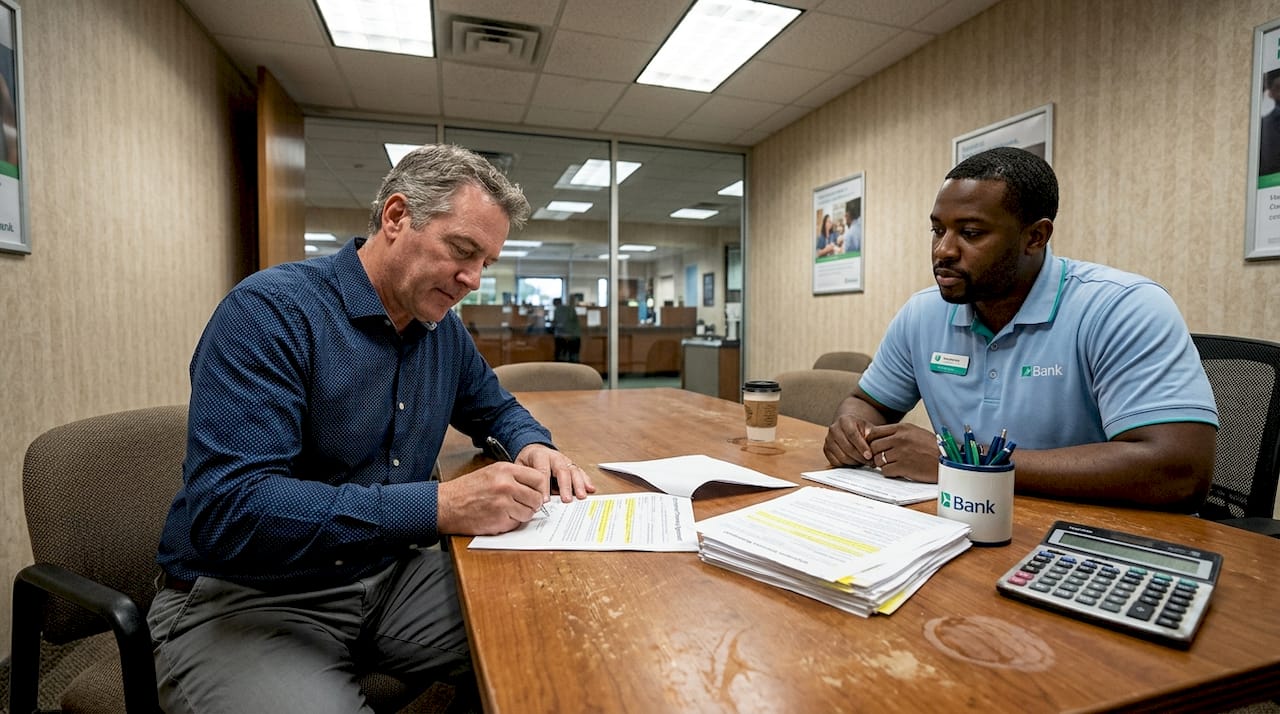
Once you receive approval, the closing process begins. You'll receive a formal loan or lease agreement containing all terms, conditions, payment schedules, and obligations. Read every page carefully before signing. Don't rush this step despite your eagerness to get equipment delivered.
Pay special attention to the interest rate, total amount financed, payment due dates, late payment penalties, and any balloon payments at the end of the term. Verify that the equipment description matches exactly what you intend to purchase. Confirm whether you're personally guaranteeing the loan, which puts your personal assets at risk if the business defaults.
Examine all fees disclosed in the agreement. Common charges include origination fees, documentation fees, and sometimes early termination penalties if you pay off the loan ahead of schedule. Calculate the total cost of financing by multiplying your monthly payment by the number of payments, then adding any upfront fees.
Pro Tip: If you spot terms that differ from what was discussed during application, don't hesitate to question them before signing. Lenders can sometimes correct errors or explain items that seem inconsistent with your understanding.
Coordinate equipment delivery timing with your lender and vendor. Some financing agreements require the lender to pay the vendor directly upon delivery confirmation, while others provide funds to you for vendor payment. Understand this process to avoid delays that could disrupt your operations or strain vendor relationships.
The final step involves closing the deal with proper contract review and timely receipt of equipment, ensuring all parties fulfill their obligations and your business gets the tools it needs without complications.
Organize all closing documents in a dedicated file, both physical and digital. You'll need these records for tax purposes, insurance claims, warranty issues, and future financing applications. Keep copies of the signed agreement, payment schedule, equipment invoices, delivery receipts, and any correspondence with the lender.
- Verify that the first payment date aligns with your cash flow expectations and doesn't create immediate financial strain
- Set up automatic payments if possible to avoid late fees and protect your credit rating
- Confirm insurance requirements and secure proper coverage before equipment delivery
- Inspect equipment thoroughly upon delivery and document any damage or defects immediately
- Maintain detailed records of all maintenance and repairs to protect warranty coverage and resale value
Communicate proactively with both your lender and equipment vendor throughout the closing process. If delivery dates shift or unexpected issues arise, inform all parties immediately. This transparency builds trust and often leads to flexible solutions when problems occur.
Review the equipment financing beginner's guide for additional insights on managing your equipment financing relationship long term and maximizing the value of your investment.
Explore tailored equipment financing solutions for your business
Navigating equipment financing becomes significantly easier when you partner with a lender who understands small business challenges and offers flexible solutions. Capital For Business provides equipment financing up to $250,000 with streamlined approval processes and same day funding options that keep your business moving forward without lengthy delays.
Whether you need machinery, vehicles, technology, or specialized industry equipment, exploring different types of business loans helps you identify the optimal financing structure for your situation. Our team works with businesses across hundreds of industries, bringing expertise that matches your specific equipment needs with appropriate funding solutions. Discover comprehensive business funding solutions designed to support your growth objectives while maintaining healthy cash flow.
Frequently asked questions
What credit score do I need for equipment financing?
Most lenders prefer credit scores of 600 or higher for standard equipment financing terms. However, scores between 500 and 600 may still qualify with higher interest rates or larger down payments. Your overall business financial health, time in operation, and the equipment's collateral value also significantly influence approval decisions beyond just credit scores.
Can I finance used equipment?
Yes, many lenders finance used equipment if it meets their age and condition requirements. Typically, equipment must be less than 10 years old and in good working condition with reasonable remaining useful life. Used equipment financing often requires more detailed inspections, appraisals, and documentation compared to new equipment purchases, and may come with slightly higher rates.
How long does the equipment financing process usually take?
The timeline varies from a few days to several weeks depending on lender type and application completeness. Online lenders and equipment financing specialists often provide decisions within 24 to 48 hours with funding in less than a week. Traditional banks typically take two to four weeks for underwriting and approval. Having all documentation prepared and responding promptly to lender requests significantly accelerates the process.
What happens if I default on equipment financing?
Defaulting on equipment financing typically results in the lender repossessing the equipment to recover their investment. This repossession damages your business credit score and may affect your ability to secure future financing. Many lenders will work with struggling borrowers to restructure payment terms or create temporary forbearance arrangements before pursuing repossession, so communication is critical if you anticipate payment difficulties.