Finding the right funding can feel like an uphill battle when traditional banks tighten their lending standards. For many plumbing business owners in the United States, affordable small business loans open doors to crucial equipment upgrades and expansion plans that otherwise seem out of reach. By exploring specialized financing options for plumbers, you can gain practical insights into loan types, eligibility requirements, and smart strategies to confidently grow your business.
Table of Contents
- Defining Small Business Loans for Plumbers
- Types of Small Business Loans Available
- Key Requirements and How Loans Work
- Typical Uses and Real-World Applications
- Costs, Risks, and Common Pitfalls
Key Takeaways
| Point | Details |
|---|---|
| Purpose of Small Business Loans | Designed to help plumbers grow their businesses, purchase equipment, and hire staff, these loans provide essential capital for expansion. |
| Types of Loans Available | Plumbers can access various loans, including Equipment Financing, SBA Loans, and Working Capital Loans, each tailored for specific financial needs. |
| Eligibility Requirements | Key criteria include a minimum credit score, operational history, and demonstrating positive cash flow to qualify for loans. |
| Risks and Pitfalls | Plumbing business owners should understand the financial risks, such as high-interest rates and strict repayment terms, to avoid common loan pitfalls. |
Defining Small Business Loans for Plumbers
Small business loans for plumbers represent specialized financial tools designed to help professionals in the plumbing trade expand, upgrade equipment, and grow their businesses. These loans provide critical capital that enables plumbing entrepreneurs to invest in their future, purchase essential tools, hire additional technicians, and scale operations beyond current limitations.
Understanding the landscape of small business loans requires recognizing their fundamental purpose. Government financial incentives play a crucial role in supporting small and medium enterprises (SMEs), including plumbing businesses, by reducing financial risks and expanding access to capital. These programs aim to strengthen businesses through strategic funding mechanisms.
Typical small business loans for plumbers can include several key financial products:
- Equipment Financing: Loans specifically designed to purchase trucks, specialized plumbing tools, or advanced diagnostic equipment
- Working Capital Loans: Short-term funding to cover operational expenses like payroll, supplies, and daily business needs
- Business Line of Credit: Flexible funding that allows plumbers to draw money as needed, providing financial flexibility
- Expansion Loans: Longer-term financing for significant business growth, such as opening additional service locations
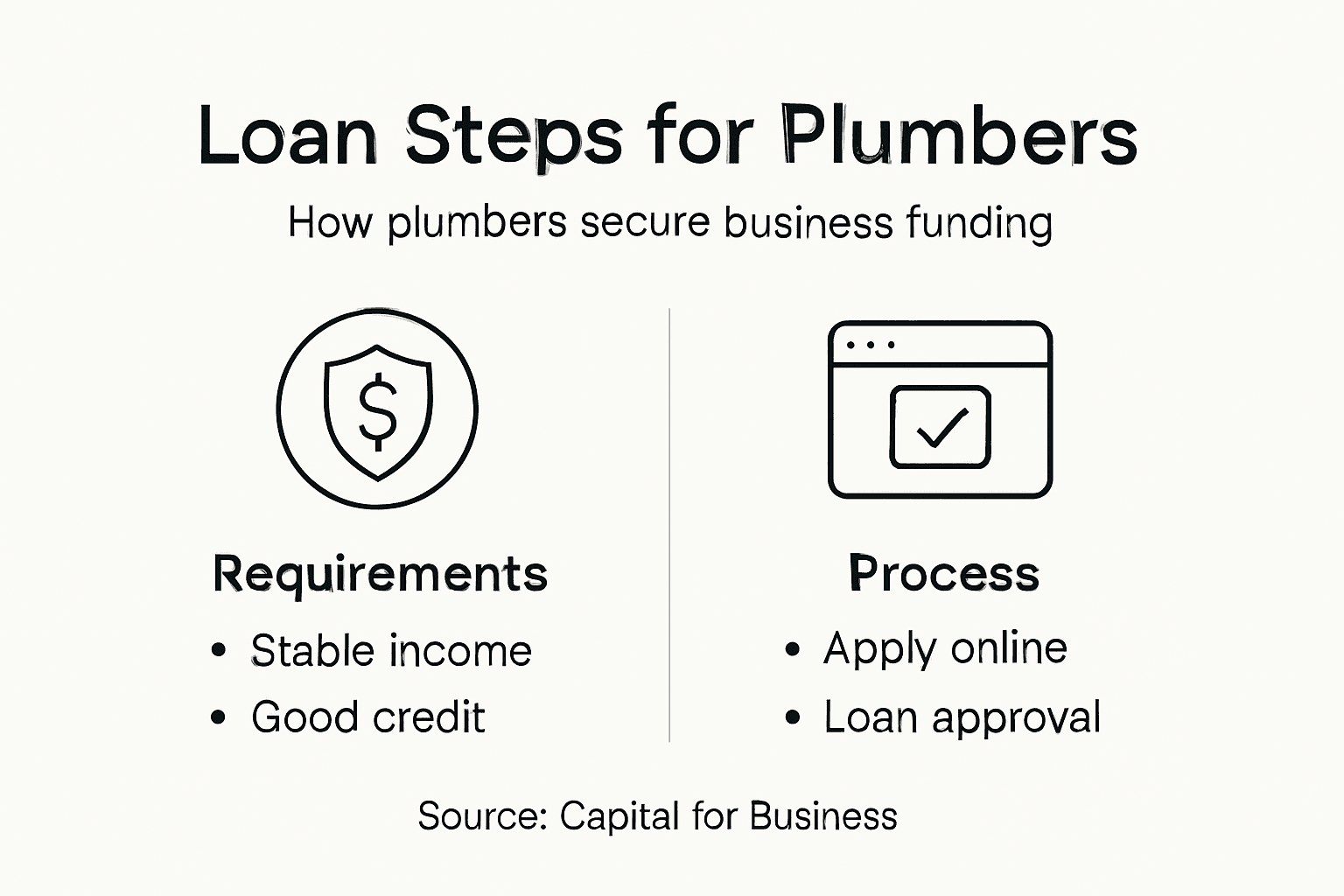
The loan application process typically involves demonstrating business stability, showcasing positive cash flow, and presenting a clear plan for how the borrowed funds will generate additional revenue. Lenders want to see that plumbing business owners have a strategic approach to utilizing borrowed capital.
Pro tip: Before applying for a small business loan, compile a comprehensive business portfolio including financial statements, tax returns, and a detailed growth strategy to improve your approval chances.
Types of Small Business Loans Available
Plumbers have access to multiple small business loan types, each designed to address specific financial needs and business growth strategies. Small business loan options vary widely, offering flexibility for different operational requirements and financial scenarios within the plumbing industry.
Small Business Administration (SBA) Loans represent a critical funding pathway for plumbing entrepreneurs. SBA loan programs include several key financing options:
- 7(a) Loans: General purpose business funding with flexible terms
- 504 Loans: Long-term financing for major fixed assets like equipment or real estate
- Microloans: Smaller funding amounts up to $50,000 for immediate business needs
- Disaster Loans: Emergency funding for businesses experiencing unexpected challenges
Beyond SBA offerings, plumbing businesses can explore additional loan types tailored to their specific requirements:
- Equipment Financing: Specialized loans for purchasing trucks, tools, and specialized plumbing machinery
- Working Capital Loans: Short-term funding to manage operational expenses
- Line of Credit: Flexible funding that allows drawing money as needed
- Invoice Factoring: Financing based on outstanding customer invoices
- Merchant Cash Advances: Quick funding based on future revenue projections
The most suitable loan depends on multiple factors including business credit score, revenue history, specific funding needs, and planned use of capital. Plumbing business owners should carefully evaluate each option's terms, interest rates, and repayment structures before making a decision.

Here's a comparison of key small business loan types commonly used by plumbing contractors:
| Loan Type | Primary Purpose | Funding Speed | Typical Repayment Terms |
|---|---|---|---|
| Equipment Financing | Buying or upgrading business tools | 1-2 weeks | 1-5 years |
| SBA 7(a) Loan | General growth and expansion | 3-7 weeks | Up to 25 years |
| Working Capital Loan | Covering daily operating expenses | 2-10 days | 1-3 years |
| Line of Credit | Flexible access for cash needs | 2-7 business days | Renewed annually |
| Invoice Factoring | Unlocking capital from invoices | 1-3 business days | Paid when invoices settle |
Pro tip: Compare multiple lenders and loan types, preparing a comprehensive business plan that demonstrates your financial stability and growth potential to improve your loan approval chances.
Key Requirements and How Loans Work
Understanding the mechanics of small business loans is crucial for plumbing entrepreneurs seeking financial growth. Small business loan fundamentals involve borrowing a specific amount of capital and repaying it with interest over a predetermined timeframe, with various conditions and expectations.
Loan Eligibility Requirements for plumbing businesses typically include several key components:
- Minimum credit score of 600-680
- Operational business history of at least 2 years
- Annual revenue meeting lender's minimum thresholds
- Positive cash flow demonstrating ability to repay
- Limited existing debt obligations
- Detailed business plan showing growth potential
SBA loan guidelines outline specific criteria for qualification, including:
- Being a for-profit business operating in the United States
- Demonstrating inability to secure reasonable financing through traditional channels
- Meeting size standards for small businesses
- Providing comprehensive financial documentation
- Offering potential collateral or personal guarantees
Loan Repayment Structures vary depending on the specific loan type and lender requirements. Most small business loans for plumbers include monthly principal and interest payments, with terms ranging from 1-25 years. Interest rates can be fixed or variable, typically between 6-30% based on creditworthiness and loan type.
Plumbing business owners should carefully review all loan terms, understanding both the potential benefits and potential risks associated with business financing.
Pro tip: Maintain meticulous financial records and develop a robust business plan to significantly improve your chances of securing favorable loan terms and approval.
Typical Uses and Real-World Applications
Small business loans for plumbers serve multiple strategic purposes, enabling entrepreneurs to transform financial opportunities into tangible business growth. These loans provide critical funding for various essential business needs, helping plumbing professionals expand their operational capabilities and competitive edge.
Equipment and Vehicle Investment represents a primary use of small business loans:
- Purchasing specialized plumbing trucks and vans
- Acquiring advanced diagnostic equipment
- Investing in high-quality tools and technology
- Upgrading existing fleet and machinery
- Replacing outdated or inefficient equipment
Business Expansion and Operational Scaling offers another significant application for loan funding:
- Opening additional service locations
- Hiring and training new technicians
- Expanding service geographic coverage
- Developing marketing and advertising campaigns
- Creating dedicated customer service infrastructure
Financial flexibility allows plumbing businesses to strategically allocate resources. Loans can fund critical operational needs such as:
- Covering seasonal revenue fluctuations
- Managing payroll during slow business periods
- Purchasing bulk inventory at discounted rates
- Investing in professional certifications and training
- Developing digital infrastructure and booking systems
Smart investment of loan capital can transform a small plumbing business from a local operation into a regional service powerhouse.
Pro tip: Develop a comprehensive business plan that clearly articulates how loan funds will generate measurable returns, demonstrating to lenders your strategic approach to business growth.
Costs, Risks, and Common Pitfalls
Plumbing business owners must carefully navigate the complex landscape of small business loans, understanding the potential financial challenges that accompany borrowing. Business loan risks include multiple financial and operational considerations that can significantly impact long-term business sustainability.
Primary Financial Risks associated with small business loans include:
- High-interest rates eroding profit margins
- Strict repayment terms creating cash flow pressure
- Personal asset liability through loan guarantees
- Potential credit score impacts from loan applications
- Risk of overleveraging business finances
Common Loan Pitfalls that plumbers should be aware of:
- Underestimating total loan costs
- Failing to understand complex loan terms
- Inadequate financial planning for repayment
- Choosing inappropriate loan structures
- Neglecting to compare multiple lending options
Most loan-related challenges stem from insufficient preparation and understanding. Plumbing entrepreneurs must conduct thorough due diligence, carefully analyzing:
The following table summarizes critical risk factors plumbers should evaluate before taking out a business loan:
| Risk Factor | Potential Impact | Mitigation Strategy |
|---|---|---|
| High Interest Cost | Reduces profit margins | Compare lenders for lower rates |
| Cash Flow Pressure | Difficulties meeting other obligations | Choose manageable repayment terms |
| Asset Liability | Personal property at risk | Limit personal guarantees |
| Overleveraging | Threatens long-term business health | Avoid borrowing beyond actual need |
| Loan Term Complexity | Misunderstanding leads to costly errors | Consult financial experts |
- Complete loan cost structures
- Potential hidden fees
- Prepayment penalty clauses
- Collateral requirements
- Long-term financial implications
Successful loan management requires a strategic approach that balances immediate business needs with long-term financial health.
Pro tip: Create a comprehensive financial model that stress-tests your ability to repay the loan under various business scenarios, ensuring you can meet obligations even during challenging economic periods.
Empower Your Plumbing Business Growth with Tailored Financing Solutions
Small business loans for plumbers often come with challenges such as high-interest rates, complex repayment terms, and the need for clear growth strategies. If you are a plumbing professional looking to invest in equipment upgrades, expand your team, or improve cash flow, these are common hurdles that can block your path. Understanding the importance of working capital, equipment financing, and flexible line of credit options is key to overcoming these financial obstacles.
At Capital for Business, we specialize in delivering fast and affordable funding solutions designed specifically for small business owners like you. Whether you need a working capital loan to cover day-to-day expenses or equipment financing to upgrade your fleet, we have your growth goals covered. Our expertise since 2009 has empowered hundreds of plumbing businesses to scale successfully when traditional lenders fall short.

Don’t let funding challenges slow your business down. Take control today by visiting Capital for Business and discover how our tailored loan products and supportive service can help you secure the capital you need. Act now and turn your business ambitions into reality with confidence and speed.
Frequently Asked Questions
What types of small business loans are available for plumbers?
Typical small business loans for plumbers include equipment financing, working capital loans, business lines of credit, and expansion loans. Each type is designed to address specific funding needs within the plumbing industry.
What are the eligibility requirements for a small business loan for plumbers?
Eligibility requirements generally include a minimum credit score of 600-680, at least 2 years of operational history, sufficient annual revenue, positive cash flow, and a detailed business plan showing growth potential.
How can plumbers effectively use small business loans?
Plumbers can use small business loans for various purposes such as purchasing specialized equipment, covering operational costs, expanding service locations, hiring staff, and investing in marketing and training initiatives.
What are the risks associated with taking out a small business loan?
Common risks include high-interest rates that can erode profit margins, cash flow pressure from strict repayment terms, potential personal liability, and the risk of overleveraging finances. It’s important to thoroughly analyze loan terms and prepare a solid financial plan.