
Facing a cash flow crunch is a reality many North American business owners know all too well. Accessing the right funding often means the difference between thriving growth and stalled progress, especially when traditional bank loans are out of reach. This guide highlights business funding alternatives beyond conventional banks, offering practical insights on flexible financing strategies supported by programs like those from the Small Business Administration.
Table of Contents
- What Small Business Funding Really Means
- Types of Funding Options for Businesses
- How Application and Approval Processes Work
- Pros, Cons, and Common Pitfalls
- Comparing Funding to Traditional Bank Loans
Key Takeaways
| Point | Details |
|---|---|
| Understanding Funding Types | Entrepreneurs should explore various funding types including debt, equity, and government grants to match their specific needs. |
| Application Process Preparation | A comprehensive business plan and meticulous documentation are essential for successful funding applications. |
| Evaluating Funding Options | Different funding sources have unique advantages and drawbacks; entrepreneurs must assess options carefully to align with their business objectives. |
| Recognizing Risks and Pitfalls | It is crucial to understand potential risks associated with funding, such as loss of control or hidden costs, before proceeding. |
What Small Business Funding Really Means
Small business funding represents the critical financial oxygen that transforms entrepreneurial vision into operational reality. At its core, business funding is the capital entrepreneurs obtain to launch, sustain, and expand their enterprises through various financial instruments and support mechanisms.
The Small Business Administration defines small business funding as a comprehensive ecosystem of financial support that extends far beyond simple loan provision. This support encompasses multiple strategic avenues:
- Loan guaranty programs
- Venture capital investments
- Disaster assistance funds
- Technical support resources
- Management training initiatives
- Contracting opportunity platforms
These funding pathways serve a critical purpose: bridging the financial gap between entrepreneurial ambition and practical business development. Unlike traditional banking models, small business funding programs recognize that startups and growing companies require flexible, nuanced financial solutions tailored to their unique developmental stages.
Funding sources can be categorized into several key types:
- Debt financing (loans requiring repayment)
- Equity financing (investors exchange capital for ownership)
- Government grants and subsidies
- Alternative lending platforms
- Crowdfunding mechanisms
Each funding type offers distinct advantages and challenges, making it essential for business owners to understand their specific financial needs and matching funding strategies.
Here's a summary of how key funding options impact small businesses:
| Funding Type | Typical Use Case | Business Owner Impact |
|---|---|---|
| Debt Financing | Equipment or expansion | Fixed repayments, retains ownership |
| Equity Financing | Rapid growth, innovation | Shares control, expert input |
| Government Grants | R&D or special initiatives | No repayment, strict guidelines |
| Alternative Lending | Fast cash needs | Quick access, higher costs |
| Crowdfunding | Product launch, marketing | Builds audience, no repayments |
Pro tip: Research multiple funding sources and create a comprehensive financial strategy that balances immediate cash flow needs with long-term growth objectives.
Types of Funding Options for Businesses
Business owners have multiple strategic funding pathways to fuel their entrepreneurial dreams, each with unique characteristics and potential advantages. Funding options range from traditional bank loans to innovative alternative financing methods that provide flexible capital solutions for growing enterprises.
The Small Business Administration offers comprehensive capital access programs designed to support businesses at various stages of development. These funding mechanisms can be broadly categorized into several key types:
-
Debt Financing
- Traditional bank loans
- SBA-guaranteed loans
- Business credit lines
- Equipment financing
-
Equity Financing
- Venture capital investments
- Angel investor funding
- Private equity
- Crowdfunding platforms
-
Government Support
- Small business grants
- Minority business development funds
- Economic development assistance
- Specialized industry grants
Each funding type presents distinct advantages and potential challenges. Debt financing typically involves repaying borrowed money with interest, offering businesses immediate capital without surrendering ownership. Conversely, equity financing involves trading business ownership stakes for investment, which can provide substantial funds but reduces founder control.

Modern entrepreneurs increasingly leverage alternative lending platforms that offer more flexible and rapid funding solutions compared to traditional banking models. These platforms often utilize advanced algorithms and streamlined application processes to match businesses with appropriate funding sources.
Understanding the nuanced landscape of business funding requires careful evaluation of your specific business model, growth stage, and financial requirements. Successful funding strategies involve matching the right financial instrument to your unique business needs and long-term objectives.
Pro tip: Develop a comprehensive financial profile and research multiple funding sources before committing to any single financing option.
How Application and Approval Processes Work
Navigating the business funding application landscape requires strategic preparation and a comprehensive understanding of the evaluation process. Funding applications demand meticulous attention to detail, with lenders and investors carefully scrutinizing every aspect of a business's financial health and growth potential.
Small business funding applications typically involve a multi-step process that tests the viability and preparedness of entrepreneurial ventures. The key stages of the application journey include:
-
Pre-Application Preparation
- Develop a robust business plan
- Gather financial statements
- Check personal and business credit scores
- Organize tax returns and financial documentation
-
Application Components
- Detailed business description
- Financial projections
- Loan purpose explanation
- Collateral documentation
- Personal background information
-
Evaluation Criteria
- Creditworthiness
- Business model strength
- Revenue potential
- Management experience
- Industry market conditions
The complexity of funding applications varies significantly across different financing platforms. Traditional bank loans often require extensive documentation and have stringent approval criteria, while alternative lending platforms may offer more streamlined processes with faster turnaround times.
Understanding grant application requirements becomes crucial for businesses seeking non-dilutive funding options. Government and private grant programs typically involve multi-stage review processes that demand precise proposal preparation and strict adherence to specific guidelines.
Successful applicants recognize that funding approval is not just about presenting financial numbers, but telling a compelling story about their business's potential for growth and sustainability. This narrative must be supported by solid financial documentation, clear strategic vision, and demonstrable market opportunity.
Pro tip: Create a comprehensive funding application package that anticipates potential questions and provides clear, verifiable documentation of your business's financial health and growth potential.
Pros, Cons, and Common Pitfalls
Business funding represents a powerful tool for growth, but navigating its complexities requires nuanced understanding. Funding strategies are rarely one-size-fits-all, demanding careful consideration of potential benefits and inherent risks associated with different financial approaches.
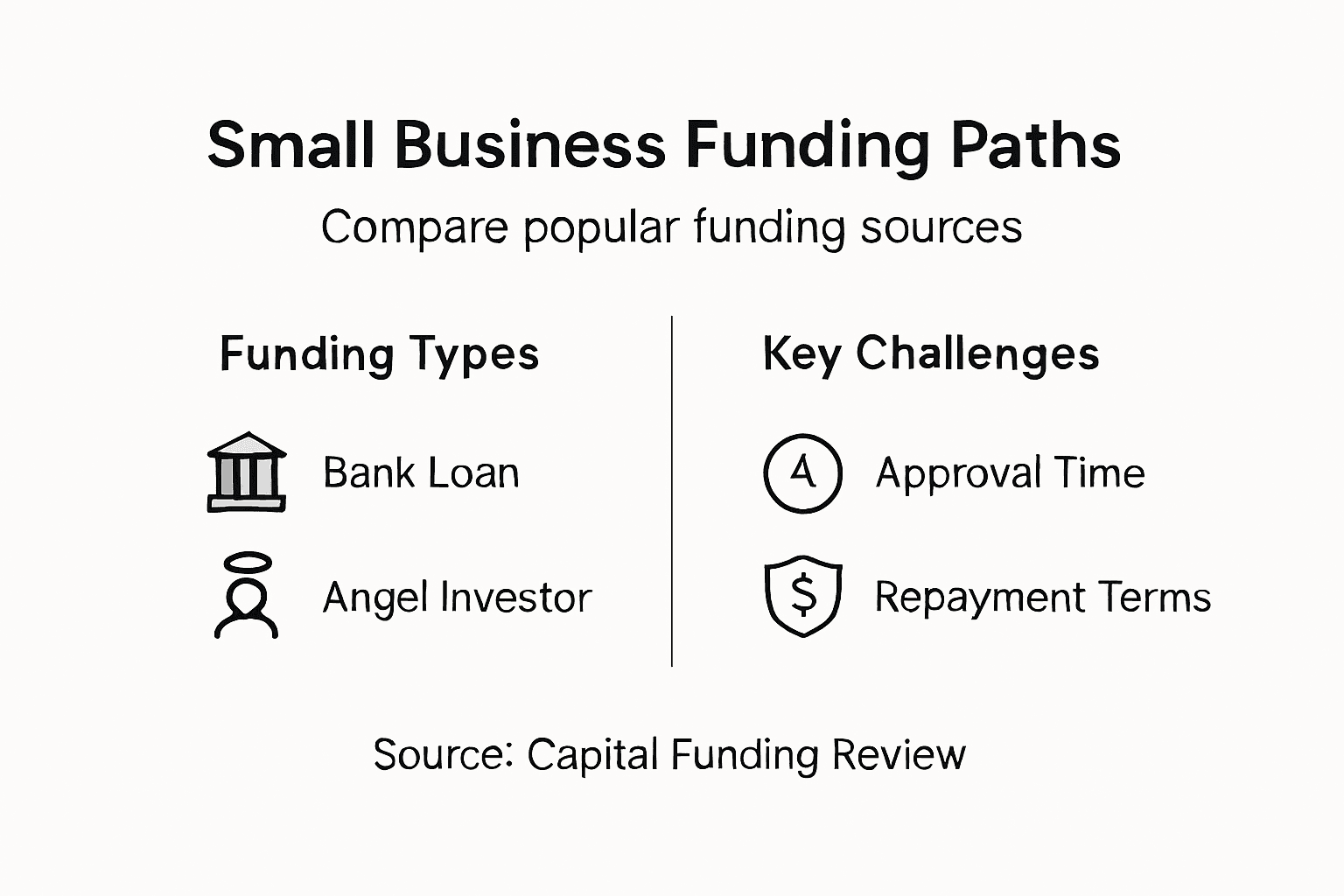
Small business funding programs present a complex landscape of opportunities and challenges that entrepreneurs must carefully evaluate. The pros, cons, and potential pitfalls can be systematically broken down into key categories:
Funding Pros:
- Accelerated business growth
- Access to critical capital
- Potential tax advantages
- Professional network expansion
- Opportunity for strategic guidance
Funding Cons:
- Potential loss of business control
- Complex reporting requirements
- Interest and repayment obligations
- Potential personal financial risk
- Stringent qualification criteria
Common Pitfalls:
- Insufficient financial documentation
- Misunderstanding funding terms
- Overestimating revenue projections
- Inadequate business planning
- Poor credit management
Entrepreneurs must recognize that each funding source carries unique implications. Debt financing typically involves predictable repayment structures but creates ongoing financial obligations, while equity financing might provide more flexible capital but potentially dilutes ownership and decision-making authority.
Understanding the intricate nuances of funding requirements becomes critical for successful capital acquisition. Businesses must develop comprehensive strategies that align funding approaches with their specific growth objectives, financial capabilities, and long-term vision.
Transparency, meticulous preparation, and realistic expectations are fundamental to navigating the complex world of business funding. Successful entrepreneurs approach funding as a strategic partnership, carefully evaluating each opportunity's potential impact on their business trajectory.
Pro tip: Conduct thorough due diligence and consult financial professionals before committing to any funding arrangement to fully understand potential risks and opportunities.
Comparing Funding to Traditional Bank Loans
The landscape of business financing is complex and nuanced, with traditional bank loans representing just one of many potential pathways for entrepreneurs seeking capital. Funding strategies have evolved dramatically, offering business owners multiple alternatives to conventional lending models.
Traditional bank loans present distinct characteristics that set them apart from emerging financing options. These key differences can be systematically broken down into critical evaluation points:
Traditional Bank Loan Characteristics:
- Lower interest rates
- Longer repayment terms
- Stringent approval requirements
- Extensive documentation
- Personal credit scrutiny
Alternative Funding Features:
- Faster approval processes
- More flexible qualification criteria
- Higher potential costs
- Less documentation
- Potential equity exchanges
Comparative Evaluation Factors:
Compare how traditional and alternative funding differ in key traits:
| Evaluation Factor | Traditional Bank Loan | Alternative Funding |
|---|---|---|
| Approval Speed | Slow, several weeks | Fast, often days |
| Application Complexity | High, detailed review | Simple, minimal paperwork |
| Cost of Capital | Lower interest rates | Higher fees or rates |
| Control/Ownership | Retain full control | May dilute ownership |
- Funding speed
- Cost of capital
- Ownership implications
- Reporting requirements
- Long-term financial impact
Entrepreneurs must recognize that each financing mechanism carries unique advantages and potential drawbacks. Bank loans typically offer more predictable structures but demand robust financial histories, while alternative funding sources provide greater flexibility at the potential expense of higher costs.
The Small Business Administration emphasizes understanding funding differences as a critical step in strategic business development. Successful entrepreneurs carefully match their funding approach to their specific business model, growth stage, and financial objectives.
Modern business owners have unprecedented access to diverse funding mechanisms, each with its own risk-reward profile. The key lies in comprehensive research, realistic financial projections, and a nuanced understanding of how different funding sources align with specific business goals.
Pro tip: Conduct a comprehensive financial assessment and compare multiple funding options before committing to any single financing strategy.
Unlock Your Small Business Growth with Tailored Funding Solutions
Understanding the complexities of small business funding is just the first step toward turning your entrepreneurial vision into reality. Whether you are grappling with finding flexible debt financing, navigating equity options, or meeting urgent working capital needs, the challenges can feel overwhelming. The article highlights key pain points such as balancing repayment obligations, managing ownership dilution, and handling complex application processes. At Capital for Business, we specialize in offering a wide range of financial services designed to meet these precise challenges quickly and affordably. From small business loans to lines of credit and equipment financing, we provide practical funding options when traditional banks say no.
Don’t let funding hurdles stall your business growth. Explore reliable and customized financial solutions with Capital for Business, where experience and speed come together to empower entrepreneurs nationwide and in Canada. Visit our site to apply now and get the financial support necessary to move forward confidently and efficiently.
Frequently Asked Questions
What are the different types of small business funding available?
Small business funding can be categorized into debt financing, equity financing, government grants, alternative lending platforms, and crowdfunding mechanisms. Each type serves unique financial needs and may offer distinct advantages and challenges.
How do I prepare for a small business funding application?
To prepare for a small business funding application, develop a comprehensive business plan, gather financial statements, check credit scores, and organize all necessary documentation, including tax returns. A strong presentation of your business's financial health is critical.
What are some common pitfalls when applying for business funding?
Common pitfalls include insufficient financial documentation, misunderstanding funding terms, overestimating revenue projections, and inadequate business planning. Thorough preparation and realistic expectations are essential to avoid these mistakes.
How do traditional bank loans differ from alternative funding options?
Traditional bank loans typically feature lower interest rates, longer repayment terms, and stringent approval requirements, while alternative funding options often provide faster approval processes and more flexible qualification criteria, albeit at potentially higher costs.