
Finding the right financing can feel complicated when cash flow gets tight or expansion opportunities arise. For small business owners in Canada and the United States, understanding strategic borrowing is vital to keeping operations steady and driving growth in competitive industries like retail and construction. This article clears up common myths about business loans and shows you how to choose and use the best funding solutions for your company’s needs.
Table of Contents
- Defining Business Loans And Common Misconceptions
- Business Loan Types And Key Differences
- How Business Loans Work For Small Firms
- Eligibility, Application, And Qualification Standards
- Risks, Costs, And Legal Obligations
- Alternatives To Business Loans And Their Uses
Key Takeaways
| Point | Details |
|---|---|
| Business Loans Are Tailored for Companies | Unlike personal loans, business loans cater to the specific needs of enterprises, offering various financing options for growth and operations. |
| Understanding Loan Types is Crucial | Different types of business loans serve distinct purposes, and selecting the right one can significantly impact financial health and growth strategies. |
| Accurate Financial Planning Enhances Eligibility | A well-prepared business plan and accurate financial statements are essential for securing favorable loan terms and improving approval chances. |
| Consider Alternative Funding Sources | Entrepreneurs should explore diverse funding options, such as grants and equity financing, which can provide capital without traditional loan obligations. |
Defining Business Loans and Common Misconceptions
Business loans are financial tools designed specifically to help companies access capital for growth, operations, and strategic investments. Unlike personal loans, these financial instruments are tailored to meet the complex and diverse needs of commercial enterprises. Commercial loans broadly cover financing extended to businesses for various purposes ranging from working capital to equipment purchases.
Business loans come in multiple forms and serve different strategic objectives:
- Working Capital Loans: Short-term financing to cover day-to-day operational expenses
- Equipment Financing: Specific loans for purchasing machinery or technology
- Term Loans: Long-term financing with structured repayment schedules
- Line of Credit: Flexible borrowing option allowing businesses to draw funds as needed
Many entrepreneurs harbor misconceptions about business loans that can hinder their financial planning. Common myths include believing that loans are only for struggling businesses or that they always require extensive collateral. In reality, strategic borrowing can be a powerful growth mechanism for companies at any stage of development.
Most business loans differ significantly from personal loans in several critical aspects. They typically involve larger amounts, more complex approval processes, and are evaluated based on business financial performance rather than individual credit scores. Lenders assess factors like revenue projections, business plan viability, and potential return on investment.
Pro tip: Before applying for a business loan, thoroughly review your company's financial statements and create a comprehensive business plan that demonstrates clear potential for growth and repayment capability.
Business Loan Types and Key Differences
Businesses have multiple financing options to support their growth and operational needs. Financing strategies vary based on specific business requirements and can significantly impact a company's financial trajectory. Understanding these different loan types is crucial for making strategic financial decisions.
The primary business loan categories include:
- Term Loans: Fixed amount borrowed with predetermined repayment schedule
- Lines of Credit: Flexible borrowing option with revolving credit limits
- SBA Loans: Government-backed financing with favorable terms
- Equipment Financing: Specific loans for purchasing business machinery
- Invoice Financing: Loans secured against outstanding customer invoices
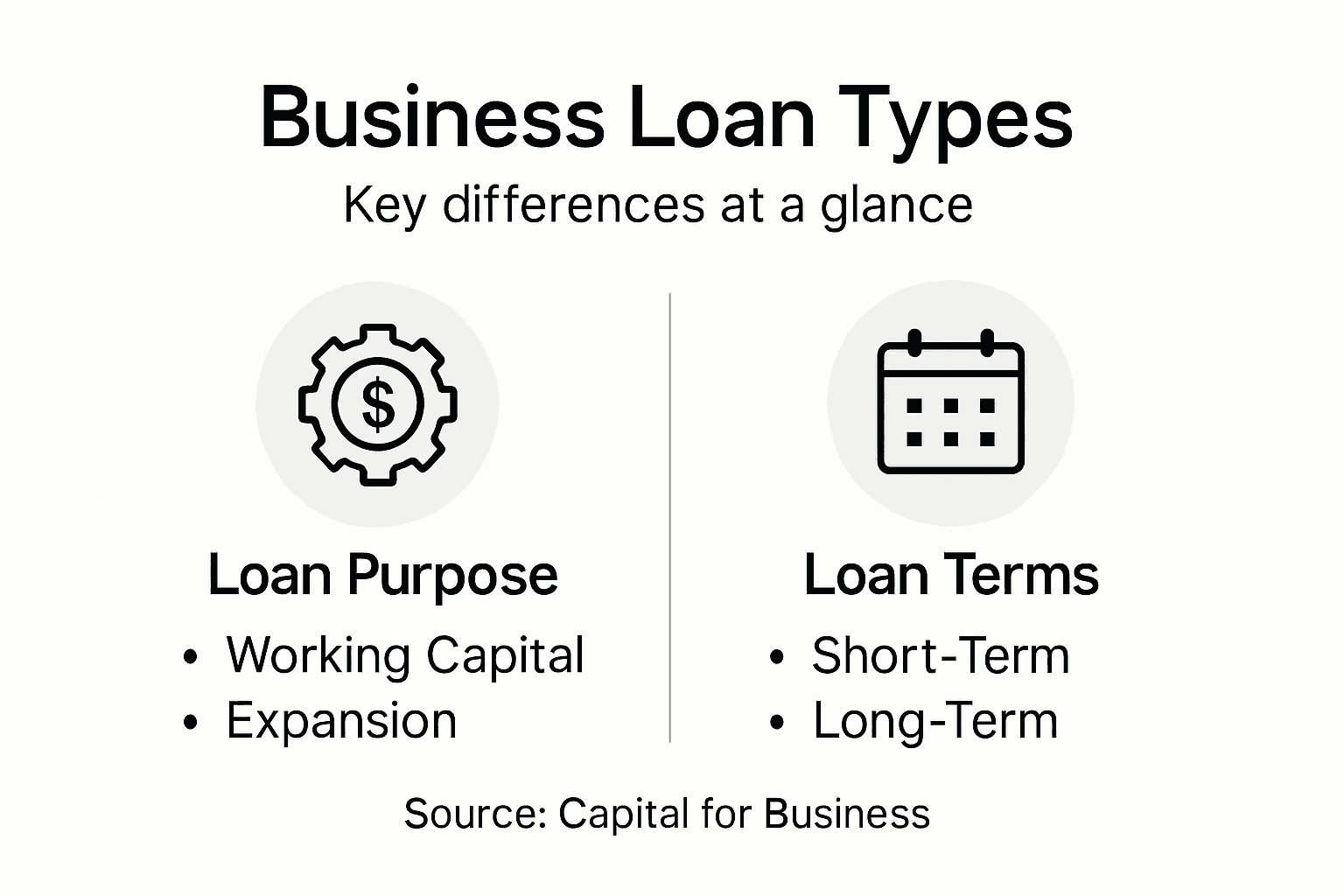
Short-term loans typically range from a few months to one year and are ideal for immediate operational needs. These loans often have higher interest rates but provide quick access to capital. In contrast, long-term loans extend over multiple years and are better suited for substantial investments like property purchases or major equipment acquisitions.
The key differences between loan types extend beyond just repayment periods. Lenders evaluate several critical factors when determining loan eligibility, including business credit history, annual revenue, time in operation, and specific financial goals. Some loans require collateral, while others may be unsecured, which impacts interest rates and approval processes.
Here's a concise comparison of major business loan types and their best use cases:
| Loan Type | Typical Use Case | Repayment Term | Collateral Needed |
|---|---|---|---|
| Term Loan | Facility upgrades | 1-10 years | Often required |
| Line of Credit | Managing cash flow gaps | Revolving/ongoing | Sometimes required |
| SBA Loan | Expansion or real estate | 5-25 years | Usually required |
| Equipment Financing | Purchase of vehicles/machinery | 2-7 years | Secured by equipment |
| Invoice Financing | Unlocking receivables | 1-12 months | Secured by invoices |
Pro tip: Carefully analyze your business's specific financial needs and cash flow projections before selecting a loan type to ensure you choose the most appropriate financing strategy.
How Business Loans Work for Small Firms
Small business loan programs provide critical financial support that enables entrepreneurs to transform their vision into reality. These specialized financing mechanisms help small firms overcome capital barriers by offering flexible funding solutions tailored to different business stages and objectives.
The typical loan process for small firms involves several key steps:
- Application Preparation: Gathering financial documents and business plans
- Credit Assessment: Evaluating business creditworthiness and financial history
- Loan Matching: Identifying appropriate loan types and terms
- Funding Approval: Securing final loan disbursement
- Ongoing Management: Monitoring repayment and maintaining financial compliance
Working capital loans represent a fundamental financing tool for small businesses, providing essential funds to cover operational expenses, purchase inventory, or manage cash flow gaps. These loans typically range from $5,000 to $500,000 and can be secured through various lenders, including traditional banks, credit unions, and alternative financial institutions.

Understanding loan requirements is crucial for small business owners. Lenders typically evaluate multiple factors including business credit score, annual revenue, time in operation, and potential for future growth. Some loans may require collateral, while others might rely on personal guarantees or demonstrate strong revenue potential as primary qualification criteria.
Pro tip: Develop a comprehensive business plan and maintain accurate financial records to significantly improve your chances of securing favorable loan terms.
Eligibility, Application, and Qualification Standards
Federal regulations define precise business loan qualification criteria that small businesses must navigate carefully. Lenders assess multiple dimensions of a company's financial health and potential to determine loan eligibility, creating a comprehensive evaluation process that goes far beyond simple credit scoring.
Key eligibility requirements typically include:
- Business Location: Must be physically located in the United States
- Operational Status: Operating for profit with demonstrable business activity
- Size Standards: Meet Small Business Administration (SBA) size requirements
- Financial Documentation: Provide comprehensive financial statements
- Credit History: Maintain acceptable personal and business credit profiles
Qualification standards vary significantly across different loan types and lending institutions. Traditional banks often have more stringent requirements, demanding extensive documentation and strong credit histories. Alternative lenders might offer more flexible criteria, focusing on recent revenue performance and potential for growth rather than historical financial perfection.
The application process involves a detailed financial review where lenders evaluate several critical factors. These include annual revenue, time in business, cash flow consistency, debt-to-income ratio, and the specific purpose of the requested funding. Businesses must demonstrate not just their ability to repay the loan, but also a clear strategic plan for utilizing the borrowed capital to drive growth and generate additional revenue.
Pro tip: Prepare a comprehensive loan application package that includes detailed financial projections, a clear business plan, and organized documentation to significantly improve your approval chances.
Risks, Costs, and Legal Obligations
Bank lending practices require comprehensive risk management for small business loans, creating a complex landscape of financial and legal considerations. Business owners must understand the multifaceted risks associated with borrowing, including potential financial, legal, and operational implications.
Key risks and obligations include:
- Financial Exposure: Potential loss of personal and business assets
- Legal Compliance: Meeting regulatory requirements and loan agreements
- Collateral Requirements: Risking specific business or personal property
- Credit Impact: Potential negative effects on business and personal credit scores
- Repayment Responsibilities: Contractual obligations for loan reimbursement
Venture loans carry inherently higher risks compared to traditional financing. Lenders carefully evaluate multiple dimensions of potential borrower risk, including business model stability, revenue projections, and management team expertise. This rigorous assessment helps mitigate potential defaults while protecting both the lender's and borrower's interests.
Legal obligations extend beyond simple repayment terms. Business owners must maintain precise financial documentation, comply with all loan covenant requirements, and provide regular financial reporting. Failure to meet these obligations can result in immediate loan acceleration, additional fees, or legal action that could potentially threaten the entire business operation.
Pro tip: Consult with a financial attorney before signing any loan agreement to fully understand the complex legal implications and potential long-term consequences of your borrowing commitment.
Alternatives to Business Loans and Their Uses
Government programs offer diverse small business funding alternatives beyond traditional bank loans. Entrepreneurs have multiple financing strategies to explore, each with unique advantages and considerations for supporting business growth and operational needs.
Key alternative funding sources include:
- Grants: Non-repayable funds from government and private organizations
- Crowdfunding: Online platforms allowing public investment
- Angel Investors: Individual investors providing capital for equity
- Venture Capital: Institutional investment in high-potential startups
- Community Development Financial Institutions (CDFIs): Specialized lenders serving underserved markets
Equity financing represents a significant alternative to traditional debt. By selling company shares, businesses can secure capital without taking on loan repayment obligations. This approach works particularly well for technology startups and businesses with strong growth potential, though it requires entrepreneurs to sacrifice partial ownership and future profits.
Each alternative funding method comes with distinct requirements and implications. Grants typically demand extensive applications and specific qualifying criteria, while investor funding requires compelling business plans and demonstrated market potential. Some options like crowdfunding offer more flexible terms but may involve complex regulatory compliance and marketing efforts to attract potential supporters.
Below is a quick reference to alternative funding sources and their main advantages:
| Funding Source | Best For | Major Benefit |
|---|---|---|
| Grants | Startups or nonprofits | No repayment needed |
| Crowdfunding | New product launches | Wide investor base |
| Angel Investors | Early-stage growth | Expertise plus funding |
| Venture Capital | High-growth startups | Access to large capital, networks |
| CDFIs | Underserved communities | Flexible qualification criteria |
Pro tip: Research multiple funding alternatives simultaneously and prepare comprehensive documentation to maximize your chances of securing the most suitable financial support for your specific business needs.
Empower Your Business Growth with the Right Financing Solutions
The article highlights the challenges small businesses face when navigating the complex world of business loans including understanding eligibility criteria, managing risks, and selecting the right loan type for growth and stability. If you are aiming to unlock working capital, finance equipment, or secure a flexible line of credit, these are critical factors that can determine your success. Common pain points like navigating stringent bank requirements, needing quick access to funds, and finding affordable lending options are barriers Capital for Business is ready to overcome with you.
At Capital for Business, we specialize in providing tailored financial solutions designed to meet your unique needs when traditional banks fall short. Since 2009, we have helped hundreds of business owners across numerous industries find fast, reliable funding that supports expansion, upgrades, and sustained growth. Our products include small business loans, working capital, merchant cash advances, business lines of credit, and equipment financing. Partnering with us means gaining access to essential capital with clarity, confidence, and a commitment to your success.
Are you ready to take the next step and fuel your business growth with flexible funding that fits your goals?
Explore your options and find the right business loan for you today by visiting Capital for Business. Learn more about how our small business loans and working capital solutions can empower your enterprise to thrive with speed and affordability.
Frequently Asked Questions
What are the different types of business loans available?
Business loans come in various types, including term loans for fixed amounts, lines of credit for flexible borrowing, SBA loans backed by the government, equipment financing for purchasing machinery, and invoice financing secured against outstanding invoices.
How can small businesses improve their chances of qualifying for a loan?
Small businesses can enhance their loan eligibility by maintaining accurate financial records, developing a comprehensive business plan, demonstrating consistent revenue, and preparing a detailed loan application package that includes financial projections and organized documentation.
What are the main risks associated with taking out a business loan?
The primary risks of business loans include financial exposure which could result in the loss of personal or business assets, legal compliance with loan agreements, potential negative impacts on credit scores, and the obligation to repay the loan as per the terms of the agreement.
How does a line of credit differ from a term loan?
A line of credit is a flexible borrowing option that allows businesses to draw funds as needed and only pay interest on the amount borrowed, whereas a term loan involves borrowing a fixed amount with a predetermined repayment schedule and typically requires repayment of both principal and interest over a set period.