
Restaurants operate on razor-thin profit margins while juggling unpredictable cash flow, rising costs, and shifting lending rules. Securing the right business loan can mean the difference between thriving expansion and cash flow crisis. The U.S. full-service restaurant market exceeded $360 billion in 2025, yet most owners struggle to navigate financing options effectively. This guide walks you through every critical step for securing and managing restaurant business loans in 2026, from understanding your options to applying strategically and using funds wisely for sustainable growth.
Table of Contents
- Understanding The Restaurant Financing Landscape In 2026
- Preparing To Apply: Key Steps And Requirements For Restaurant Business Loans
- Exploring Business Loan Options Suitable For Restaurants
- Managing And Optimizing Loan Use For Restaurant Growth And Stability
- How Capital For Business Can Empower Your Restaurant Financing
- Frequently Asked Questions
Key takeaways
| Point | Details |
|---|---|
| Tight margins demand smart financing | Average restaurant profit margins hover between 3% and 5%, making every financing decision critical for survival. |
| SBA loans offer low rates but stricter rules | SBA loan rates dropped to three-year lows but approval timelines extended by 30 days in 2026. |
| Preparation improves approval odds | Complete financial records, solid business plans, and awareness of new lending rules increase success rates. |
| Multiple loan types serve different needs | Equipment financing, merchant cash advances, term loans, and SBA options each fit specific restaurant scenarios. |
| Cash flow management drives loan success | Daily monitoring and strategic fund allocation ensure loan repayment without sacrificing operational stability. |
Understanding the restaurant financing landscape in 2026
The restaurant industry presents unique financial challenges that make securing appropriate funding essential. The U.S. full-service restaurant market exceeded $360 billion in 2025, with double-digit growth projected through 2026. This expansion creates opportunities, but also intensifies competition and capital demands.
Profitability remains challenging across the sector. Average restaurant profit margins hover between 3% and 5%, leaving minimal room for financial missteps. A single slow month or unexpected equipment failure can drain reserves quickly. These tight margins mean every dollar of borrowed capital must generate clear returns.
Daily operational pressures compound financing challenges. Cash flow management is the #1 challenge for restaurant owners, driven by weekly payroll obligations, perishable inventory that spoils if not sold quickly, and supplier payment schedules that rarely align with revenue patterns. You might generate strong weekend sales but still face Tuesday morning cash shortages when rent and vendor invoices come due.
The lending environment shifted noticeably in 2026. Traditional banks tightened qualification standards, particularly for SBA-backed loans. New Standard Operating Procedure requirements added documentation steps and extended approval timelines. Alternative lenders filled some gaps, but often at higher costs. Understanding these market dynamics helps you set realistic expectations and choose restaurant financing options that match your situation.
Successful restaurant financing starts with recognizing these realities. You need capital that supports growth without creating unsustainable debt burdens. The right loan structure accounts for seasonal revenue fluctuations, provides breathing room during slower periods, and funds improvements that genuinely boost profitability.
Pro Tip: Track your cash conversion cycle closely before applying for any loan. Know exactly how many days pass between paying suppliers and collecting customer revenue. This metric reveals your true working capital needs and helps you request appropriate loan amounts.
Preparing to apply: key steps and requirements for restaurant business loans
Strong preparation separates successful loan applications from rejected ones. Lenders scrutinize restaurant applications carefully due to industry failure rates, so presenting complete, organized documentation becomes critical.
Start by assembling your financial foundation:
- Pull your personal and business credit reports to identify any issues requiring attention before applying
- Compile three years of business tax returns showing consistent revenue patterns and responsible tax management
- Gather six months of bank statements demonstrating positive cash flow trends and adequate reserves
- Prepare current profit and loss statements and balance sheets reviewed or audited by a qualified accountant
- Document all existing debts, payment histories, and current obligations to show your debt service capacity
Your business plan carries enormous weight in the approval process. Lenders want to see exactly how borrowed funds will generate returns. Include detailed financial projections showing monthly cash flow under various scenarios. Explain your competitive advantages, target customer base, and growth strategies with specific metrics. Address how you will handle seasonal fluctuations and unexpected challenges.

Credit considerations extend beyond just scores. Lenders evaluate your payment history patterns, debt-to-income ratios, and how you have managed previous business obligations. Personal credit matters significantly for newer restaurants or smaller loan amounts. Business credit becomes more important as your operation matures and loan sizes increase.
Be aware that many buyers are unaware of new SBA rule changes affecting lending in 2026. The updated Standard Operating Procedure introduced stricter qualification requirements and additional documentation steps. These changes particularly impact restaurant acquisitions and expansion financing. Understanding current SBA and bank term loan updates prevents application delays and rejection surprises.
Legal documentation must be current and complete. Organize your business formation documents, operating agreements, franchise agreements if applicable, and all permits and licenses. Lenders verify legal compliance before approving restaurant loans. Missing or expired permits trigger immediate red flags.
Pro Tip: Create a loan application checklist specific to your restaurant type and desired loan amount. Different lenders require different documents, but having everything organized in advance speeds the process dramatically. Consider common financing mistakes to avoid when assembling your application package.
Exploring business loan options suitable for restaurants
Restaurant owners can access several distinct loan types, each serving different needs and situations. Understanding the strengths and limitations of each option helps you match financing to your specific goals.
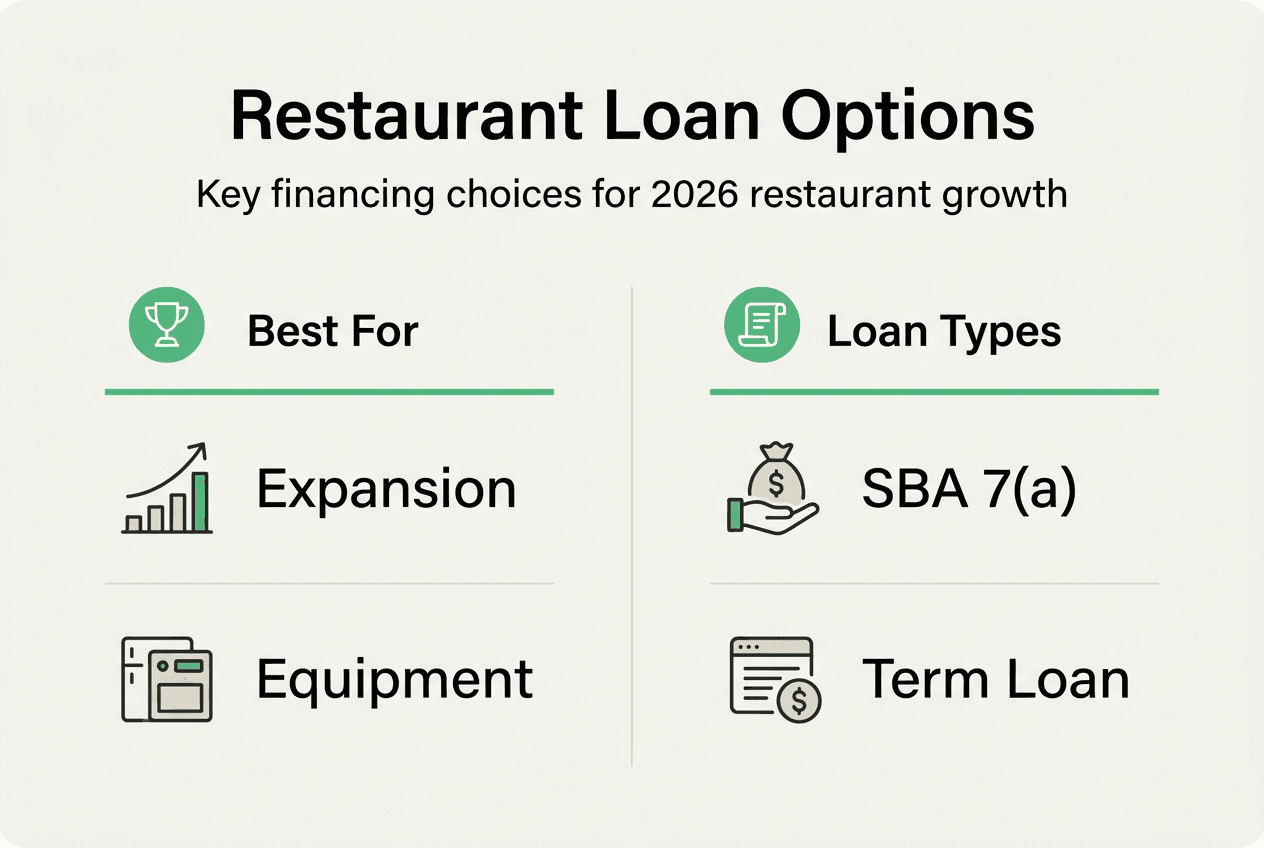
SBA 7(a) loans represent the gold standard for restaurant financing when you qualify. SBA loan rates range from 10.50% to 13.50%, the lowest in three years. Terms extend up to 25 years for real estate and 10 years for equipment, keeping monthly payments manageable. The downside? Approval requirements tightened significantly in 2026, and closing timelines extended by roughly 30 days. You need strong credit, substantial documentation, and patience to navigate the process.
Equipment financing provides a targeted solution for kitchen upgrades, point-of-sale systems, or refrigeration improvements. The equipment itself serves as collateral, making approval easier than unsecured loans. You preserve working capital while spreading equipment costs over the asset's useful life. Rates and terms vary based on equipment type and your creditworthiness. This option works particularly well when specific equipment upgrades will directly increase revenue or reduce operating costs.
Merchant cash advances offer the fastest funding, often within 24 to 48 hours. Providers advance cash based on your credit card sales volume, then collect repayment as a percentage of daily card transactions. This structure provides automatic flexibility during slow periods. However, effective interest rates run significantly higher than traditional loans, sometimes exceeding 40% annually. Use merchant cash advances only for genuine emergencies or opportunities with immediate, substantial returns.
Term loans from traditional banks or alternative lenders provide fixed repayment schedules over set periods, typically one to five years. You receive a lump sum upfront and repay through regular installments. These loans work well for renovations, expansion projects, or consolidating existing debts. Interest rates and qualification requirements vary widely between lenders. Compare multiple offers carefully, examining not just rates but also prepayment penalties, origination fees, and total repayment amounts.
| Loan Type | Best For | Typical Rate | Funding Speed | Key Advantage |
|---|---|---|---|---|
| SBA 7(a) | Major expansion or acquisition | 10.50% to 13.50% | 60 to 90 days | Lowest rates and longest terms |
| Equipment Financing | Kitchen upgrades or new equipment | 8% to 20% | 7 to 14 days | Equipment serves as collateral |
| Merchant Cash Advance | Emergency cash needs | 40%+ effective APR | 24 to 48 hours | Repayment flexes with sales |
| Term Loan | Renovations or working capital | 12% to 30% | 3 to 10 days | Fixed, predictable payments |
Explore top small business loans for restaurants to compare specific lender offerings. For equipment-focused needs, review our detailed equipment financing guide covering qualification requirements and application strategies.
Pro Tip: Calculate the true cost of each loan option using total repayment amount, not just interest rate. A merchant cash advance might quote a factor rate that sounds reasonable but translates to an extremely high APR when you account for the short repayment period.
Managing and optimizing loan use for restaurant growth and stability
Securing a loan represents just the beginning. How you deploy and manage those funds determines whether the debt strengthens your restaurant or creates financial strain.
Allocate borrowed capital strategically to areas generating measurable returns. Kitchen equipment that increases output capacity or reduces labor costs pays for itself through improved margins. Marketing campaigns that attract new customers during traditionally slow periods boost revenue when you need it most. Dining room renovations that enhance ambiance can justify higher menu prices and improve customer retention. Avoid using loan proceeds for operating expenses that do not generate incremental revenue.
Cash flow monitoring becomes even more critical once you add loan payments to your obligations. Track daily sales, weekly payroll, and monthly fixed costs against your cash position. Identify patterns in your cash conversion cycle to anticipate shortfalls before they become crises. Many restaurant owners discover that maintaining a small but steady net margin requires consistent cost discipline and efficient labor scheduling. Build cash reserves during peak periods to cover loan payments during slower months.
Inventory optimization directly impacts your ability to service debt comfortably. Reduce spoilage by improving forecasting accuracy and adjusting order quantities based on actual consumption patterns. Balance the cost savings of bulk purchasing against the risk of waste. Negotiate payment terms with suppliers that align with your revenue cycles. Every dollar saved on spoiled inventory or better payment terms increases the cash available for loan repayment.
Key practices for sustainable loan management include:
- Review financial statements weekly, not just monthly, to catch problems early and adjust operations quickly
- Maintain a cash reserve equal to at least one month of operating expenses plus loan payments as a safety buffer
- Track specific metrics tied to your loan's purpose, such as increased covers served after a kitchen upgrade
- Communicate proactively with your lender if you anticipate any payment challenges rather than missing deadlines
- Reinvest a portion of loan-driven revenue increases to accelerate debt paydown and reduce total interest costs
Avoid common pitfalls that undermine loan success. Do not divert funds to non-essential expenses like unnecessary décor upgrades that fail to increase revenue. Resist the temptation to take on additional debt before fully stabilizing the first loan's impact. Stay disciplined about separating business and personal finances to maintain clear visibility into restaurant performance.
Pro Tip: Create a simple dashboard tracking your loan's ROI monthly. Calculate the incremental revenue or cost savings generated by loan-funded improvements and compare it to your monthly payment. This visibility keeps you focused on maximizing the loan's value and identifies quickly if adjustments are needed. Learn more about how to use a business loan wisely and strategies for supporting working capital with small business loans.
How Capital For Business can empower your restaurant financing
Navigating restaurant financing challenges requires both capital access and expert guidance. Capital For Business specializes in helping restaurant owners secure funding tailored to their unique operational needs and growth goals.
We offer up to $500,000 in restaurant business loans designed specifically for the industry's cash flow patterns and seasonal fluctuations. Our team understands the financial pressures you face, from managing weekly payroll to funding equipment upgrades that keep your kitchen competitive.
Our financing solutions include SBA loans, equipment financing, working capital advances, and flexible term loans. We guide you through the application process, help you understand the new 2026 lending requirements, and match you with the loan structure that fits your situation. Whether you are expanding to a second location, renovating your dining room, or managing cash flow during a slow season, we provide the capital and expertise to support your success.
Explore our full range of small business loan types and discover how our integrated business funding solutions can help you achieve your restaurant's full potential in 2026.
Frequently asked questions
What credit score do I need to qualify for a restaurant business loan?
Most traditional lenders prefer credit scores above 650 for restaurant loans, with SBA loans typically requiring 680 or higher. Alternative lenders may approve scores as low as 550 but charge significantly higher rates. Your business credit score, revenue history, and time in operation also influence approval decisions beyond just personal credit.
How long does it take to close a restaurant SBA loan in 2026?
Average deal closing time is up 30 days due to new SBA requirements implemented in 2026. Expect 60 to 90 days from application to funding for most SBA 7(a) loans. The extended timeline reflects additional documentation requirements and more thorough underwriting processes. Plan your financing needs well in advance to avoid operational disruptions.
Can I use a business loan to cover seasonal cash flow shortages?
Yes, working capital loans and lines of credit specifically address seasonal fluctuations and temporary cash needs. Cash flow management is the #1 challenge for restaurant owners, making access to flexible financing essential during slower periods. Structure your loan to provide reserves that cover expenses during predictable low-revenue months without creating unsustainable debt burdens.
What common mistakes should I avoid when applying for a restaurant loan?
Submitting incomplete financial documentation or unrealistic cash flow projections tops the list of application errors. Many applicants also fail to understand new SBA lending rules, leading to unexpected delays or rejections. Not comparing loan terms carefully across multiple lenders can cost thousands in unnecessary interest and fees. Review our guide on small business financing mistakes to identify and prevent common pitfalls before applying.