
Unexpected slow periods can make even the most prepared Canadian restaurant owners feel uneasy about meeting day-to-day expenses. Keeping your business running smoothly depends on having a clear picture of your incoming and outgoing cash. A cash flow analysis provides powerful insight into exactly when and why shortfalls may happen, helping you plan for those leaner months and decide if a merchant cash advance is the right move for your restaurant’s needs.
Table of Contents
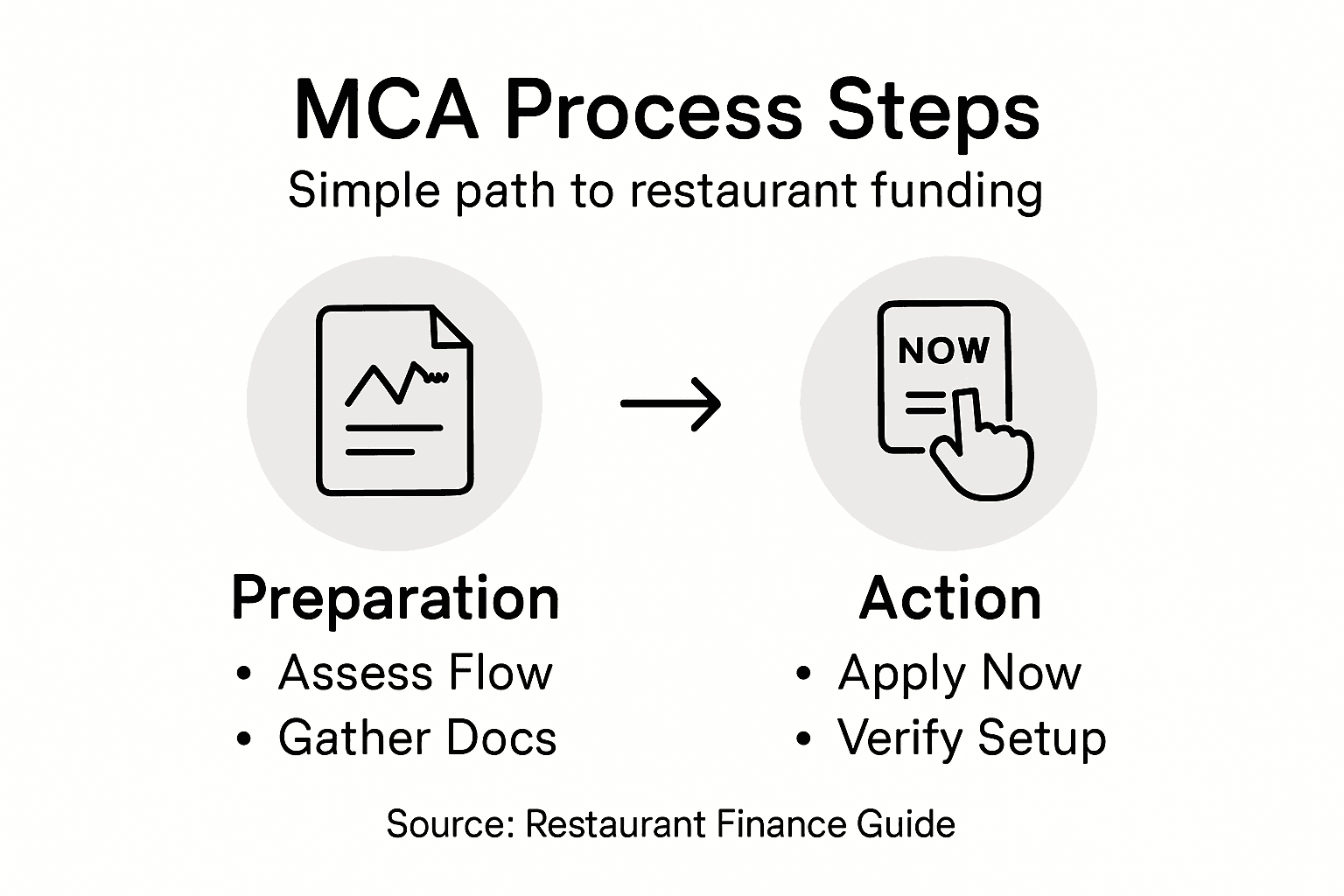
- Step 1: Assess Business Cash Flow Needs
- Step 2: Gather Required Financial Documents
- Step 3: Apply for Merchant Cash Advance
- Step 4: Review and Accept Capital Offer
- Step 5: Verify Funding and Repayment Setup
Quick Summary
| Key Message | Explanation |
|---|---|
| 1. Assess Cash Flow Needs | Analyze your cash flow to determine financial health and identify funding requirements. Track inflows and outflows meticulously. |
| 2. Gather Financial Documents | Compile necessary financial records to showcase your restaurant's stability and repayment capacity for lenders. |
| 3. Understand Merchant Cash Advance Process | Familiarize yourself with the application and repayment structures to prepare effectively for the funding process. |
| 4. Review Capital Offer Carefully | Evaluate the terms of your advance offer, focusing on total funding and repayment percentages to avoid financial strain. |
| 5. Verify Funding and Repayment Setup | Confirm your funding deposit and review the repayment mechanisms to ensure a clear understanding and transparency. |
Step 1: Assess Business Cash Flow Needs
Understanding your restaurant's cash flow is the critical first step in determining whether a merchant cash advance makes sense for your business. Cash flow analysis provides a comprehensive snapshot of your financial health, revealing how money moves through your restaurant's operations.
To effectively assess your cash flow needs, you'll want to examine several key financial indicators. Cash flow statements reveal crucial financial insights that can help you make informed decisions. Start by collecting these essential financial documents:
- Monthly revenue records
- Expense statements
- Bank account statements
- Profit and loss reports
- Credit card processing statements
When analyzing these documents, pay special attention to seasonal variations in restaurant income. Most restaurants experience significant fluctuations in revenue due to factors like tourist seasons, local events, and holiday periods. Track your monthly cash inflows and outflows carefully to understand your true financial position.
Your goal is to identify periods of potential cash flow strain and determine the exact amount of working capital needed to bridge financial gaps.
Look for patterns in your restaurant's economic indicators such as same-store sales, customer traffic, and recurring expenses. Calculate your average monthly cash surplus or deficit to understand precisely how much additional funding might benefit your business.
Pro tip: Create a detailed spreadsheet tracking your cash flow trends over the past 12-24 months to gain the most accurate picture of your restaurant's financial performance.
Here's a summary of common issues during restaurant cash flow analysis:
| Issue Type | Business Impact | Suggested Solution |
|---|---|---|
| Seasonal revenue swings | Budget shortfalls in off-peak months | Project future inflows accurately |
| Inconsistent expense tracking | Unclear financial picture | Implement monthly reconciliation |
| High fixed costs | Reduced cash flexibility | Analyze cost structures regularly |
Step 2: Gather Required Financial Documents
Collecting comprehensive financial documentation is crucial when preparing for a merchant cash advance application. You'll need to demonstrate your restaurant's financial stability and potential for repayment through a strategic compilation of key financial records.
To build a robust financial profile, focus on organizing comprehensive cash flow statements that provide a clear picture of your business's financial performance. Here are the essential documents you should assemble:
- Three years of tax returns (personal and business)
- Detailed bank statements (last 6-12 months)
- Profit and loss statements
- Business balance sheets
- Sales and revenue records
- Credit card processing statements
- Accounts receivable and payable reports
Pay special attention to documenting consistent revenue streams and demonstrating financial stability. Lenders will scrutinize these documents to assess your restaurant's financial health and repayment capacity.
Accurate and well-organized financial documentation can significantly improve your chances of securing a merchant cash advance.
Ensure that your financial documents follow standard cash flow reporting guidelines to provide maximum transparency. Digital copies should be clear, properly labeled, and easily accessible for quick review by potential lenders.

Pro tip: Create a dedicated digital folder with clearly labeled financial documents and maintain an organized system that allows for quick retrieval during the application process.
Step 3: Apply for Merchant Cash Advance
Applying for a merchant cash advance requires strategic preparation and understanding of the unique financing option available for restaurant businesses. Merchant cash advances offer flexible funding based on your restaurant's credit card sales performance, providing a faster alternative to traditional bank loans.
To begin your application, you'll need to compile several key documents and follow these essential steps:
- Gather complete financial documentation
- Review your recent credit card processing statements
- Prepare your business's sales volume history
- Calculate your average monthly revenue
- Determine the exact funding amount needed
- Research multiple merchant cash advance providers
Understand the application process thoroughly before submitting. Most lenders will require detailed information about your restaurant's financial performance, focusing on your ability to repay through future credit card transactions.
Your merchant cash advance application success depends on demonstrating consistent revenue and strong sales performance.
When applying for merchant funding, pay special attention to the specific requirements of each lender. Some may have different criteria for approval, so compare multiple options carefully. Be prepared to provide bank statements, tax returns, and credit card processing history to support your application.
Pro tip: Maintain pristine financial records and be prepared to explain any fluctuations in your restaurant's revenue to increase your chances of approval.
Compare how merchant cash advances differ from traditional bank loans for restaurants:
| Criteria | Merchant Cash Advance | Traditional Bank Loan |
|---|---|---|
| Approval Speed | 24-48 hours | Several weeks |
| Repayment Method | Percentage of daily sales | Fixed monthly payments |
| Qualification Focus | Credit card sales | Credit score, collateral |
| Flexibility | Varies with business revenue | Fixed terms regardless of revenue |
Step 4: Review and Accept Capital Offer
Carefully reviewing your merchant cash advance offer is a critical step that will impact your restaurant's financial future. Understanding merchant cash advance terms requires a detailed analysis of the funding proposal to ensure it aligns with your business goals and cash flow capabilities.
When evaluating the capital offer, focus on these key aspects:
- Total funding amount
- Factor rate and total repayment cost
- Daily or weekly repayment percentage
- Contract length and terms
- Potential prepayment penalties
- Impact on daily credit card sales
Calculate the total financing cost by multiplying the factor rate against your total advance amount. Unlike traditional loans, merchant cash advances use a factor rate instead of an interest rate, which means you'll pay a predetermined total regardless of how quickly you repay.
Your goal is to ensure the advance supports your restaurant's growth without creating unsustainable financial pressure.
Examine the repayment structure carefully. Most advances will automatically deduct a percentage of your daily credit card sales, which means your repayment fluctuates with your restaurant's revenue. This can be advantageous during slower periods but requires careful cash flow management.
Pro tip: Create a detailed spreadsheet modeling your projected cash flow with the merchant cash advance to understand exactly how the repayment will impact your daily restaurant operations.
Step 5: Verify Funding and Repayment Setup
After accepting your merchant cash advance offer, the next critical step is verifying the funding deposit and understanding the precise repayment mechanism. Merchant cash advance funding processes typically involve rapid fund transfer and automated sales-based repayment strategies.
To ensure a smooth funding and repayment setup, follow these key verification steps:
- Confirm exact funding amount deposited
- Verify bank account deposit details
- Review percentage of daily credit card sales for repayment
- Check automatic withdrawal configuration
- Validate merchant account integration
- Understand transaction fee structures
Validate the total advance amount immediately after deposit. Most lenders transfer funds within 24-48 hours of final agreement, so prompt verification is essential. Double-check that the deposited amount matches your approved offer exactly.
Accurate verification protects your restaurant's financial interests and ensures a transparent funding relationship.
Monitor your initial repayment cycles carefully. Tracking merchant cash advance repayments requires understanding how daily sales percentages translate into actual payment amounts. Your repayment will automatically adjust based on your restaurant's credit card transaction volumes.
Pro tip: Create a dedicated bank account spreadsheet to track each merchant cash advance transaction, ensuring complete transparency and easy reconciliation.
Secure Fast Funding Tailored for Your Restaurant's Needs
If assessing your cash flow and managing merchant cash advances feels overwhelming, you are not alone. Many restaurant owners face challenges navigating factor rates, repayment percentages, and fluctuating revenues. Capital For Business understands these unique pain points and offers flexible merchant cash advances designed to match your daily credit card sales, helping you maintain control without disrupting operations. With over a decade of experience supporting small businesses across the United States and Canada, we provide reliable funding solutions when traditional banks fall short.
Take the next step to stabilize your restaurant's cash flow with confidence. Explore how our fast and flexible financial services can support your growth by visiting Capital For Business. Discover options including working capital, equipment financing, and merchant cash advances specifically crafted to work with your revenue patterns. Don’t wait for slow bank approvals when you need funding now to keep your restaurant thriving. Get started today and turn your cash flow challenges into opportunities.
Frequently Asked Questions
How can I assess my restaurant's cash flow needs?
To assess your restaurant's cash flow needs, analyze key financial indicators such as monthly revenue records, expense statements, and profit and loss reports. Track your cash inflows and outflows over the past 12-24 months to identify periods of financial strain and determine how much working capital you need.
What financial documents are required for a merchant cash advance application?
You will need several key documents, including three years of tax returns, recent bank statements, profit and loss statements, and credit card processing statements. Organize these documents clearly and ensure they demonstrate consistent revenue streams to improve your chances of approval.
How do I apply for a merchant cash advance?
To apply for a merchant cash advance, gather your financial documents and prepare information about your sales volume history. Compare multiple providers and submit an application that shows you have a stable revenue stream, supported by your recent credit card processing statements.
What should I look for in a capital offer from a merchant cash advance?
When reviewing a capital offer, focus on the total funding amount, factor rate, and repayment terms. Calculate the total financing cost to ensure it aligns with your restaurant's goals and verify the repayment structure to avoid potential financial strain.
How can I verify the funding and repayment setup after acceptance?
After accepting the offer, confirm the exact funding amount deposited into your bank account and review the percentage of daily credit card sales that will be used for repayment. Monitor your repayment cycles closely to ensure they are aligned with your restaurant's cash flow.