
Securing financing for your Canadian small business can feel like hitting a brick wall when traditional banks ignore your applications or reject them outright. Many business owners struggle with unclear requirements, incomplete documentation, or choosing the wrong loan type for their needs. This guide walks you through every step of the business loan application process tailored to Canadian regulations and programs, helping you prepare properly and maximize your approval chances.
Table of Contents
- Prerequisites: What You Need Before You Start
- Step 1: Define Your Loan Purpose And Choose The Right Type
- Step 2: Prepare Your Documentation And Application
- Step 3: Submit Your Application And Engage With Lenders
- Common Mistakes And How To Fix Them
- Expected Outcomes: Timelines, Approval Rates, And Loan Terms
- Explore Tailored Canadian Business Loan Solutions
- Frequently Asked Questions
Key Takeaways
| Point | Details |
|---|---|
| Preparation Impact | Proper loan preparation can boost approval rates by up to 40% for Canadian small businesses. |
| Government Support | CSBFP loans cover up to $1.15 million with government backing that reduces lender risk. |
| Documentation Critical | Complete, accurate documents and clear loan purpose prevent delays and rejections. |
| Timeline Varies | Banks take 1-4 weeks for approval; alternative lenders process faster but charge more. |
| Right Loan Type | Matching loan type to business need protects cash flow and ensures suitable funding. |
Prerequisites: What You Need Before You Start
Before submitting any loan application, you must have your foundational business elements in order. Starting unprepared wastes time and signals to lenders that you lack seriousness about managing borrowed funds.
First, ensure your business is legally registered in Canada with valid provincial or federal registration documents. Lenders require proof of your physical Canadian location and operational legitimacy. You cannot skip this step.
Next, gather at least two years of financial statements and tax returns. These documents demonstrate your revenue trends, profitability, and ability to service debt. New businesses with shorter histories face tougher scrutiny, so establish your track record before applying.
Your business plan matters more than many owners realize. It must clearly outline why you need the loan, how you will use funds, and your realistic repayment strategy. Vague plans get rejected fast.
Understand credit score minimums, which vary by lender but typically range from 600 to 680 for traditional banks. Check your score before applying to avoid surprises. For applying for a CSBFP loan, you must meet specific eligibility criteria including maximum gross revenue of $10 million annually.
Complete these business loan prerequisites before moving forward:
- Valid Canadian business registration and licenses
- Minimum 2 years of financial statements and tax returns
- Detailed business plan with clear loan purpose
- Credit score review and improvement plan if needed
- Understanding of program eligibility like CSBFP revenue caps
Step 1: Define Your Loan Purpose and Choose the Right Type
Mismatching your loan type to your actual need creates cash flow problems and wastes application effort. Equipment purchases require different financing than working capital or real estate.
Equipment financing works best for machinery, vehicles, or technology purchases. The equipment itself serves as collateral, often resulting in better rates. Consider leasing as an alternative if you want to preserve capital or upgrade frequently.
Working capital loans or lines of credit suit operational expenses like payroll, inventory, or seasonal fluctuations. Lines of credit offer flexibility, letting you draw funds as needed and pay interest only on the amount used.
Real estate and leasehold improvements fit government-backed programs perfectly. The CSBFP allows loans up to CAD 1.15 million for equipment purchase, leasehold improvements, and working capital, with amortization terms reaching 15 years.
Never use operating lines for asset purchases. This common mistake ties up revolving credit that should remain available for daily operations, creating liquidity crunches when you need flexibility most.
Match your financing to your growth strategy. Equipment financing supports expansion without draining reserves, while term loans fund larger strategic investments. Think about how you will grow your business with loans before choosing a product.
Pro Tip: Government-backed CSBFP loans reduce lender risk, making approval easier for businesses that might not qualify for conventional financing. Explore these options first if you meet eligibility requirements.
Step 2: Prepare Your Documentation and Application
Incomplete applications get rejected or delayed regardless of your business strength. Lenders want proof you can repay, and missing documents signal disorganization or risk.
Start by collecting your core financial documents. You need balance sheets, income statements, cash flow statements, and tax returns for the past two to three years. Ensure all documents are current, accurate, and professionally prepared.

Applying for a CSBFP loan requires preparing documents including financial statements, business plans, valid business registration, and proof of Canadian operations. These form your application backbone.
Your business plan must go beyond generic templates. Include specific loan amounts, detailed use of funds, market analysis, competitive positioning, and realistic financial projections. Show how the loan drives revenue growth or cost savings that enable repayment.
Draft a concise loan purpose statement. In two to three paragraphs, explain exactly why you need funding, how you will deploy it, and your repayment timeline. Vague statements like "business growth" fail. Specifics like "purchase two delivery vehicles to expand service radius by 50 miles, targeting 30 new customers monthly" work.
Follow this sequence when assembling your application:
- Gather all financial statements and tax returns
- Update your business plan with current data and loan specifics
- Write your detailed loan purpose statement
- Collect business registration, licenses, and any required permits
- Add supporting documents like contracts, purchase orders, or leases
- Review lender checklists to ensure nothing is missing
Use loan documentation checklists specific to your industry to avoid gaps. Each lender may have unique requirements, so confirm their list before submitting.
Pro Tip: Organize documents in clearly labeled folders (digital or physical) matching the lender's application sections. This shows professionalism and speeds up processing when they request additional information.
Understand the business loan application workflow to anticipate next steps and prepare accordingly.
Step 3: Submit Your Application and Engage with Lenders
Submission is just the beginning. How you interact with lenders during processing significantly impacts approval odds.
Choose your lender carefully. Traditional banks offer lower rates but stricter requirements and slower processing. Credit unions often provide personalized service and community focus. Alternative lenders approve faster but charge premium rates.
When pursuing government backing, select only CSBFP-approved lenders. The Canada Small Business Financing Program shares 85% of loan default risk with lenders, encouraging banks and credit unions to approve loans they might otherwise deny. This list is available through Innovation, Science and Economic Development Canada.
Submit your complete application package through the lender's preferred channel, whether online portal, email, or in-person meeting. Confirm receipt and ask about expected timeline and next steps.
Respond to every lender inquiry within 24 hours if possible. Speed signals reliability and urgency without desperation. When they request clarifications or additional documents, provide exactly what they ask for with clear labels and explanations.
Don't be afraid to negotiate terms once approved. Interest rates, repayment schedules, and fees sometimes have flexibility, especially if you have competing offers or strong financials. Politely ask if better terms are possible.
Key submission and engagement practices:
- Submit only to lenders whose requirements match your business profile
- Confirm application receipt and processing timeline
- Respond to requests within 24 hours with complete, organized information
- Maintain professional, courteous communication throughout
- Negotiate terms politely once you receive approval offers
Learn more about communicating with lenders effectively to improve your approval chances through better relationship management.
Common Mistakes and How to Fix Them
Most rejections stem from preventable errors. Recognizing these pitfalls lets you avoid them entirely.
Incomplete documentation tops the rejection list. Missing even one required form delays processing or triggers automatic denial. Fix this by using comprehensive checklists and triple-checking before submission.
Unclear loan purpose statements confuse underwriters. When they cannot understand exactly how you will use funds or generate repayment, they reject you. Write specific, detailed descriptions with dollar amounts and timelines.
Ignoring your credit score and cash flow projections signals poor financial awareness. Review both carefully before applying. If your score is low, wait and improve it. If cash flow is tight, explain temporary factors and show improvement trends.
Applying for unsuitable loan products wastes everyone's time. A working capital line won't work for real estate purchase. Equipment financing won't help with payroll gaps. Match product to purpose precisely.
Delaying responses to lender inquiries makes them question your commitment and organization. Set up systems to monitor application status and respond immediately to requests.
Avoid these common loan mistakes:
- Submitting incomplete application packages
- Using vague, generic loan purpose descriptions
- Failing to review and address credit score issues first
- Applying for loan types that don't match your need
- Slow or incomplete responses to lender follow-up requests
Pro Tip: Have a trusted advisor or accountant review your application package before submission. Fresh eyes catch errors you might miss after reviewing documents repeatedly.
Understanding these loan application pitfalls helps you prepare more effectively and avoid costly delays.
Expected Outcomes: Timelines, Approval Rates, and Loan Terms
Setting realistic expectations prevents frustration and helps you plan your business decisions around likely funding timelines.
Traditional banks typically take one to four weeks to process applications. Their thorough underwriting reviews credit, financials, collateral, and business viability in detail. This slower pace comes with lower interest rates and better terms.
Alternative lenders process applications in days, sometimes offering same-week funding. They prioritize speed over comprehensive review, accepting higher risk in exchange for premium rates and fees. Use them when timing matters more than cost.
CSBFP loans cover up to CAD 1.15 million with amortization up to 15 years. These government-backed loans feature reasonable rates because shared default risk makes lenders more willing to approve borderline applications.
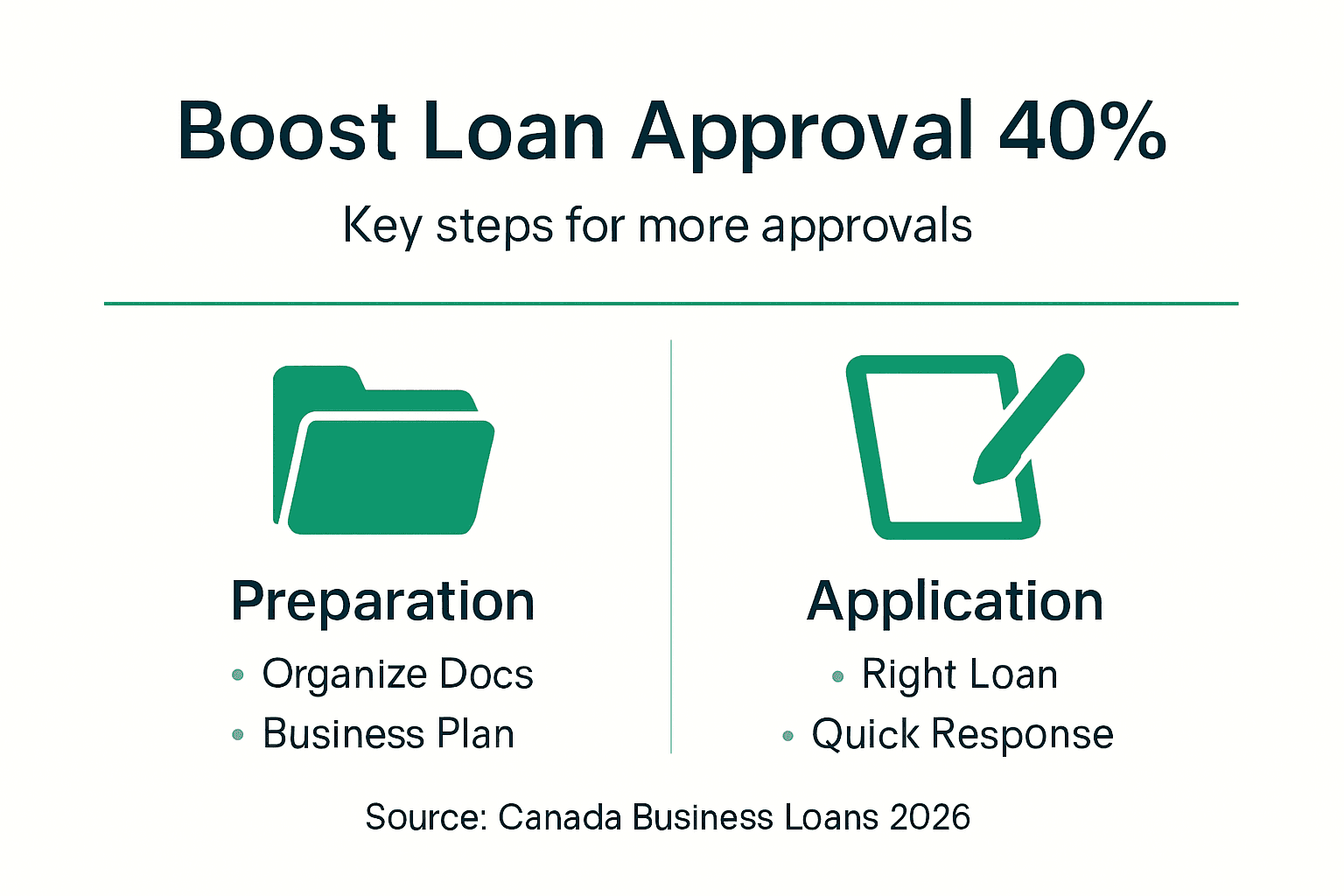
Strong, complete applications can boost approval rates by up to 40% compared to rushed or incomplete submissions. This preparation pays enormous dividends when you need funding to seize time-sensitive opportunities.
Understanding typical terms protects your cash flow. Shorter amortization means higher monthly payments but less total interest. Longer terms reduce monthly obligations but increase total cost. Match term length to the asset's useful life or revenue generation period.
| Lender Type | Approval Timeline | Typical Loan Amount | Interest Rate Range | Best For |
|---|---|---|---|---|
| Traditional Banks | 1-4 weeks | $50k-$5M+ | 4%-8% | Established businesses, lower rates |
| Credit Unions | 2-3 weeks | $25k-$1M | 5%-9% | Community businesses, personalized service |
| CSBFP Program | 2-4 weeks | Up to $1.15M | 5%-7% | Equipment, real estate, government backing |
| Alternative Lenders | 1-7 days | $10k-$500k | 12%-30%+ | Fast funding, flexible requirements |
Review the loan approval timeline guidance to better plan your application timing around business needs.
Explore Tailored Canadian Business Loan Solutions
You now understand the complete application process from preparation through approval. Putting this knowledge into action starts with exploring loan products designed for Canadian small businesses like yours.
Capital for Business specializes in serving businesses when traditional banks say no. Whether you need fast funding despite credit challenges or want to explore equipment financing options, we provide solutions tailored to your specific situation.
Discover bad credit business loans you can qualify for right now, even with past financial difficulties. Access fast small business loans up to $500k to support operational needs or expansion plans. Explore equipment financing options designed specifically for Canadian businesses looking to upgrade or expand their capabilities without draining working capital.
Frequently Asked Questions
What documentation is absolutely required for a CSBFP loan?
You must provide financial statements, business tax returns, a detailed business plan, valid Canadian business registration, and proof of operations in Canada. Some lenders also require personal credit reports and collateral documentation. Having these ready before applying speeds up processing significantly.
How long does it typically take to get approved for a business loan in Canada?
Traditional banks and credit unions typically process applications in one to four weeks depending on complexity and completeness. Alternative lenders often approve within days but charge higher rates. CSBFP-backed loans follow traditional timelines because government involvement requires additional documentation review.
Can I apply for a business loan with less than perfect credit?
Yes, several options exist for businesses with credit challenges. Alternative lenders focus more on cash flow and business performance than personal credit scores. Government-backed CSBFP loans also reduce lender risk, making approval possible for businesses that might not qualify conventionally. Review tips before applying to improve your chances despite credit issues.
What are the main benefits of government-backed loans like CSBFP?
CSBFP loans share 85% of default risk with the government, encouraging lenders to approve businesses they might otherwise reject. They offer higher loan amounts up to $1.15 million, longer amortization periods up to 15 years, and reasonable interest rates. These terms make major investments in equipment or real estate more affordable for small businesses.
What should I do if my loan application is rejected?
Request specific reasons for denial from the lender to understand what needs improvement. Common issues include insufficient cash flow, incomplete documentation, or unsuitable loan type for your purpose. Address these problems, improve your credit score if needed, and reapply after making corrections. Consider consulting with financial advisors to strengthen your next application. Avoid these financing mistakes when preparing your revised submission.