

Lease when the need is short term, seasonal, or the technology turns over fast. Either way, your next move is the same: pull an equipment quote, your last two years of business tax returns, and a current profit and loss statement before you contact a lender.
TL;DR:
- Most contractors can secure financing within a few days if they provide a complete equipment quote and recent financial documents.
- Longer repayment terms should align with the equipment's expected useful life to avoid paying beyond its value.
- Loan interest rates vary based on credit, with well-qualified borrowers often qualifying for single digits, while newer businesses may face higher rates.
- Lenders require insurance coverage that names them as loss payees to protect against theft or damage, with proof of coverage needed before funding.
- Refinancing or upgrading equipment depends on current loan payoff quotes and residual value, with timing crucial for favorable terms.
Table of Contents
- Finance Construction Equipment: Comparing Loans, Leases, and Other Options
- Who Actually Lends on Heavy Equipment?
- What Rates, Terms, and Down Payments Look Like
- What Lenders Want to See Before They Approve You
- How Long Financing Actually Takes
- How to Compare Offers Without Getting Burned
- How Financed Equipment Affects Your Taxes
- Insurance You Need Once the Equipment Is Financed
- Refinancing or Upgrading Equipment You Already Financed
- Contract Risks and How to Protect Yourself
- How Capital for Business Helps Contractors Get Equipment Funded Fast
- What We've Learned Financing Contractor Equipment
- Where to Verify Financing Details Yourself
- Sources
- FAQ
Finance Construction Equipment: Comparing Loans, Leases, and Other Options
Before you can finance construction equipment intelligently, you need to know what's actually on the table. Each option fits a different job, a different balance sheet, and a different appetite for risk.
- Equipment loan: You borrow against the machine, make payments, and own it outright at the end. Best for equipment you'll run for years, since ownership builds equity and shows up as an asset.
- Capital lease: Structured like a loan with a buyout option. Good middle ground for contractors who want eventual ownership without a large down payment.
- Operating lease: Lower monthly payments, no ownership, and easier upgrades. Works well for machines that get replaced by newer models every few years, like GPS-guided graders.
- SBA-backed loan: Government-guaranteed programs that offer longer terms and often lower rates, in exchange for more paperwork and a slower timeline.
- Business line of credit: Flexible, revolving access to cash for smaller attachments or unexpected repairs rather than the machine itself.
- Short-term rental: No commitment, no depreciation to track, and no financing application. Makes sense for a one-off job or testing a piece of equipment before you commit to buying it.
If a job calls for a specialty attachment you'll use once this year, renting beats financing outright. If it's your excavator or your primary skid steer, financing options for builders that lead to ownership usually win on cash flow over the equipment's working life.
Who Actually Lends on Heavy Equipment?
Your choice of lender determines how fast you get funded and how much documentation you'll be asked to produce. Banks, SBA lenders, online platforms, and equipment-specific financiers each play a different role in construction machinery finance.
- Banks and credit unions offer the lowest rates but the slowest process. Expect several weeks of underwriting, strong credit requirements, and a preference for borrowers with an established banking relationship.
- SBA loan programs, including the 504 loan program, work well for larger equipment purchases tied to business growth, though approval and funding can take a month or more.
- Online and alternative lenders move faster, sometimes funding in days, and tend to accept lower credit scores. That speed and flexibility usually come with a higher rate.
- Dealer and specialty equipment financiers, including OEM finance arms like John Deere Financial, can bundle the loan into the purchase and often move faster because the vendor submits equipment details directly to the lender.
Contractors juggling tight deadlines often start with a dealer finance channel or online lender for speed, then build a bank relationship over time for lower-cost financing on future purchases.
What Rates, Terms, and Down Payments Look Like
Repayment terms for heavy equipment financing typically run 12 to 84 months, with interest rates that swing widely depending on your credit profile, the lender, and how the deal is structured. A well-qualified borrower with strong revenue might land a single-digit rate, while a newer business with thinner credit could see rates well into double digits.
Loan terms should roughly match the equipment's useful life. Lenders and finance guides generally recommend keeping the payoff period within the years you expect to run the machine hard, so you're not still paying off a paver you retired two seasons ago.
Down payments usually fall within a range that can include zero to a modest percentage. Some equipment-specific lenders offer full financing on newer machines with strong resale value, while older or specialized equipment with a narrow resale market often requires a larger down payment or a shorter term to protect the lender's recovery value if you default.
Payment structures can flex around your business, not just the calendar. Seasonal payment plans let you pay less in winter months and more during your busy season. Skip-payment options pause a payment or two around slow periods. Balloon payments lower your monthly bill in exchange for a large payment at the end of the term. On the tax side, financed equipment is typically eligible for depreciation deductions, which can meaningfully offset the cost of ownership.
What Lenders Want to See Before They Approve You
Qualification comes down to three things: credit, time in business, and paperwork. Get these right and you'll move through underwriting fast.
- Credit score. Some lenders accept scores in the mid-500s, but stronger credit unlocks better pricing and lower down payments.
- Time in business. Two or more years of operating history gives you access to more lenders and better terms; newer businesses aren't shut out, but expect tighter scrutiny.
- Revenue and cash flow. Lenders look closely at whether your monthly cash flow can absorb the new payment, not just your total revenue.
- Documents to gather: two years of business tax returns, a recent profit and loss statement, a balance sheet, an equipment quote with serial or VIN information, and a government-issued ID for the business owner.
- Entity paperwork. If you operate as an LLC, have your articles of organization and EIN documentation ready, since lenders will verify the business entity separately from your personal credit.
Pro Tip: A larger down payment or a dealer referral can offset a thin credit file. Lenders read both as lower risk, even when your score isn't where you'd like it to be.
How Long Financing Actually Takes
The timeline depends heavily on which lender you choose, but the stages are the same everywhere: quote, application, underwriting, and funding.
- Get your equipment quote from a trusted distributor first. This locks in the price and gives the lender the VIN or serial number they need to structure the deal.
- Apply with documents in hand. Online and dealer lenders can sometimes approve in 24 to 48 hours; banks and SBA lenders often take one to several weeks.
- Underwriting is where cash flow, credit, and collateral value get reviewed. Clean, complete documentation here is the single biggest factor in speed.
- Funding happens once the paperwork is signed. Dealer finance channels tend to be fastest since the vendor often submits equipment details directly to the lender.
Pre-qualifying before you shop for equipment can shave days off the whole process.
How to Compare Offers Without Getting Burned
Choosing the right financing for construction isn't just about the lowest rate. It's about total cost and what happens if your job schedule shifts.
- Compare total cost, not just the monthly payment. A longer term lowers your payment but can cost more in interest over time.
- Ask about early payoff penalties. Some agreements charge a fee if you pay off the loan ahead of schedule.
- Ask what happens if you skip a payment. Late fees, default triggers, and grace periods vary widely between lenders.
- Ask whether the term matches the equipment's useful life. A mismatch here is one of the more common reasons contractors end up upside down on a machine.
- Have a lawyer review any personal guarantee or blanket lien language before you sign, especially on larger loans.
Learn more about the practical differences between a small business loan or an equipment leasing option before you commit to either path.
How Financed Equipment Affects Your Taxes
Buying equipment through a loan generally makes the machine your asset for tax purposes, and that opens the door to depreciation deductions that spread the equipment's cost over its useful life. Depending on how your accountant structures it, you may be able to accelerate a large portion of that deduction into the first year, which can meaningfully reduce your taxable income during a year with a big equipment purchase.
Interest paid on an equipment loan is typically deductible as a business expense, separate from the depreciation on the equipment itself. That's one reason loans often come out ahead of leasing for equipment you'll keep long term. You get the write off on interest and the depreciation benefit, while leasing may only let you deduct the lease payment itself.
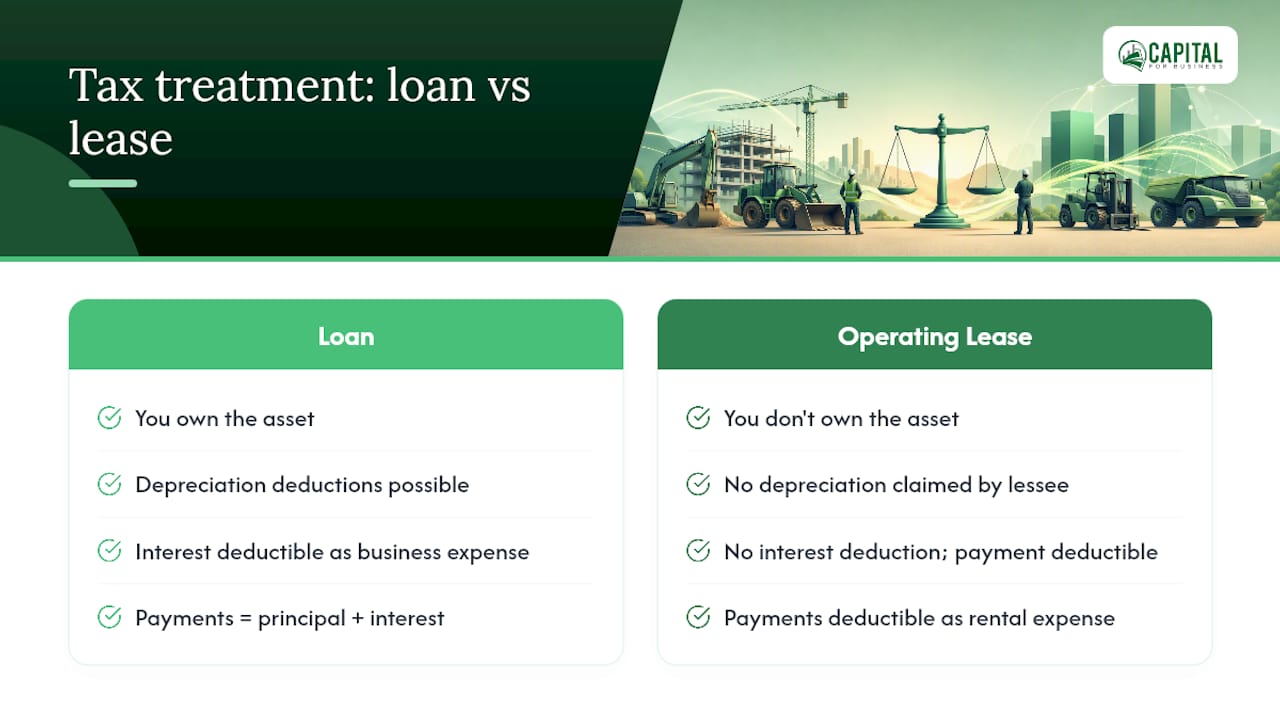
Leasing changes the picture. An operating lease is often treated as a rental expense, meaning your full payment is deductible but you don't get to claim depreciation because you don't own the asset. A capital lease with a buyout option can sometimes be treated more like a purchase for tax purposes, depending on how the agreement is structured.
None of this replaces a conversation with your accountant. The right structure depends on your income for the year, whether you want to front load deductions or spread them out, and how the equipment fits into your broader tax planning. What matters for financing purposes is that the loan versus lease decision isn't just about monthly cash flow. It changes what you can and can't deduct, and that difference can be worth thousands of dollars depending on the size of the purchase.
Insurance You Need Once the Equipment Is Financed
Financed equipment almost always comes with an insurance requirement built into the agreement, and skipping it isn't an option. Most lenders require physical damage coverage, sometimes called equipment or inland marine coverage, that protects the machine against theft, fire, collision, and weather damage for the life of the loan.
The lender will typically ask to be named as a loss payee on the policy. That means if the equipment is totaled or stolen, the insurance payout goes toward paying off the remaining loan balance before you see a dime. Skipping this step, or letting a policy lapse, can trigger a default clause in your financing agreement even if you're current on payments.
Liability coverage matters just as much on a job site. If your excavator damages a neighboring property or injures someone, general liability or a commercial auto policy covering mobile equipment can be the difference between a manageable claim and a lawsuit that outlasts the loan itself.
A few practices keep you protected without overpaying:
- Insure to replacement value, not purchase price. Equipment values shift, and being underinsured after a total loss leaves you covering the gap out of pocket.
- Bundle equipment coverage with your general liability policy where possible. Many insurers offer a discount for contractors who consolidate coverage.
- Review coverage annually, especially after adding attachments or upgrading a machine, since added value on the equipment often isn't automatically reflected in your policy.
Confirm your specific coverage requirements with your lender in writing before the loan closes, since requirements vary between banks, SBA lenders, and dealer finance programs.
Refinancing or Upgrading Equipment You Already Financed
Contractors refinance equipment loans for the same reasons homeowners refinance mortgages: to lower a rate, extend a term for better cash flow, or free up equity in a machine that's paid down significantly. If your credit has improved since you first financed a piece of equipment, or if rates have shifted, refinancing the remaining balance can lower your monthly payment without touching the equipment itself.
Upgrading is a different move. Many lenders and dealer finance programs allow you to trade in financed equipment toward a newer model, rolling any remaining balance into the new loan. This works best when the equipment still has decent resale or trade-in value, since a machine that's underwater, meaning you owe more than it's worth, will leave a gap you have to cover out of pocket or fold into the new financing.
Before refinancing or upgrading, get a written payoff quote from your current lender and compare it against the trade-in or resale value of the equipment. If you're rolling old debt into new equipment financing, ask the new lender to show you the total cost over the full term, not just the new monthly payment, since stretching an old balance into a new loan can quietly extend how long you're paying for a machine you no longer own.
Timing also matters. Refinancing near the end of a busy season, when your recent profit and loss statement looks strongest, often gets you better terms than applying during a slow month when revenue dips.
Contract Risks and How to Protect Yourself
Equipment financing agreements carry real risk if you sign without reading the fine print, particularly around default terms and collateral. Most agreements use the equipment itself as collateral, which means falling behind on payments can result in repossession, not just a fee.
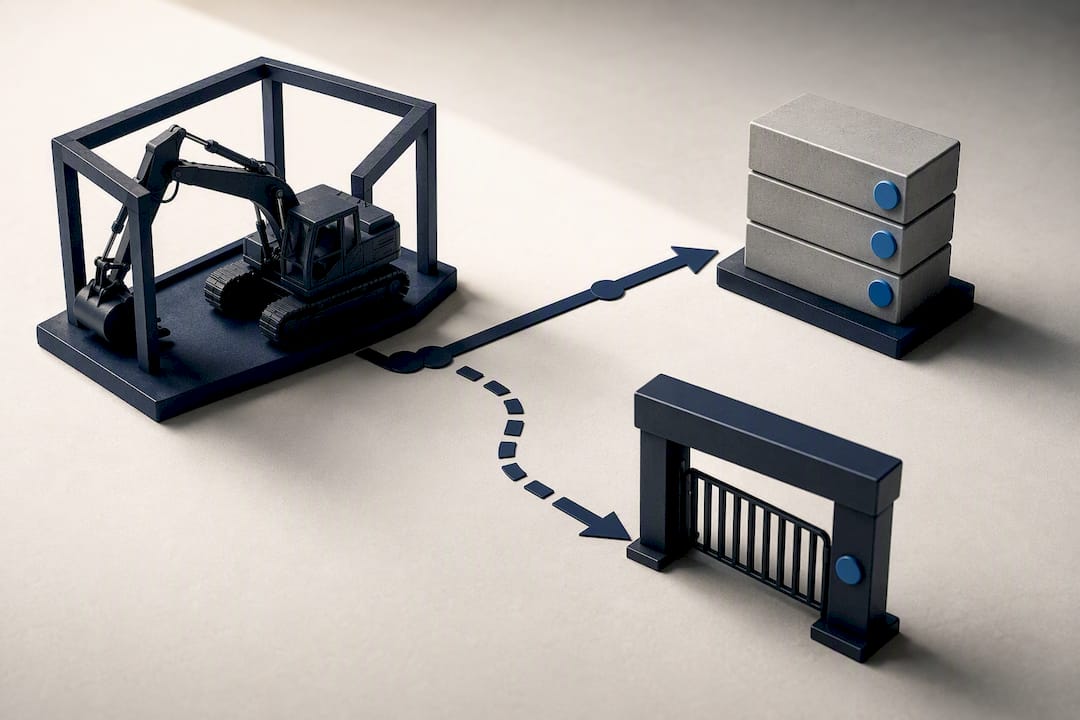
Watch for cross-default clauses, which let a default on one loan trigger default on other financing you hold with the same lender, even if you're current on that other loan. Also check for personal guarantee language, common on financing for newer businesses, which puts your personal assets on the line if the business can't repay the debt.
Protections worth confirming before you sign:
- A clear payoff schedule showing exactly what you owe at any point if you want to pay early or refinance.
- Defined default triggers, so you know precisely how many missed payments lead to repossession versus a late fee.
- Insurance and loss payee terms spelled out in writing, not left to verbal assurance from a sales rep.
- No unusual UCC filing language that gives the lender a blanket lien on business assets beyond the financed equipment itself.
When a contract includes cross-default clauses, broad personal guarantees, or vague default triggers, it's worth the cost of a short lawyer review before you sign. A few hundred dollars in legal fees is a lot cheaper than discovering a clause the hard way during a slow season.
How Capital for Business Helps Contractors Get Equipment Funded Fast
Waiting weeks on a bank while a job sits idle isn't a real option for most contractors. Capital for Business has worked with small business owners since 2009, and our equipment financing is built specifically for that reality: funding up to $250,000 with same-day turnaround once your documents are in.
We know the checklist lenders ask for because we wrote it: an equipment quote, recent business tax returns, and a profit and loss statement get most applications moving fast. Flexible payment structures may accommodate your busy season, and some lenders work with contractors whose credit doesn't fit traditional bank criteria, without forcing a rigid one-size-fits-all term. If leasing fits your situation better than ownership, our breakdown of equipment leasing versus equipment financing can help you decide before you apply.
Ready to move? Gather your equipment quote and financials, then start your equipment financing application today.
What We've Learned Financing Contractor Equipment
Two lessons stand out after years of underwriting equipment deals for contractors. First, the businesses that get funded fastest are the ones who bring a complete equipment quote with serial information up front, not the ones with the highest credit score. Second, seasonal payment structures prevent more defaults than any amount of underwriting caution, because they match the loan to how construction cash actually flows.
Case studies and contractor testimonials to be added.
— Capital
Where to Verify Financing Details Yourself
Check SBA's 504 loan program for government-backed terms, compare rates on NerdWallet's equipment financing guide, and confirm any lender's license through NMLS Consumer Access.
Sources
- 504 loans | U.S. Small Business Administration
- Construction and heavy equipment financing: Best loan options | NerdWallet
- NMLS Consumer Access
- Heavy Construction Equipment Financing | John Deere US
FAQ
What Is the Monthly Payment on a $50,000 Business Loan?
It depends on the rate and term, but monthly payments vary widely; shorter terms raise the payment while longer terms lower it and increase total interest paid.
Do I Have to Put 20% Down on a Construction Loan?
Not always.
Can I Use My LLC to Get a Construction Loan?
Yes, most lenders finance equipment directly to an LLC, but expect to provide your articles of organization, EIN documentation, and possibly a personal guarantee if the business is newer or thinly capitalized.
How Hard Is It to Get a $1,000,000 Business Loan?
Financing at that level generally requires strong revenue, multiple years in business, solid credit, and detailed financials, and it often involves SBA programs or specialty equipment lenders rather than a quick online approval. Working with a lender that reviews cash flow and documentation directly can make a large equipment purchase more approachable than applying blind to a bank.