
Securing fast project funding often feels like a hurdle for American construction companies facing tough bank requirements and slow approvals. Access to a construction business loan can help unlock faster cash flow for land, labor, and equipment costs, but the process looks different from standard business financing. This guide reveals the defining features, types, approval steps, and strategies for construction loans, helping contractors make smarter choices in a demanding financial climate.
Table of Contents
- What Defines Construction Business Loans
- Types of Financing for Construction Firms
- How Loan Approval and Funding Work
- Requirements and Eligibility for Borrowers
- Costs, Risks, and Common Challenges
- Alternatives and Best Practices Compared
Key Takeaways
| Point | Details |
|---|---|
| Construction Business Loans Provide Vital Support | These loans cater to the unique financial needs of construction projects, from land acquisition to labor expenses. |
| Diverse Financing Options Available | Construction firms can explore various financing methods including bank loans, equipment financing, and government grants for tailored solutions. |
| Robust Loan Approval Process | Lenders require comprehensive documentation and thorough assessments of project viability and borrower qualifications. |
| Risk Management is Essential | Developing a proactive risk management strategy can enhance a construction firm's loan attractiveness and project success. |
What Defines Construction Business Loans
Construction business loans are specialized financial products designed to support contractors, builders, and construction companies in funding their project development and operational needs. Unlike traditional business loans, these loans have unique characteristics tailored specifically to the complex and dynamic nature of construction projects.
A construction business loan typically covers various financial requirements throughout a project's lifecycle, including:
- Land acquisition costs
- Material and equipment purchases
- Labor expenses
- Site preparation and infrastructure development
- Working capital during project execution
These loans are structured differently from standard business financing, with specific loan disbursement mechanisms that release funds incrementally based on project milestones and progress. Lenders carefully evaluate project feasibility, contractor credentials, and potential revenue generation before approving financing.
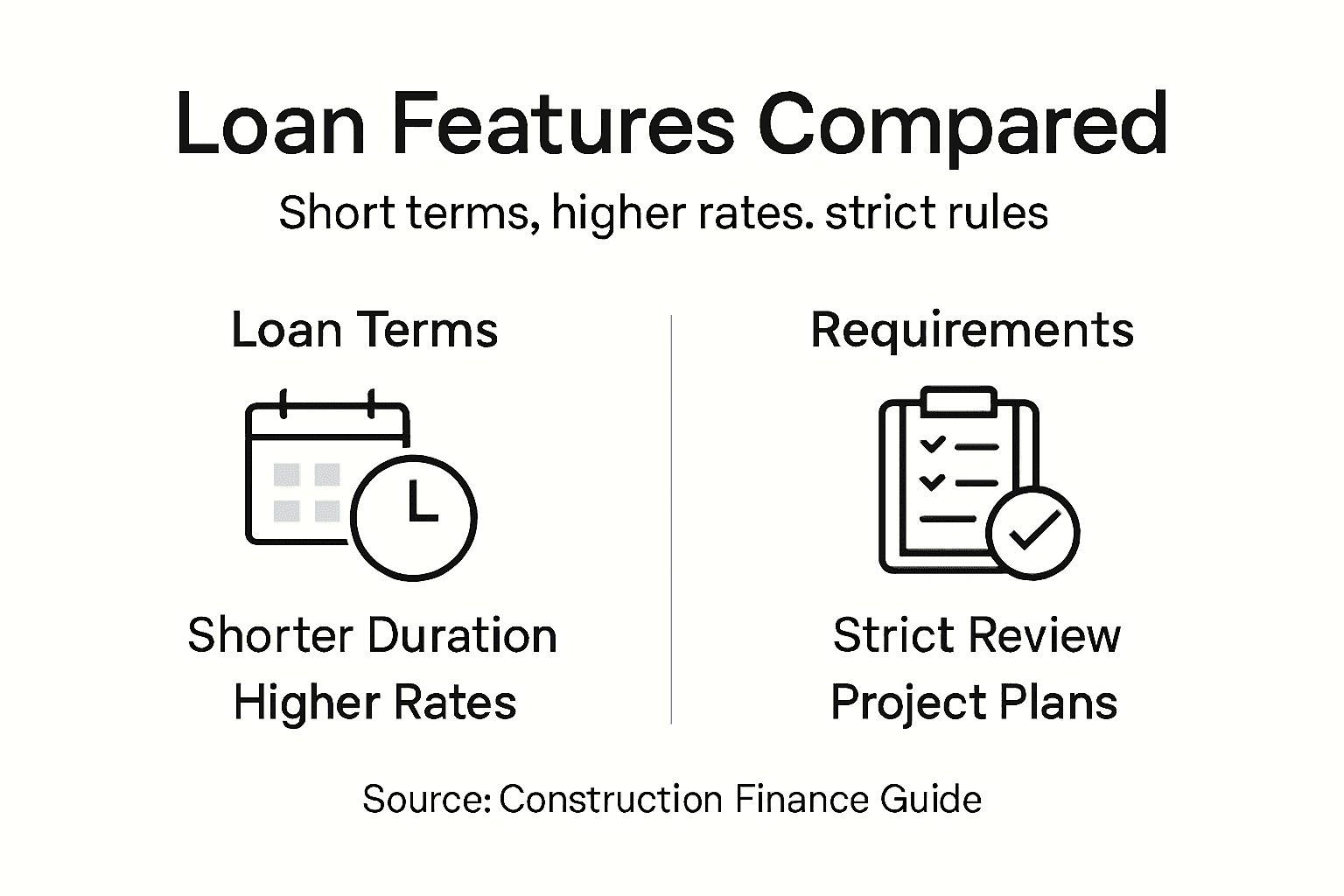
The key defining features of construction business loans include shorter loan terms, higher interest rates, and more rigorous underwriting processes compared to conventional loans. Construction loans often transition into long-term financing after project completion, providing builders with flexible funding solutions.
Pro tip: Always prepare a comprehensive project plan and detailed financial projections before applying for a construction business loan to increase your approval chances.
Types of Financing for Construction Firms
Construction firms have multiple financing options to support their project development and operational needs. Major finance sources include diverse funding mechanisms designed to address the unique financial challenges of construction enterprises.
The primary types of construction financing include:
- Bank Loans: Traditional lending with structured repayment schedules
- Equipment Financing: Specific funding for purchasing construction machinery
- Line of Credit: Flexible funding for ongoing operational expenses
- Invoice Factoring: Leveraging outstanding project invoices for immediate cash
- Government Grants: Special funding programs for infrastructure development
Project finance typically breaks down into three primary categories:
- Equity Financing
- Debt Financing
- Government Support
Project finance models demonstrate that most construction projects utilize a combination of these funding sources. Equity typically comes from project sponsors, private investors, and internal cash reserves, while debt financing represents 70-90% of total project funding from commercial and development banks.
Government grants and specialized lending programs can provide additional financial support, helping construction firms manage risk and improve project viability. These funding mechanisms enable companies to invest in advanced technologies, mobilize work teams quickly, and enhance overall project quality.
Here's how different construction financing options impact a business:
| Financing Option | Typical Use Case | Approval Speed | Flexibility Level |
|---|---|---|---|
| Bank Loan | Large projects, asset purchase | Moderate | Structured repayment |
| Equipment Financing | Machinery and tools acquisition | Fast | Purpose-limited |
| Line of Credit | Cash flow management | Fast | High |
| Invoice Factoring | Accelerating payments | Very fast | Transactional |
| Government Grant | Infrastructure, innovation | Slow | Project-specific |
Pro tip: Diversify your financing sources and maintain strong financial documentation to improve your chances of securing optimal funding for construction projects.
How Loan Approval and Funding Work
Construction loan approval involves a comprehensive evaluation process that assesses the financial viability and risk associated with a construction project. Lenders carefully scrutinize multiple aspects of the borrower's financial profile and project details before committing funds.
The typical loan approval process for construction firms includes several critical steps:
- Creditworthiness Assessment
- Personal credit score evaluation
- Business credit history review
- Debt-to-income ratio analysis
- Project Documentation
- Detailed project plans
- Comprehensive budget projections
- Contractor and subcontractor credentials
- Financial Documentation
- Tax returns
- Financial statements
- Business performance records
Key evaluation criteria that lenders examine include:
- Project feasibility and potential profitability
- Borrower's industry experience
- Collateral and asset documentation
- Risk mitigation strategies
- Repayment capability
Business loan applications typically require borrowers to demonstrate a clear financial need and provide comprehensive documentation. Most construction loans are structured with milestone-based fund disbursement, meaning funds are released in stages corresponding to specific project completion points.

Understanding the nuanced requirements of construction loan funding can significantly improve a firm's chances of securing optimal financing. Lenders often prefer projects with well-defined scopes, realistic timelines, and robust financial planning.
Pro tip: Prepare a comprehensive loan application package with detailed financial projections, risk assessments, and professional documentation to increase your approval probability.
Requirements and Eligibility for Borrowers
SBA construction loan eligibility involves a comprehensive set of requirements designed to ensure financial stability and project viability for construction businesses. Lenders carefully evaluate multiple dimensions of a borrower's financial health and operational capacity before approving funding.
Core eligibility criteria for construction business loans typically include:
- Business Structure Requirements
- Operate as a for-profit enterprise
- Registered and operating in the United States
- Meet Small Business Administration size standards
- Financial Health Indicators
- Robust credit score (preferably above 680)
- Demonstrated financial capability
- Strong business performance history
- Project-Specific Qualifications
- Clear and detailed project plan
- Realistic budget projections
- Proven technical expertise
Key documentation borrowers must typically provide includes:
- Comprehensive business tax returns
- Detailed project proposal
- Personal and business credit reports
- Financial statements
- Contractor licenses and certifications
Construction loan requirements are stringent, with lenders seeking borrowers who demonstrate exceptional financial management and project planning skills. Most SBA construction loans offer up to $5 million for eligible small businesses, with loan terms potentially extending to 25 years for real estate development projects.
Successful applicants must showcase not just financial capability, but also a strategic approach to project execution and risk management. Lenders prioritize borrowers who can articulate a clear vision and provide comprehensive documentation supporting their loan request.
Pro tip: Develop a comprehensive loan application package that highlights your business's financial strength, project feasibility, and risk mitigation strategies to maximize your approval chances.
Costs, Risks, and Common Challenges
Construction project risks encompass a complex landscape of financial, operational, and strategic challenges that can significantly impact project success and loan viability. Understanding these risks is crucial for construction firms seeking to secure and maintain business financing.
The most prevalent risks and challenges in construction business loans include:
- Financial Risks
- Fluctuating material costs
- Unexpected budget overruns
- Cash flow interruptions
- Interest rate volatility
- Operational Challenges
- Labor shortages
- Supply chain disruptions
- Project timeline delays
- Equipment maintenance expenses
- Documentation Risks
- Incomplete project proposals
- Inaccurate financial reporting
- Compliance documentation errors
Key financial challenges construction businesses must navigate:
- Rising material procurement costs
- Workforce recruitment and retention
- Technology and equipment investments
- Insurance and liability expenses
- Regulatory compliance requirements
Construction loan risk management requires proactive strategies that anticipate potential disruptions. Lenders typically mitigate risks through progressive drawdowns, milestone verifications, and comprehensive insurance requirements.
Successful construction firms develop robust risk management frameworks that demonstrate financial resilience, operational flexibility, and strategic planning capabilities to potential lenders.
The table below summarizes key risks and strategies for managing construction loan challenges:
| Risk Type | Example Challenge | Risk Management Strategy |
|---|---|---|
| Financial | Material price spikes | Negotiate fixed-price contracts |
| Operational | Project delays | Implement robust project tracking |
| Documentation | Regulatory non-compliance | Regular compliance audits |
| Cash Flow | Payment interruptions | Maintain reserve funds |
Pro tip: Develop a comprehensive risk management strategy that includes contingency budgets, diversified supplier networks, and detailed project documentation to enhance your loan attractiveness.
Alternatives and Best Practices Compared
Modern project finance models have revolutionized traditional financing approaches, offering construction businesses more flexible and strategic funding solutions. These innovative frameworks go beyond conventional bank loans, providing nuanced strategies for project development and risk management.
Alternative financing options for construction businesses include:
- Equity-Based Solutions
- Venture capital investments
- Private equity partnerships
- Angel investor funding
- Alternative Lending Platforms
- Peer-to-peer lending networks
- Online marketplace financing
- Crowdfunding platforms
- Specialized Funding Methods
- Green bond financing
- Public-private partnerships
- Sustainability-linked loans
Best practices for securing and managing construction project financing:
- Develop comprehensive risk assessment frameworks
- Maintain transparent financial documentation
- Diversify funding sources
- Implement rigorous project management systems
- Establish clear performance metrics
Construction financing best practices emphasize collaboration between contractors and lenders. Successful strategies involve creating single-purpose entities, using performance bonds, and maintaining strong financial oversight throughout project development.
Constructors must adapt to evolving financing landscapes by demonstrating financial resilience, technological innovation, and strategic planning capabilities that extend beyond traditional lending criteria.
Pro tip: Proactively build relationships with multiple financing sources and maintain exceptional financial transparency to maximize your funding opportunities.
Empower Your Construction Projects with Flexible Financing Solutions
Successfully navigating the complexities of construction business loans requires access to adaptable and reliable funding options. The article highlights key challenges such as managing cash flow interruptions, meeting strict documentation requirements, and handling project-specific financial risks. At Capital for Business, we understand these pain points and offer tailored financing alternatives that support contractors, builders, and construction companies through every stage of their project.
Whether you need working capital to cover labor costs, equipment financing to acquire vital machinery, or a business line of credit to maintain steady cash flow, our fast and efficient loan solutions are designed to meet your specific construction financing needs. Don't let traditional bank delays or rigid lending criteria hold your projects back. Discover financing options that prioritize your business goals and growth strategies by visiting Capital for Business today.

Take control of your construction project funding now and secure the financial support that helps you build with confidence. Explore how our small business loans and specialized financial services can turn your project plans into reality at Capital for Business. Start your application and join hundreds of satisfied construction professionals who trust us to fuel their growth.
Frequently Asked Questions
What are construction business loans?
Construction business loans are specialized financial products designed to help contractors and construction companies finance project development and operational expenses, covering costs such as land acquisition, materials, labor, and working capital.
How do I improve my chances of getting approved for a construction business loan?
To increase your chances of approval, prepare a comprehensive project plan, present detailed financial projections, and ensure all necessary documentation is accurate and complete.
What types of financing are available for construction firms?
Construction firms can choose from various financing options, including bank loans, equipment financing, lines of credit, invoice factoring, and government grants, each tailored for specific financial needs.
What risks should I consider when applying for a construction business loan?
Key risks include fluctuating material costs, unexpected budget overruns, labor shortages, and cash flow interruptions. It's essential to develop a risk management strategy to address these challenges effectively.
Recommended
- How to Expand Your Construction Business Services
- 4 Tips for Improving Construction Project Profitability
- Technology Tools for Your Startup Construction Business
- 10 Tips to Create Good Rapport in Your Construction Company
- How Small Businesses Save 20+ Hours Weekly with Document Automation - BankStatementFlow Blog