

Start with a clear billing descriptor, a fast internal refund path, and pre-dispute alerts turned on. Together, those three moves stop most disputes before they ever become a formal chargeback. Chargeback prevention for small business works best as a habit, not a fire drill: prevention plus fast triage beats fighting every case after the fact, and most owners can put the basics in place in a single afternoon with almost no budget.
TL;DR:
- Most small businesses should prioritize fixing billing descriptors and clear communication to significantly reduce friendly fraud disputes.
- Using tracked shipping, proof of delivery, and monitoring reason-code trends can help identify and respond to disputes more effectively.
- Automated alerts from networks like Ethoca and Verifi provide early warnings, allowing quick refunds and dispute prevention before formal chargebacks occur.
- Handling more than 20 disputes per month typically justifies investing in dispute management tools and outsourced representment services for better efficiency.
- Maintaining a routine of regular monitoring and fast refund workflows is more effective than reactive measures, preventing disputes from escalating.
Table of Contents
- What Chargebacks Are and Why They Matter for Small Merchants
- Prioritized Chargeback Prevention Checklist for Small Teams
- How Do You Detect and Respond to a Chargeback?
- Monitoring and Metrics: What to Track and When to Act
- When Should You Add Tools or Outsource Chargeback Management?
- A 30/60/90 Quick-Start Plan From a Financing Provider
- Why Chargeback Prevention Works Best as a Routine, Not a Reaction
- How A Financing Provider Helps You Cover the Cash Gap
- Sources
- FAQ
What Chargebacks Are and Why They Matter for Small Merchants
A chargeback happens when a cardholder disputes a charge with their bank instead of contacting you directly. The issuer pulls the funds back from your account first and asks questions later, which means you are guilty until you prove otherwise. That single fact should shape how you think about chargeback risk assessment.
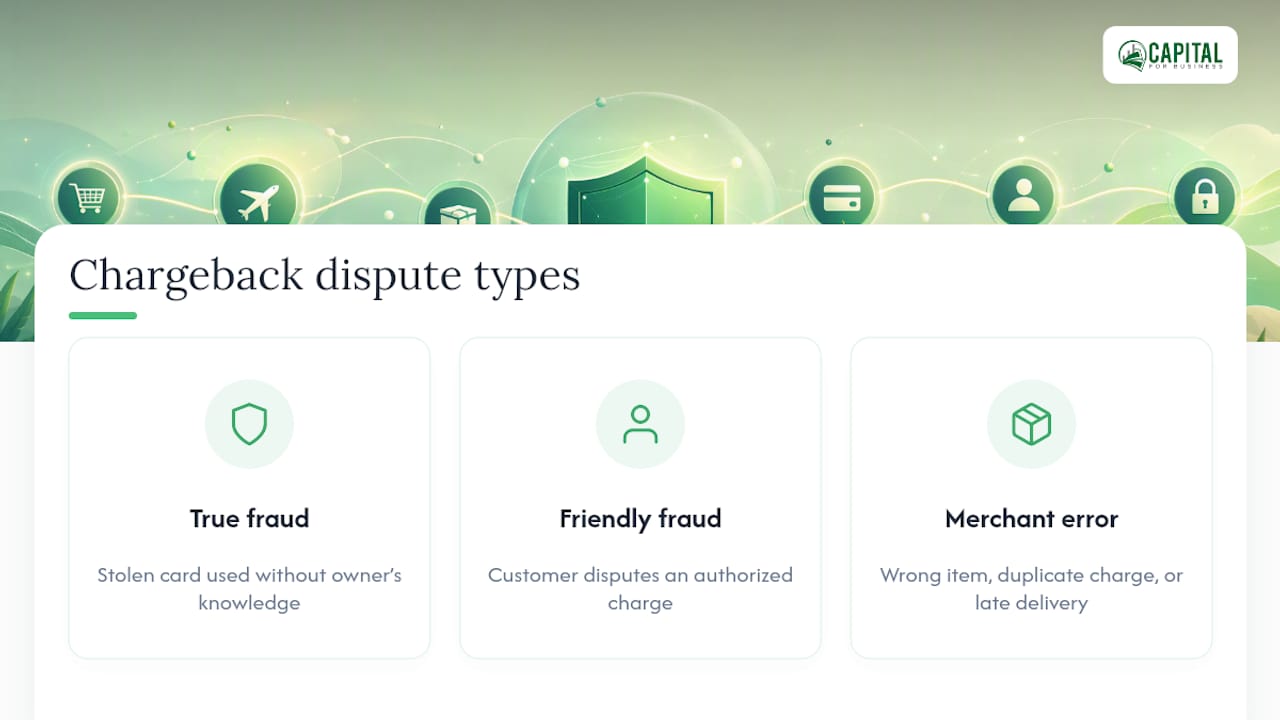
Disputes fall into three buckets. True fraud is a stolen card used without the owner's knowledge. Friendly fraud, sometimes called first-party fraud, is a legitimate customer disputing a charge they actually authorized, often because they forgot a subscription renewal or didn't recognize your billing name on their statement. Merchant error covers cases where you shipped the wrong item, missed a delivery window, or processed a duplicate charge.
Each chargeback carries a fee that varies depending on your processor, on top of losing the original sale amount and any goods already shipped. Rack up too many, and your acquirer can flag your account for monitoring or, in serious cases, terminate it. That risk is why chargeback prevention tactics belong in your basic operating routine, not just your fraud team's job description, if you even have one.
Prioritized Chargeback Prevention Checklist for Small Teams
Fix the cheap, high-impact items first. Most small businesses find that descriptor and communication problems drive a disproportionate share of friendly-fraud disputes, so start there before spending money on anything else.
- Billing descriptor: Make sure your statement name matches your storefront name exactly. If your processor shows "SQ *WIDGETCO123" instead of "WidgetCo," customers won't recognize the charge and will call their bank before they call you. Most processors let you update this in your merchant dashboard quickly, usually within a few business days.
- Confirmation and receipt emails: Send an immediate order confirmation with the SKU-level product description, price, and your support contact. Vague line items ("Misc Purchase $84.00") are a leading cause of "transaction not recognized" disputes.
- Subscription and renewal notices: Email customers 3 to 5 days before any recurring charge, and make cancellation as easy as signup. A hidden or multi-step cancellation flow is one of the fastest ways to generate friendly-fraud claims.
- Proof of delivery: Use tracked shipping and keep delivery confirmation on file. Send a shipment notice the moment a package leaves your warehouse.
- Baseline fraud controls: Turn on Address Verification Service (AVS) and CVV matching in your payment gateway. Add velocity checks to flag unusual order patterns, and enable 3D Secure selectively for higher-ticket or higher-risk transactions rather than every single sale, which can hurt conversion.
- Dedicated payment support: Give customer service a fast, no-argument refund path for orders under a set dollar threshold. A refund issued in minutes almost always costs less than a chargeback fee plus the lost sale.
These practices align closely with Capital One's small-business chargeback guidance, which points to accurate descriptors, clear disclosures, and AVS/CVV screening as foundational controls. For more implementation detail, see Capitalforbusiness's chargeback prevention tips.
Pro Tip: Review your billing descriptor the same week you launch any new product line or rebrand. A mismatched descriptor is invisible to you until a customer calls their bank confused, and by then you're already fighting a dispute.
How Do You Detect and Respond to a Chargeback?
Speed decides most outcomes here. Pre-dispute alerts from networks like Ethoca and Verifi often arrive 24 to 72 hours before a formal chargeback posts, giving you a window to issue a refund and stop the dispute cold. Pairing that alert with a fast-refund workflow is what actually makes the window useful, since an alert nobody acts on is worthless.
When a chargeback does land, triage it by reason code before doing anything else:
- Fraud-coded disputes (stolen card, unauthorized use) rarely win on representment. Accept small-dollar cases and route larger ones to your fraud-screening tool for pattern review.
- "Not recognized" disputes usually respond well to representment. Pull your confirmation email, descriptor screenshot, and IP/device data as evidence.
- Subscription disputes need your signup record, terms acceptance, and renewal notice history.
- "Not as described" or delivery disputes need tracking confirmation, photos of the shipped item, and any customer service correspondence.
Every card network sets a strict representment deadline, typically 7 to 20 days depending on the reason code and network, and formatting matters almost as much as content. A seven-step chargeback cycle, covering monitoring, alert interception, triage, evidence collection, representment, outcome analysis, and feeding lessons back into prevention, gives small teams a repeatable structure instead of reinventing the process each time a dispute hits.
Not every case deserves a fight. A simple break-even rule works: if your labor cost to build a case exceeds the transaction value times your realistic win probability, accept the loss and move on. Flag repeat offenders (same card, same IP, same shipping address) for a blocklist regardless of outcome.
Monitoring and Metrics: What to Track and When to Act
Your chargeback-to-transaction ratio is the number that determines whether your acquirer leaves you alone or puts you under a monitoring program.
- Check your ratio weekly at minimum; daily if you run high transaction volume or just launched a new product.
- Segment disputes by channel (web vs. phone vs. marketplace), SKU, and marketing campaign. A single problematic SKU or a poorly targeted ad campaign can quietly drive most of your dispute volume.
- Watch reason-code trends, not just the total count. A spike in "subscription canceled" disputes points to your cancellation flow, not your fraud screening.
- If your ratio trends upward two months running, freeze new promotions on the flagged channel and audit your descriptor, disclosures, and refund speed immediately.
When Should You Add Tools or Outsource Chargeback Management?
Manual tracking works fine for a handful of disputes a month. Past that, chargeback prevention tools generally split into three categories: alert networks that flag disputes before they post, dispute-management software that auto-assembles evidence and tracks deadlines, and fraud-screening services that use machine-learning scoring to catch risky orders pre-authorization. Security add-ons like the top Shopify security plugins can layer verification directly into checkout for ecommerce merchants. Outsourced representment services typically charge a flat fee or a percentage of recovered funds. They tend to pay for themselves once you're handling more than roughly 20 to 30 disputes a month.
A 30/60/90 Quick-Start Plan From a Financing Provider
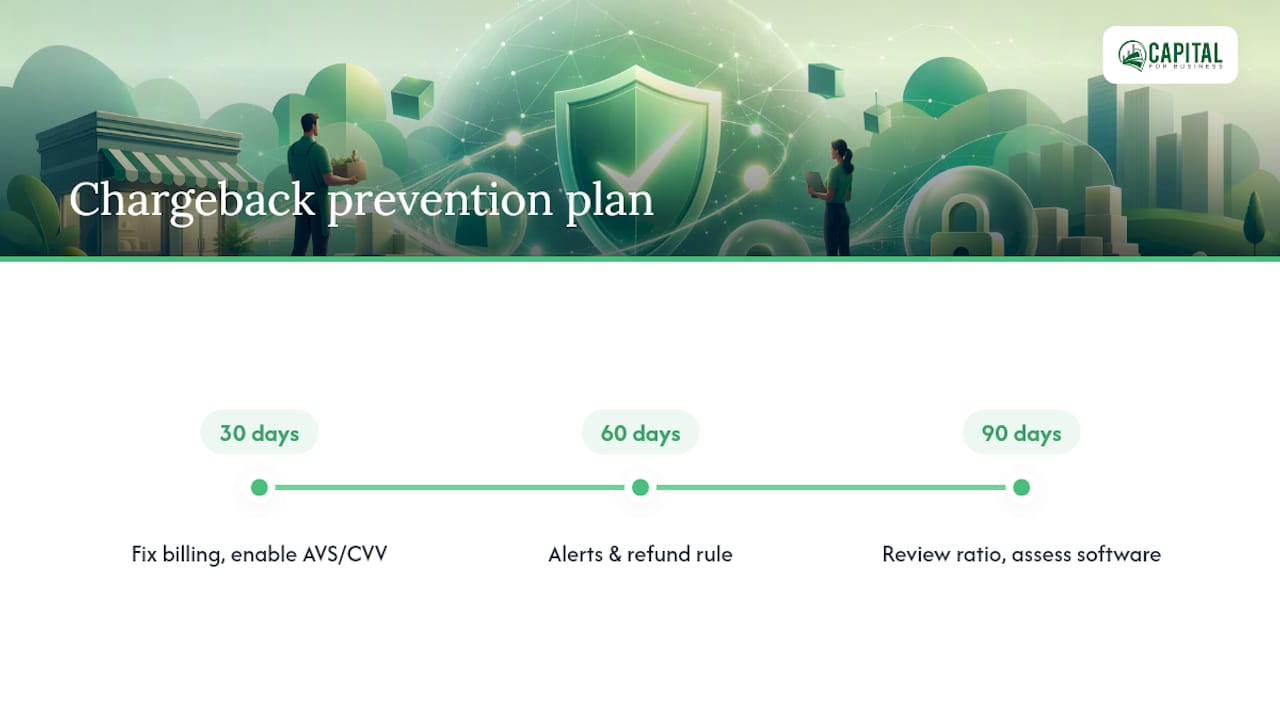
In your first 30 days, fix your billing descriptor, tighten confirmation emails, and enable AVS/CVV. By day 60, add pre-dispute alerts and a documented refund threshold. By day 90, review your ratio trend and decide whether dispute-management software earns its cost. Prevention first, automation second. For deeper steps, see Capitalforbusiness's prevention guide.
Why Chargeback Prevention Works Best as a Routine, Not a Reaction
Assign one person ownership of your dispute inbox and review your ratio monthly, even when nothing looks wrong. Prevention habits compound. A descriptor fix made once keeps paying off on every transaction after it, while representment only ever fixes the case in front of you.
— Capital
How A Financing Provider Helps You Cover the Cash Gap
Chargebacks don't just cost you the disputed amount. They tie up cash for weeks while a case works through representment, and that timing gap can strain payroll or inventory buying even when your business is otherwise healthy. Such financing providers exist for exactly that kind of short-term mismatch between when money leaves your account and when it comes back.

A Business Line of Credit gives you a revolving cushion you draw only when you need it, which fits the unpredictable timing of dispute-related cash gaps better than a lump-sum loan. If you need a faster bridge tied to your existing sales volume, a Merchant Cash Advance can get funds moving quickly without the paperwork a bank typically demands. Explore the full funding solutions lineup and request a consultation to find the option that matches how your revenue actually flows.
Sources
This guide draws on chargeback lifecycle research from Chargeflow's chargeback management guide, prevention tactics from Capital One, tool categories from Stripe, alert timing from Tagada, and representment economics from TechnologyAdvice. For general consumer-protection context, the FDIC publishes small-business payment guidance.
This article is general information, not a substitute for advice from a qualified financial advisor. Consult a qualified financial professional about your own circumstances before acting on anything here.
- Chargeback Management: The Complete 2026 Guide
- How to Master Chargeback Management: A 2026 Guide | Tagada
FAQ
Do Businesses Get in Trouble for Chargebacks?
Yes, but not in the way most owners fear. Excessive chargebacks trigger acquirer monitoring programs and added fees, and in severe cases can lead to account termination rather than criminal liability. Staying under your network's ratio threshold and fixing root causes early keeps your merchant account in good standing.
What Are the Best Chargeback Prevention Services Available?
The right service depends on your dispute volume and mix. Small merchants typically start with built-in processor features like Capital for Business's credit card processing tools, then add alert networks or dispute-management automation once volume justifies the cost.
Can I Go to Jail for Chargebacks?
No, receiving chargebacks as a merchant is not a criminal matter. Jail time only enters the picture in cases of proven merchant fraud, such as deliberately billing customers for goods never provided, which is an entirely different legal issue from normal dispute activity.
Do Customers Usually Win Chargebacks?
Outcomes vary widely by reason code, but merchants win only a minority of representments at scale, especially on friendly-fraud claims. That's why prevention and selective representment based on a simple cost-benefit rule outperforms fighting every case.